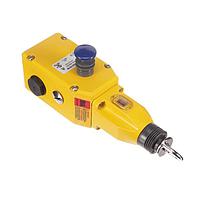
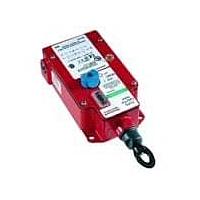
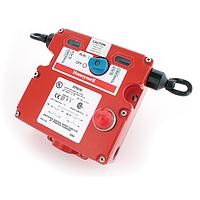
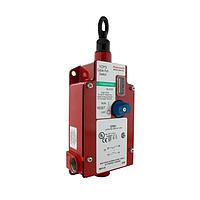
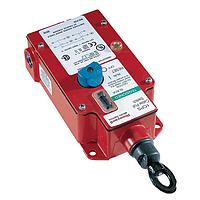
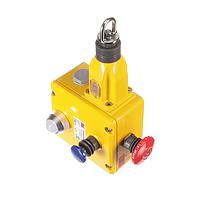
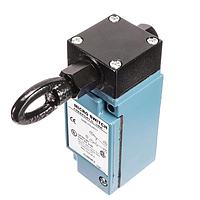
Cable Pull Switches
Long conveyor runs, assembly lines, and material handling systems often need a stopping method that can be reached from virtually any point along the machine. In these environments, Cable Pull Switches provide a practical way to trigger a stop command by pulling a tensioned cable installed along the hazard zone.
For industrial automation and machine safety applications, this type of switch is commonly selected when a standard pushbutton cannot provide enough reach. It helps operators and maintenance personnel react quickly, while also supporting a more consistent safety strategy across larger equipment layouts.
Why cable pull switches are used in industrial systems
A cable pull switch is designed to monitor a pull wire or cable stretched between defined mounting points. When the cable is pulled, and in many designs if it becomes slack or breaks, the switch changes state and initiates a stop function or safety-related signal, depending on the system design.
This makes cable pull devices especially useful on conveyors, transfer lines, packaging equipment, and other extended machine sections where accessible emergency actuation is important. Instead of relying on a single local control point, the cable creates a continuous access path along the machine perimeter or operating side.
Typical applications and installation context
These switches are commonly applied where personnel may need to stop equipment from different positions without moving to a fixed control station. Material handling systems are a typical example, particularly where belt conveyors or roller conveyors extend across production or warehouse areas.
They are also used in plants where maintenance access, operator walkways, or inspection routes run parallel to machinery. In these cases, cable pull switches help improve reachability and support safer intervention during abnormal conditions, provided the overall safety circuit is designed correctly.
What to consider when selecting a cable pull switch
The right selection usually depends on the cable run length, mounting arrangement, environmental exposure, and the reset philosophy required by the machine. Mechanical durability matters in demanding industrial settings, especially where vibration, dust, washdown, or outdoor use may influence long-term performance.
It is also important to evaluate how the switch handles cable tension monitoring, trip indication, and manual reset. In many applications, buyers also review enclosure style, contact configuration, and integration requirements with safety relays, safety controllers, or standard control systems. Choosing the device in context of the full machine architecture is more useful than comparing part numbers in isolation.
Role within a broader machine safety strategy
Cable pull switches are one part of a wider industrial switching and safeguarding ecosystem. They are often used alongside other operator-initiated or isolation devices, depending on how the machine is accessed and how hazards are controlled during operation, maintenance, or lockout procedures.
For example, applications with localized operator stations may also use emergency stop switches for fixed access points, while power isolation may be addressed separately through disconnect switches. In systems where normal machine interaction is frequent, related control switches may support standard start, stop, and mode-selection functions.
Common manufacturer options in this category
Industrial buyers often look for cable pull switches from established automation and safety suppliers with broad support across control, sensing, and machine safety products. Brands such as Banner Engineering, Honeywell, Omron Automation and Safety, SCHNEIDER, SIEMENS, Square D, and Telemecanique are often considered when compatibility, documentation, and platform familiarity matter.
The right choice is not only about brand preference. It is usually driven by installation standards, plant maintenance practices, and whether the switch needs to align with existing safety hardware already used on the machine or across the facility.
How cable pull switches differ from other switch types
Compared with standard pushbutton-based stop devices, cable pull switches are intended for longer access zones rather than a single actuation point. Their main advantage is reach along a machine side, which can reduce the need for many separate stopping devices across the same line.
They also differ from specialized switching products such as coaxial switches, which serve a very different signal-routing function, or from conventional control hardware intended primarily for normal operation rather than emergency intervention. This distinction matters when specifying components for both usability and safety performance.
Integration and maintenance considerations
Proper installation is essential for reliable performance. Cable routing, end hardware, tensioning, support spacing, and alignment all influence how consistently the switch responds over time. A well-chosen device still depends on correct mechanical setup and periodic inspection.
Maintenance teams typically review cable condition, tension status, switch reset behavior, and any signs of wear caused by environment or repeated actuation. For this reason, many purchasing decisions are made not only by engineering teams but also by maintenance and EHS stakeholders who need dependable operation throughout the equipment lifecycle.
Choosing the right category for your application
If your requirement is to create an extended stop-access zone along a conveyor or production line, cable pull switches are often the most relevant starting point. They are particularly suitable where operators need a reachable stop method across a long machine section, rather than at one fixed panel location.
When comparing options, it helps to look beyond the switch body itself and consider the full installation environment, cable layout, safety architecture, and maintenance expectations. A well-matched cable pull switch supports safer machine access, clearer system design, and more practical operation in demanding industrial settings.
Get exclusive volume discounts, bulk pricing updates, and new product alerts delivered directly to your inbox.
By subscribing, you agree to our Terms of Service and Privacy Policy.
Direct access to our certified experts