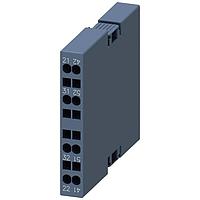
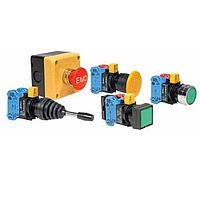
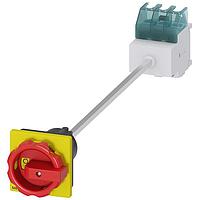
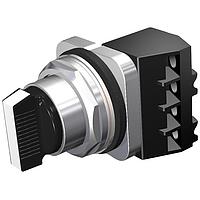
Control Switches
Reliable machine operation often depends on a simple but critical interface: the switch that lets an operator start, stop, select, reset, or change a function with confidence. In industrial panels, process equipment, and automation systems, control switches help translate human commands into clear electrical actions while supporting safe, repeatable workflows.
This category brings together switch options commonly used in industrial control architecture, where durability, operator visibility, and compatibility with the wider system matter as much as the switching function itself. Whether you are building a new panel, replacing a worn device, or standardizing components across multiple machines, choosing the right switch type can improve both usability and maintenance efficiency.
Where control switches fit in industrial systems
Control switches are typically installed at the point where an operator or technician needs direct command over a machine or process. They may be used for run/stop commands, mode selection, manual overrides, directional control, or circuit actuation within control panels, operator stations, and equipment enclosures.
In practice, these devices are part of a broader switching ecosystem. Some applications may also require dedicated emergency stop switches for safety-related shutdown, while routine machine commands remain on standard operator controls. Understanding that distinction helps ensure the right device is used for the right purpose.
Common applications and operating environments
Industrial control environments can range from clean indoor enclosures to harsher areas exposed to dust, vibration, temperature changes, or frequent operator interaction. Because of that, switch selection should be matched not only to the electrical design but also to how the equipment is used day to day.
Typical applications include production machinery, packaging lines, material handling equipment, utility panels, HVAC control systems, and OEM assemblies. In many of these settings, operators need a switch that provides a clear tactile response, straightforward labeling, and dependable performance over repeated cycles. When panel layouts become more complex, teams often review related devices such as disconnect switches for isolation functions and other specialized switch categories for distinct operational needs.
How to choose the right control switch
The best selection process starts with the function the switch must perform. A momentary action, maintained position, selector function, or multi-position control can each serve a very different role in the circuit. It is also important to confirm the intended mounting style, available panel space, and how the switch will be wired into the control system.
From there, buyers typically review factors such as electrical rating, contact arrangement, environmental suitability, and operator accessibility. In industrial automation, clear human-machine interaction is just as important as electrical compatibility. A switch that is easy to identify and actuate can help reduce operator error, speed up troubleshooting, and support more consistent machine operation.
Integration with panels, controls, and automation components
Control switches rarely operate in isolation. They are usually integrated with relays, contactors, PLC inputs, pilot devices, terminal blocks, and protective components within a panel or machine assembly. That broader context affects how the switch should be specified, especially when signal integrity, enclosure layout, and service access are part of the design requirement.
Manufacturers such as SIEMENS, SCHNEIDER, Eaton, and PHOENIX CONTACT are commonly associated with industrial control and automation ecosystems, making them relevant when engineers want better alignment across panel hardware and control architecture. In some installations, the operator command layer may also sit alongside devices such as cable pull switches used for conveyor or line-wide intervention in specific machine layouts.
Why build quality matters
In industrial use, a control switch is often actuated thousands of times over its service life. Mechanical consistency, contact reliability, and resistance to wear all contribute to long-term performance. For that reason, purchasing teams and panel builders usually look beyond the basic function and consider how the device will hold up under repeated use and routine maintenance conditions.
Mechanical durability and a well-matched operating feel can make a noticeable difference in real-world applications. A switch that remains stable in demanding environments helps reduce nuisance issues such as intermittent command signals, unclear actuation, or premature replacement intervals. This becomes especially important in production settings where downtime can disrupt throughput and maintenance schedules.
Considerations for replacement and standardization
When replacing an existing switch, it helps to verify more than just the visible actuator style. Mounting dimensions, contact configuration, actuation method, and control logic should all be checked to avoid compatibility problems. A like-for-like visual replacement may not always match the original functional requirements inside the panel.
For OEMs, integrators, and maintenance teams managing multiple machines, component standardization can simplify spare parts planning and technician training. Selecting switch families that align with the rest of the control platform may also help streamline documentation, reduce wiring variation, and support more consistent service procedures across equipment fleets.
Manufacturer landscape in this category
This category may be relevant to buyers working with recognized industrial brands such as Eaton, Honeywell, Banner Engineering, Littelfuse, Molex, APC by Schneider Electric, SCHNEIDER, SIEMENS, and PHOENIX CONTACT. Each name may be associated with different parts of the industrial switching and control ecosystem, so the right fit depends on the application, the control philosophy, and the surrounding hardware already specified in the system.
Rather than focusing only on brand preference, it is usually more effective to compare the switch’s intended role, expected usage frequency, and installation constraints. That approach helps narrow the selection toward devices that are practical for the application rather than simply familiar by name.
Finding the right fit for your application
Choosing among control switches is ultimately about matching operator needs, circuit requirements, and environmental conditions. A well-selected device supports intuitive control, cleaner panel design, and dependable machine response without adding unnecessary complexity.
If you are comparing options for a new build or a replacement project, use the application itself as the starting point: what action the switch performs, how often it is used, where it is mounted, and how it fits into the wider automation system. That method usually leads to a more reliable and maintainable result than selecting by appearance alone.
Get exclusive volume discounts, bulk pricing updates, and new product alerts delivered directly to your inbox.
By subscribing, you agree to our Terms of Service and Privacy Policy.
Direct access to our certified experts