
Robotics Components
Building or expanding an automation system often starts with the right mix of motion-ready hardware, control interfaces, development kits, and supporting accessories. In practical terms, robotics components help engineers, integrators, educators, and technical buyers move from concept to working systems with more confidence, whether the goal is prototyping, lab development, training, or deployment support.
This category brings together parts and kits that fit into the broader robotics and automation workflow. Rather than treating every item as a standalone product, it is more useful to view these components as part of an ecosystem that may also involve industrial controllers, wiring and interconnect solutions, and protection hardware around the machine or cell.
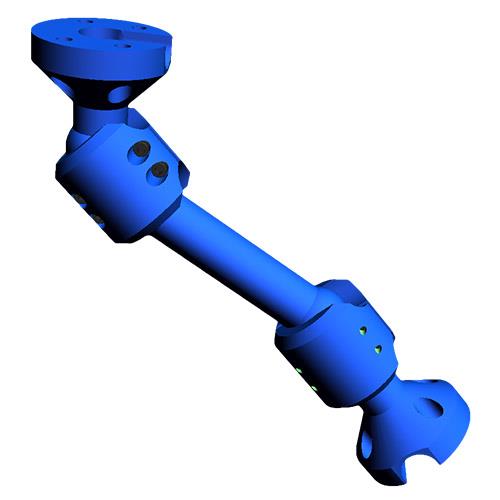
Where robotics components fit in an automation workflow
In industrial and technical environments, robotics projects rarely depend on a single device. A functional setup usually combines control logic, communication interfaces, electromechanical connections, test materials, and application-specific accessories. That is why this category is relevant not only for robot builders, but also for maintenance teams, machine designers, and engineering groups working on proof-of-concept systems.
Some buyers come here looking for development-oriented kits, while others need supporting parts that simplify assembly, wiring, or field preparation. In both cases, the value of a robotics components category lies in giving teams access to the practical building blocks required to connect mechanical motion, electrical design, and system control into one usable platform.
Typical use cases for these products
Robotics components are commonly selected for early-stage prototyping, educational lab setups, automation demonstrations, and small-scale integration tasks. They can also support technician training, troubleshooting workflows, or evaluation projects where teams need to compare component types before finalizing a production design.
In a broader industrial setting, these products may be used alongside cameras and accessories for machine vision, with safety-oriented power distribution, or with counting and speed feedback devices such as counters and tachometers. This makes the category useful for both standalone robotics work and multi-subsystem automation projects.
Examples of products found in this category
The product mix in this category reflects different stages of robotics work. Some items are engineering or evaluation kits intended to help users test materials, interfaces, or assembly approaches. Examples include KEMET FXS-ENG-KIT-07 Other Kits and KEMET FXS-ENG-KIT-06 Other Kits, which are representative of kit-based selection and experimentation in a development workflow.
Other products support hands-on building, learning, and hardware preparation. Adafruit 1976, Adafruit 3146, and Adafruit 5069 illustrate the kind of accessible kit format many teams use for rapid prototyping or educational robotics tasks. For installation and field-oriented work, items such as Klein Tools 5300 or connector-related kits like Amphenol TK-500EZ and Amphenol TK-600EZ-75 can be relevant where assembly readiness and interconnect support matter.
There are also category entries such as Molex F203W50000 and Dremel MM389 that highlight how robotics work often extends beyond control boards alone. Interconnect hardware, accessories, and supporting tools all play a role in reducing friction during setup, modification, and maintenance.
How to evaluate robotics components for your application
A practical selection process should start with the intended use case. If the requirement is training or experimentation, a kit-based product may be the right fit because it helps teams evaluate compatibility, handling, or installation steps before larger purchasing decisions are made. If the project is closer to implementation, the focus usually shifts to connector reliability, mechanical integration, and how well the component fits into the control architecture.
It also helps to think in terms of the full system, not only the individual part. Buyers should consider the operating environment, expected duty cycle, wiring layout, and the relationship between robotics hardware and adjacent devices such as circuit protection components. This broader view can reduce redesign work later and improve consistency across the build.
Brands commonly considered in robotics and automation projects
Several recognized manufacturers appear in this category because robotics projects often combine products from different specialties. Adafruit is frequently associated with hands-on development and accessible prototyping workflows, while KEMET is relevant when engineering kits are needed for evaluation and component selection. Amphenol and Molex are commonly considered when connectivity and interconnect structure are part of the design discussion.
Other well-known names in the wider automation landscape include Arduino, Honeywell, Eaton, Dremel, and Klein Tools. Their presence helps show that robotics component sourcing is not limited to one device class. Instead, it often spans development hardware, electrical accessories, assembly support, and practical tools used across technical teams.
Robotics components as part of a larger system strategy
One of the most common sourcing mistakes is treating robotics components as isolated purchases. In real projects, component choices affect enclosure layout, control integration, maintenance accessibility, and future scalability. A kit selected for evaluation today may shape connector standards, training procedures, or spare-parts decisions later in the project lifecycle.
For that reason, many engineering and procurement teams review this category alongside adjacent automation categories, especially when building complete stations or preparing repeatable assemblies. Even when the immediate need is small, choosing components with a clear system role can support more efficient integration over time.
Choosing the right category path for prototyping, education, or deployment support
Not every buyer is looking for the same thing. Some need fast-turn components for bench testing, some are comparing kit options for instructional programs, and others are looking for supporting hardware that complements robotic control and electromechanical assembly. The most effective approach is to match the product type to the stage of the project rather than selecting by name alone.
If your requirement involves evaluation kits, interconnect support, or practical accessories used around robotics builds, this category provides a useful starting point. Reviewing representative options from Adafruit, KEMET, Amphenol, Molex, Klein Tools, and Dremel can help narrow the field and make the next design or purchasing step more structured.
Robotics projects succeed when the supporting parts are chosen with the same care as the headline hardware. A well-planned component selection can simplify prototyping, improve integration, and create a smoother path from early concept work to dependable automation results.
Get exclusive volume discounts, bulk pricing updates, and new product alerts delivered directly to your inbox.
By subscribing, you agree to our Terms of Service and Privacy Policy.
Direct access to our certified experts



![ROBOTIS 901-0028-200 Robotics ROBOTIS STEM Level 1 [EN]](/s-cdn/41/4189efbd87bdc420083d8e5ad88574481ac5f524.jpg)


![ROBOTIS 901-0125-201 Educational Robotic Kits ROBOTIS DREAM? Level 5 Kit [EN]](/s-cdn/67/670d2cecaf84aef0d1b5299aae3ac74c1634a557.jpg)