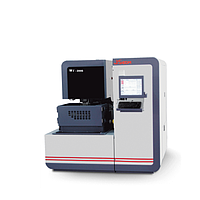
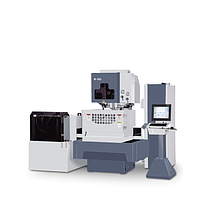
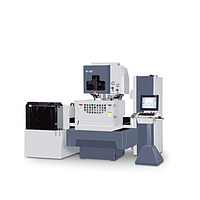
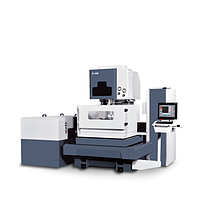
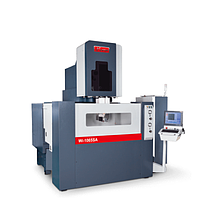
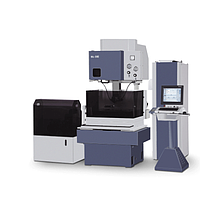
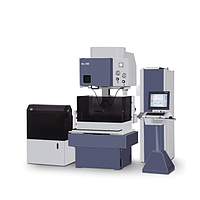
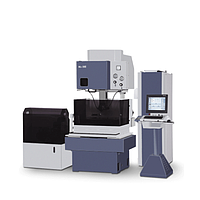
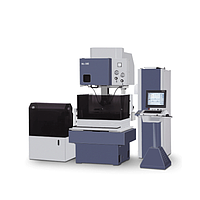
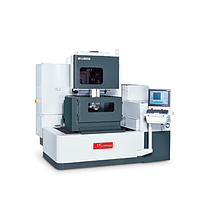
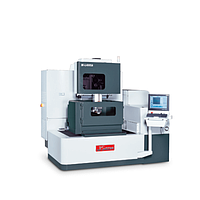
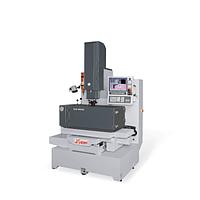
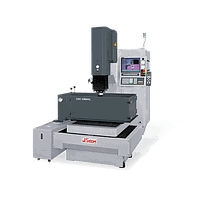
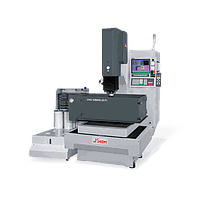
EDM CNC Machine, electrical discharge machining
Precision toolmaking, mold manufacturing, and hard-material machining often require processes that conventional cutting methods cannot handle efficiently. When intricate cavities, small holes, sharp internal corners, or conductive hardened materials are involved, EDM CNC Machine, electrical discharge machining becomes a practical solution for controlled, repeatable production.
This category brings together electrical discharge machining equipment used for non-contact material removal through controlled spark erosion. It is especially relevant for shops that work with dies, molds, electrodes, and precision components where dimensional consistency, surface requirements, and access to complex geometry matter as much as raw cutting speed.
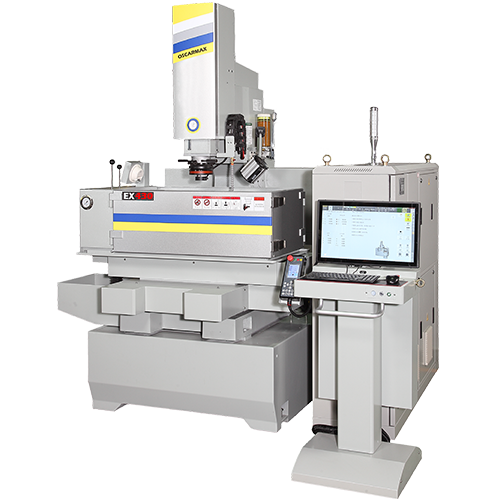
Where EDM CNC machines fit in modern manufacturing
Electrical discharge machining is widely used when the workpiece material is electrically conductive and difficult to machine by traditional milling or drilling alone. Instead of relying on direct cutting force, the process removes material using electrical discharges in a dielectric medium, helping reduce mechanical stress on delicate or hardened parts.
In practical terms, this makes EDM equipment valuable for mold shops, die makers, precision engineering environments, and subcontract manufacturers producing complex features. It is also a useful process for applications that demand fine hole generation, cavity machining, and accurate reproduction of electrode geometry.
Main machine types available in this category
The product range in this category shows two common EDM directions: micro drill EDM machines and die sinker EDM machines. While both use spark erosion, they are selected for different production goals.
Micro drill EDM machines are typically chosen for producing very small holes, starter holes, and features that are difficult to achieve with conventional drilling, especially in hard materials. Examples in this range include models such as the OscarMax SD300 ZNC Plus, SD400 ZNC Plus, SD550 ZNC Plus, SD755 ZNC Plus, as well as EXD-series machines like EXD435, EXD645, and EXD1060.
Die sinker EDM machines are more suitable for shaped cavity production using formed electrodes. Models such as the OscarMax S430S ZNC, S550 ZNC, S755 ZNC, and S1880 NC illustrate how the category also supports larger workpieces, heavier electrode loads, and mold-oriented applications.
What to consider when selecting an EDM machine
A good machine choice starts with the size and weight of the parts you actually run. Table travel, workpiece capacity, and table dimensions are critical because they directly affect fixture setup and the usable machining envelope. In this category, there are compact platforms for lighter workpieces as well as larger systems designed for heavier molds and larger part footprints.
Power and generator capability also matter. Some machines in the range operate around 4.6 KVA for micro drilling applications, while larger die sinker units may reach 6 KVA, 10 KVA, or 12 KVA depending on the model. This should be matched to the intended machining task rather than viewed in isolation.
Another practical factor is dielectric capacity and filtration. A stable dielectric system supports spark control, flushing, and debris removal, all of which influence machining stability and finished quality. For buyers comparing systems, it is useful to look at tank volume, filter arrangement, and overall machine layout together instead of focusing on a single headline specification.
Examples from the available OscarMax range
OscarMax is the main featured manufacturer in this category, with machines covering both compact and larger-format EDM requirements. For smaller work envelopes, the SD300 ZNC Plus and SD400 ZNC Plus are relevant options when the application involves lighter workpieces and more limited table space. These are typically suitable for operations that prioritize fine-hole EDM work without requiring the footprint of a larger platform.
For broader travel and increased workpiece capacity, the SD550 ZNC Plus and SD755 ZNC Plus extend the usable machining range. In the EXD series, models such as EXD435, EXD645, and EXD1060 provide another route for micro drill EDM selection, including options with larger travel and workpiece dimensions for more demanding production environments.
On the die sinker side, the S430S ZNC and S550 ZNC support general mold and cavity work, while the S755 ZNC and S1880 NC move into heavier-duty applications with larger tables and substantially higher workpiece capacity. This spread helps buyers compare machines not just by series name, but by actual fit with electrode size, tank dimensions, and expected part scale.
Production factors beyond the machine itself
EDM performance is influenced by the surrounding process environment. Stable utilities, clean air systems, and thermal control can all affect uptime and consistency in industrial settings. For facilities managing temperature-sensitive production areas or supporting auxiliary cooling needs, related equipment such as industrial water chillers may also be relevant within the wider machinery ecosystem.
Similarly, compressed air quality can play a role in workshop reliability, actuator performance, and general machine support infrastructure. If your production line includes pneumatic systems or supporting automation, it may be worth exploring compressed air treatment equipment alongside primary machining assets.
How buyers typically narrow down the right EDM solution
For B2B procurement, machine selection usually comes down to a few practical questions. First, define whether the requirement is primarily for fine-hole EDM or for cavity and mold machining. That distinction quickly narrows the shortlist between micro drill and die sinker configurations.
Next, compare actual part sizes, maximum workpiece weight, and the available table travel needed for fixturing and access. A machine that is technically capable of the process may still become inefficient if the table size, guide travel, or dielectric tank arrangement does not fit the real production workflow.
It is also sensible to review future demand. Shops expanding into larger molds or more complex tooling may prefer a machine with additional envelope or capacity rather than purchasing too narrowly for current jobs only. In that context, comparing compact ZNC models with larger EXD or NC-capable die sinker platforms can provide a more realistic long-term purchasing view.
Why this category matters for precision manufacturing
EDM is not simply an alternative to conventional machining; in many cases, it is the process that enables features other methods struggle to produce consistently. That is why this category is relevant for manufacturers working with hardened metals, detailed cavities, precision holes, and tooling applications where process control is essential.
With a range that includes smaller machines for focused hole-making tasks and larger systems for die sinking and mold work, buyers can evaluate equipment based on application fit, machine capacity, and production context. If you are comparing platforms for toolroom use, mold manufacturing, or precision subcontracting, this category offers a structured starting point for selecting the right EDM setup.
A careful review of workpiece size, machining objective, generator class, and dielectric system will usually lead to a more effective choice than comparing model names alone. For technical buyers, that approach helps align machine investment with real process requirements and long-term shop capability.
Get exclusive volume discounts, bulk pricing updates, and new product alerts delivered directly to your inbox.
By subscribing, you agree to our Terms of Service and Privacy Policy.
Direct access to our certified experts