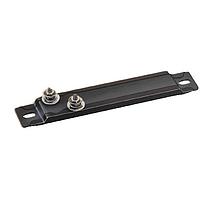
Industrial Heaters
Stable process temperature is a basic requirement in laboratories, pilot lines, packaging systems, and many production environments. Whether the goal is to warm a surface, maintain fluid viscosity, prevent condensation, or support a controlled thermal step, choosing the right Industrial Heaters category can make day-to-day operation more consistent and easier to manage.
This product group brings together heating solutions used across industrial and technical applications, from localized heat input on equipment surfaces to flexible heating around vessels, tubing, or small process sections. It is also a useful starting point when comparing heating methods with adjacent thermal control equipment such as industrial water coolers and chillers for processes that require both heating and cooling stages.
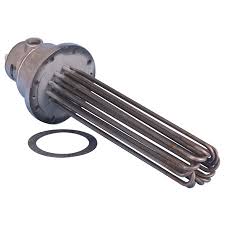
Where industrial heaters are commonly used
Heating equipment appears in a wide range of technical setups. In industrial production, heaters are often used to keep materials at a workable temperature, reduce viscosity, dry components, or maintain stable thermal conditions in enclosures and machines. In laboratory and R&D environments, they support sample preparation, reactor temperature maintenance, and controlled warming of glassware, tubing, or small vessels.
The right heater depends less on a broad label and more on the actual heat transfer task. Some applications need direct contact heating on a metal surface, while others require flexible heating around irregular shapes or controlled immersion-based heat exchange. That is why selection should begin with the load, target temperature, installation method, and duty cycle rather than product name alone.
Understanding the main heating approaches in this category
Industrial heating is not a single device type. This category covers several practical approaches designed for different installation conditions. Surface-mounted heaters are typically used when heat must be transferred through a plate, wall, or flat contact area. Other designs focus on cylindrical components, ducts, enclosures, or direct contact with liquids.
Flexible heating accessories also play an important role in the wider heating ecosystem. For example, heating tapes are commonly chosen when users need to wrap heat around glassware, lines, small pipes, or irregular shapes. This makes them especially useful in setups where rigid heaters are difficult to install or where heating needs to follow a curved path.
Featured product examples for flexible heating and cooling support
Within this category context, several DaiHan heating tape models illustrate how compact, wrap-around heating can be applied in practice. Products such as the DH.WHM12322, DH.WHM12324, and DH.WHM12328 provide different tape lengths and power levels, giving users options when matching heater coverage to vessel size, line length, or target thermal load. Their format is well suited for localized heating where accessibility and flexibility matter.
Although not heaters themselves, selected TAITEC immersion cooler models in the broader product mix help define the thermal control landscape around this category. Units such as the TAITEC 80LF, 150LF, and 250DF show how some applications require active cooling as well as heating, especially in test setups, sample handling, or process development where temperature must be raised and lowered in a controlled way. For buyers comparing thermal equipment strategies, this broader perspective is often useful.
How to choose the right industrial heater
The first selection point is the heating target: surface, air space, vessel wall, tubing, or liquid. After that, consider how quickly the system must respond and how evenly the heat needs to be distributed. A compact heater may be effective for spot heating, but larger contact areas usually need better coverage to avoid hot spots and temperature gradients.
Temperature range and power rating should also be evaluated together. A heater with higher wattage can improve warm-up time, but the surrounding material, insulation, and control method determine whether that power can be used safely and efficiently. Buyers should also review mounting constraints, available supply power, operating environment, and whether the system needs pairing with sensors or control hardware from brands such as OMEGA for more complete temperature management.
For applications involving repeated operation, maintenance access and replacement practicality matter as much as raw performance. Flexible heaters may be easier to install or change out, while fixed-format heaters may offer better mechanical stability in permanent equipment builds. In many projects, the best option is the one that balances thermal performance with serviceability.
Why application context matters more than product labels
Many purchasing mistakes happen when a heater is selected only by wattage or maximum temperature. In reality, process media, contact quality, insulation, ambient conditions, and the geometry of the heated object all influence results. A heater that performs well on a small lab vessel may not be suitable for a larger production assembly, even if the nominal temperature requirement looks similar.
This is also why some users compare heater-based solutions with other process equipment categories. For example, when the application involves packaging or thermally shrinking materials, a purpose-built heat shrinking machine may be more suitable than assembling a heating setup from separate components. Matching the equipment type to the process objective is usually the most efficient route.
Typical evaluation points for technical buyers
For B2B procurement, heater selection often includes both engineering and operational criteria. Buyers usually review the thermal task itself, but they also need to consider installation complexity, expected runtime, compatibility with existing equipment, and long-term operating stability. In regulated or quality-sensitive environments, repeatability and control integration may be just as important as nominal heater output.
- Application fit: what exactly needs to be heated, and how is heat transferred?
- Temperature and power: what operating range and heat-up behavior are required?
- Mechanical fit: does the heater match the size, shape, and access constraints of the installation?
- Control strategy: will the setup run open-loop or with temperature sensing and feedback control?
- Maintenance considerations: how easy is inspection, replacement, or cleaning in routine use?
These points help narrow down choices efficiently, especially when comparing flexible accessories, fixed heaters, and supporting thermal equipment within a larger process system.
Building a more complete thermal control setup
In real applications, heaters rarely work in isolation. They are often part of a broader thermal management system that includes insulation, sensors, controllers, power regulation, and sometimes cooling equipment. Thinking in terms of the whole process rather than a single component usually leads to more stable operation and fewer temperature-related issues.
This category is therefore useful not only for sourcing heating hardware, but also for understanding where a heater fits in the overall process. If your application requires maintaining temperature, compensating for ambient losses, or creating a controlled heating step, reviewing heater type, installation method, and control approach together will lead to a better match.
Conclusion
Choosing from an Industrial Heaters range is ultimately about matching heat delivery to the real conditions of the job. Flexible heating tapes, application-specific heater formats, and related thermal control equipment each serve different needs depending on geometry, temperature range, and process stability requirements.
By comparing the heating method, installation constraints, and control needs before ordering, technical buyers can identify solutions that are more practical for both immediate use and long-term operation. For laboratory, industrial, and OEM environments alike, a well-matched heater setup supports safer, more predictable thermal performance.
Get exclusive volume discounts, bulk pricing updates, and new product alerts delivered directly to your inbox.
By subscribing, you agree to our Terms of Service and Privacy Policy.
Direct access to our certified experts