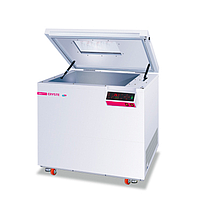
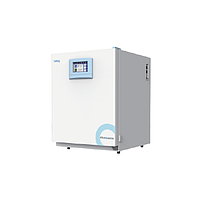
Incubator
Temperature stability can make or break routine culture work, sample conditioning, and many microbiology or life science workflows. When a laboratory needs repeatable heating performance, reliable recovery after door opening, and practical chamber capacity, choosing the right Incubator becomes an important part of building a dependable testing environment.
On this category page, you can explore laboratory incubators suited to controlled warming applications, along with representative models and accessories from established manufacturers. The range includes compact benchtop units as well as larger-capacity systems for higher sample throughput, giving labs more flexibility in matching equipment to their actual process needs.

Why incubators matter in laboratory workflows
Laboratory incubators are used to maintain a controlled thermal environment for samples, media, cultures, and other materials that require stable incubation conditions over time. In practice, this supports more consistent experimental results, especially in workflows where even small temperature deviations can affect growth behavior, reaction progress, or sample integrity.
A well-matched incubator helps reduce variability by improving temperature uniformity, minimizing fluctuation around the setpoint, and recovering quickly after access. These factors are especially relevant in shared labs, QC environments, research facilities, and educational laboratories where equipment is used frequently throughout the day.
Typical selection criteria for an incubator
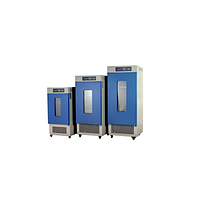
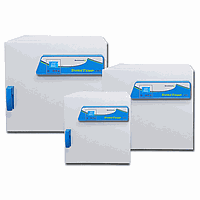
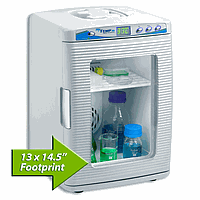
One of the first things buyers usually compare is chamber volume. Smaller chambers can be useful when bench space is limited or when only modest sample loads are needed, while larger chambers are better suited to routine batch work and multi-shelf storage. In this category, example capacities range from compact 25 L units up to larger models around 150 L.
The second key factor is the operating range and control performance. Several featured JEIOtech models work from ambient +5 to 80℃, which fits many general laboratory incubation tasks. Beyond the nominal range, buyers should also pay attention to fluctuation, variation at common working temperatures such as 37℃, recovery time, shelf loading, and available interfaces for data handling.
For labs building out a broader equipment setup, it may also be useful to review related lab apparel items that support safer routine operation around heated equipment.
Representative incubator models in this category
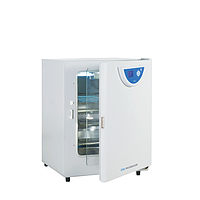
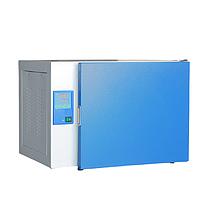
The category includes several JEIOtech incubator models that illustrate how capacity and control features scale across different laboratory needs. For compact applications, the JEIOtech IB4-03AV and JEIOTECH IB4-03V provide 25 L chamber volume, making them suitable where space efficiency matters but controlled incubation is still required.
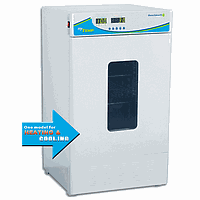
For mid-size use, the JEIOtech IB4-05AV and JEIOTECH IB4-05V offer 60 L capacity, while larger workflows may benefit from the JEIOtech IB4-10AV, JEIOTECH IB4-10V, or the 150 L class represented by JEIOtech IB4-15AV and JEIOTECH IB4-15V. Across these examples, useful practical features include TFT color displays, USB-B and RS-232 communication options, stored event records, and data export support in CSV format.
Some variants emphasize more advanced control visibility through larger displays and graph-based monitoring, while others focus on straightforward daily operation. This gives buyers a choice between simpler standard incubation and models with expanded usability for documentation, repeatability, and process monitoring.
Understanding performance beyond temperature range
Many purchasing decisions focus too heavily on the headline temperature range, but daily performance depends on more than that. For example, fluctuation and variation at 37℃ can influence how evenly conditions are maintained across shelves and over time. That becomes important when multiple containers are incubated simultaneously or when methods require tighter thermal consistency.
Recovery time is another practical specification. Each time the door is opened, chamber temperature is disturbed. Faster recovery helps reduce the impact on samples and can improve workflow efficiency in busy labs. Models in this category show recovery performance that supports regular access while maintaining controlled conditions.
It is also worth considering shelf configuration and load capacity. Standard and maximum shelf counts, along with per-shelf loading limits, affect how efficiently the chamber can be organized. In real use, that can matter as much as total chamber volume, especially for flasks, bottles, sample trays, or stacked containers.
Accessories and system compatibility
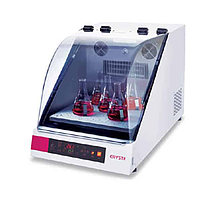
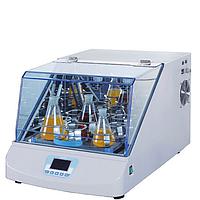
Not every item in an incubator category is a standalone chamber. Accessories can play a critical role in configuring the equipment for actual work. A good example is the JEIOTECH AAA23553 Flask clamp (For 500ml), a stainless steel clamp designed for use with an incubated shaker setup and sized for 500 ml Erlenmeyer flasks.
This kind of accessory is relevant when incubation is part of a broader motion-and-temperature workflow rather than static storage alone. It also highlights an important purchasing point: the best solution is not always just the incubator cabinet itself, but the surrounding ecosystem of shelves, holders, clamps, and communication features that support the intended application.
Manufacturers commonly considered for laboratory incubators
Laboratories often compare multiple brands before standardizing equipment. In addition to JEIOtech models featured in the representative products above, buyers in this category may also review incubator offerings from Binder, ESCO, MEMMERT, Yamato, Cole parmer, and other established laboratory equipment manufacturers listed on the site.
Different manufacturers may appeal for different reasons, such as control interface preference, chamber format, documentation features, or compatibility with existing lab standards. For organizations purchasing across several equipment groups, it can be useful to evaluate not only incubators themselves but also the wider brand ecosystem available through the supplier.
If your process includes sample preparation or support handling around the incubation area, related items such as laboratory carts and trolleys can also help improve workflow and equipment movement.
How to choose the right incubator for your lab
A practical way to narrow down options is to start with application type, required chamber size, and expected daily usage. Small research benches may prefer a 25 L or 60 L unit for routine sample incubation, while QC labs or shared facilities may need 111 L, 114 L, 146 L, or 150 L chambers to handle more samples in parallel.
Next, compare the level of control and traceability you need. If your lab values on-screen graphing, recent event records, USB data storage, and communication interfaces, models with enhanced display and data features may be the better fit. If the priority is straightforward temperature incubation with reliable performance, a more standard configuration may be sufficient.
Finally, think about how the incubator will be used over the long term. Bench space, door-opening frequency, shelf arrangement, electrical requirements, and compatibility with accessories should all be part of the decision. Looking at these factors together usually leads to a better match than choosing by capacity alone.
Final thoughts
An incubator is a core laboratory tool for maintaining controlled thermal conditions across a wide range of applications. Whether you need a compact chamber for routine tasks or a larger unit with expanded monitoring and data functions, the right choice depends on balancing capacity, stability, recovery, usability, and workflow fit.
Browse the models in this category to compare available options and identify the configuration that best supports your laboratory process. A carefully selected laboratory incubator can improve consistency, simplify daily operation, and provide a more reliable foundation for ongoing testing and research work.
Get exclusive volume discounts, bulk pricing updates, and new product alerts delivered directly to your inbox.
By subscribing, you agree to our Terms of Service and Privacy Policy.
Direct access to our certified experts