Oil Heater
Stable temperature control is essential in many oil handling and preparation processes. Whether the goal is to improve flow, prepare samples for testing, support filtration, or condition industrial oils before further treatment, the right oil heater helps maintain process consistency while reducing delays caused by high viscosity or uneven heating.
On this page, you can explore equipment designed for controlled oil heating in technical and industrial environments. This category is especially relevant for users working with lubricating oils, transformer oils, and related petroleum-based fluids where temperature directly affects pumping behavior, treatment efficiency, and downstream measurement accuracy.
Why oil heating matters in industrial oil handling
Many oils become significantly more difficult to transfer, filter, or process at lower temperatures. As viscosity rises, pumps work harder, flow rates drop, and operations such as circulation or preparation for testing can take longer than expected. A dedicated heating system helps bring the fluid into a more workable temperature range without relying on improvised methods.
In practical terms, controlled heating supports more stable process conditions. This is useful in maintenance workshops, power sector applications, oil treatment systems, and laboratory-related environments where oils may need conditioning before analysis or before moving into adjacent processes such as drying or purification.
Typical equipment found in this category
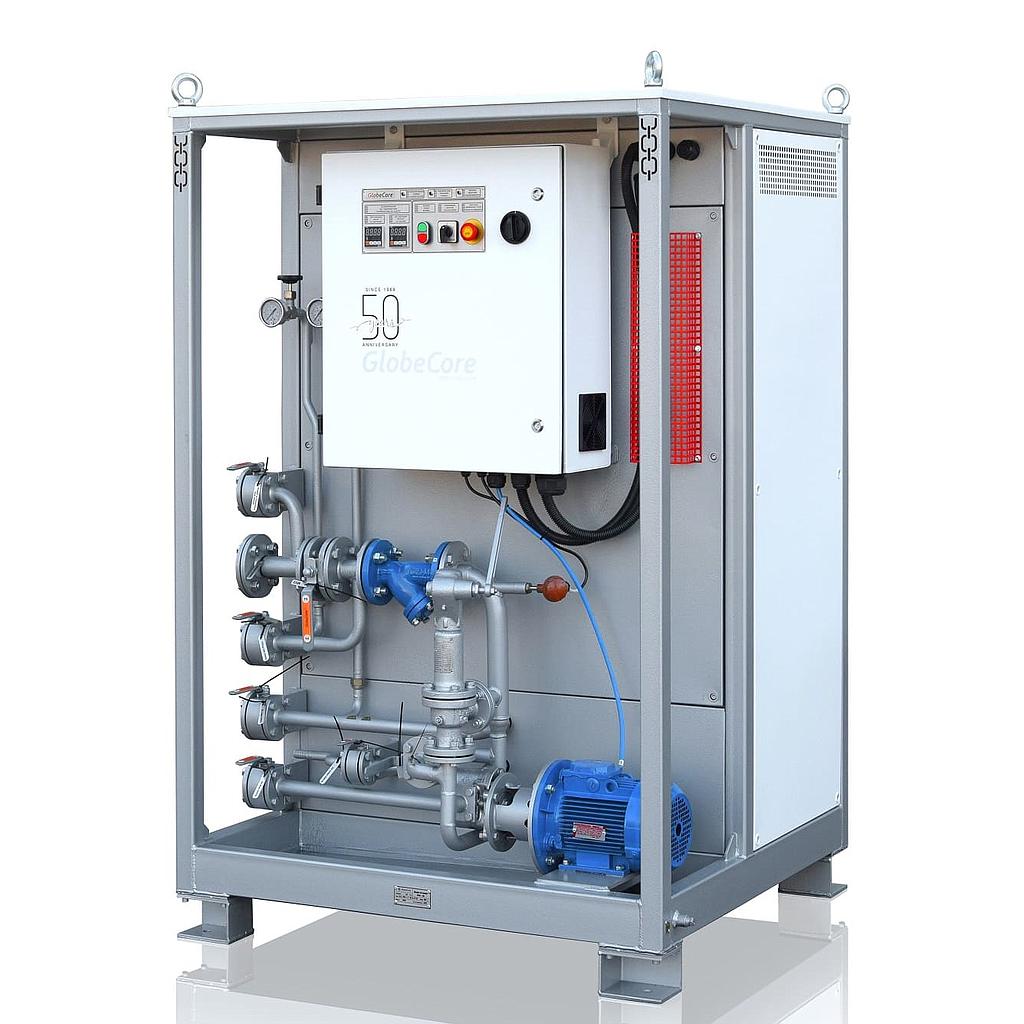
This category includes continuous oil heating solutions and low-frequency heating equipment intended for demanding technical applications. Rather than acting as a simple warming accessory, these systems are part of a broader fluid handling workflow where oil temperature, flow, and pressure need to stay within an appropriate operating window.
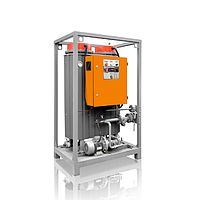
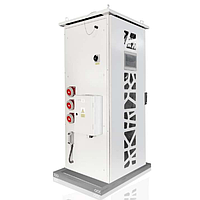
Representative examples include the GlobeCore PPM-18, PPM-50, and PPM-70 continuous oil heaters, which illustrate different throughput and pressure ranges for ongoing operation. The GlobeCore LFD Low Frequency Heating Device highlights another approach, using low-frequency output for heating-related tasks where controlled electrical parameters are important to the application.
Application scenarios for oil heaters
Oil heaters are commonly selected when operators need to improve fluid mobility before transfer, circulation, or treatment. Heating can make heavy or temperature-sensitive oils easier to pump and can support more reliable performance in systems where cold oil would otherwise slow the process or reduce efficiency.
They are also relevant in workflows tied to petroleum and lubricating oil analysis. Before certain procedures, the sample or process fluid may need to reach a suitable temperature for preparation or handling. In these environments, oil heating often works alongside equipment used for fuel and oil testing or with instruments such as a flash tester when thermal behavior and handling characteristics are part of the broader workflow.
How to choose the right oil heater
Selecting an oil heater usually starts with the process itself rather than with model names alone. Key considerations include required flow rate, expected operating pressure, power availability, and the physical characteristics of the oil being handled. If the heater will be integrated into a continuous process, throughput and thermal stability become especially important.
It is also useful to check environmental and installation requirements. Factors such as ambient temperature, electrical supply flexibility, footprint, and enclosure protection can affect suitability in industrial settings. For users comparing options from GlobeCore, the available models in this category show how capacity and pressure can vary depending on the intended duty.
Where moisture control is also part of the process, heating may need to be considered together with downstream conditioning equipment. In such cases, users may also review related solutions like an oil dryer to build a more complete treatment line.
Continuous oil heaters versus low-frequency heating devices
Continuous oil heaters are generally suited to fluid processing lines where oil must move through the system while being heated. They are often evaluated by throughput, discharge pressure, and power consumption, making them a practical choice for ongoing industrial treatment or preparation tasks.
Low-frequency heating devices fit a different operating logic. Instead of focusing only on inline flow, they are used in applications where electrically controlled low-frequency output is central to the heating process. The choice between these two approaches depends on how the oil is being handled, what stage of the process requires heat, and whether the system is batch-oriented or continuous.
Examples from the current product range
The GlobeCore PPM-18 is positioned for applications with more moderate capacity requirements, while the PPM-50 and PPM-70 represent higher-capacity continuous oil heating options within the same general equipment family. This gives buyers a useful reference point when matching process demand to available heater size and operating conditions.
The GlobeCore LFD Low Frequency Heating Device stands out for projects that require a different electrical heating approach. Together, these products show that the category covers more than one heating method, which is helpful for users comparing process integration options rather than looking for a single generic heater design.
Where oil heaters fit in a broader maintenance and testing workflow
Oil heating is often only one step in a larger chain of preparation, treatment, and verification. Depending on the application, heated oil may then be filtered, dried, tested, or transferred to another system for continued processing. Understanding that broader context can make equipment selection more accurate and more cost-effective over time.
For example, operations dealing with petroleum products may combine heating with drying, sample preparation, and test procedures using dedicated laboratory or process equipment. In these situations, choosing an oil heater that fits the surrounding workflow is usually more important than focusing on one performance figure in isolation.
Find an oil heater that matches your process
This category is intended for buyers who need a practical way to heat oils under controlled conditions in industrial or laboratory-related environments. By comparing the heating method, flow characteristics, pressure range, and installation needs, it becomes easier to narrow down the right solution for your application.
If your process involves fluid preparation, treatment, or testing, a suitable oil heater can improve handling efficiency and help create more repeatable operating conditions. Browse the available models to identify the equipment that best fits your oil type, process layout, and performance requirements.
Get exclusive volume discounts, bulk pricing updates, and new product alerts delivered directly to your inbox.
By subscribing, you agree to our Terms of Service and Privacy Policy.
Direct access to our certified experts