Petrol and Lubricating Oils Measurement
Accurate testing of fuels, base oils, lubricants, and related petroleum products is essential when product quality, process safety, and standards compliance all depend on reliable laboratory data. In refinery labs, quality control rooms, research facilities, and industrial maintenance programs, the right analytical instruments help teams verify flash point, viscosity behavior, distillation characteristics, penetration properties, and signs of oil degradation before those results affect operations.
Petrol and Lubricating Oils Measurement brings together laboratory equipment used for routine analysis and more specialized petroleum testing workflows. This category is relevant for users comparing instruments for fuel characterization, lubricant condition assessment, and standardized testing in line with common laboratory practice.
Scope of testing in petroleum and lubricant laboratories
Oil and fuel analysis rarely depends on a single parameter. A complete test workflow may include flash point testing for safe handling, viscosity evaluation for flow behavior, distillation analysis for volatility profiling, and condition monitoring for contamination or oxidation trends. The instruments in this category support those needs across a broad range of liquid petroleum products and lubricating oils.
In practice, laboratories may serve different goals at the same time: incoming material inspection, formulation development, batch release, troubleshooting, or used-oil monitoring. That is why this category spans both classical bench-top analyzers and more application-specific devices, from flash point testers to viscosity sensors and FTIR-based oil analysis systems.
Key instrument groups commonly selected for this category
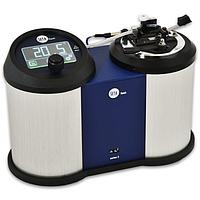
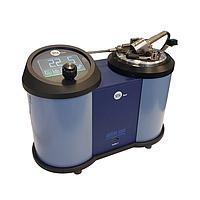
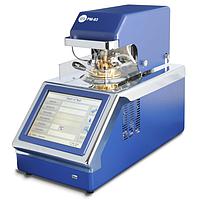
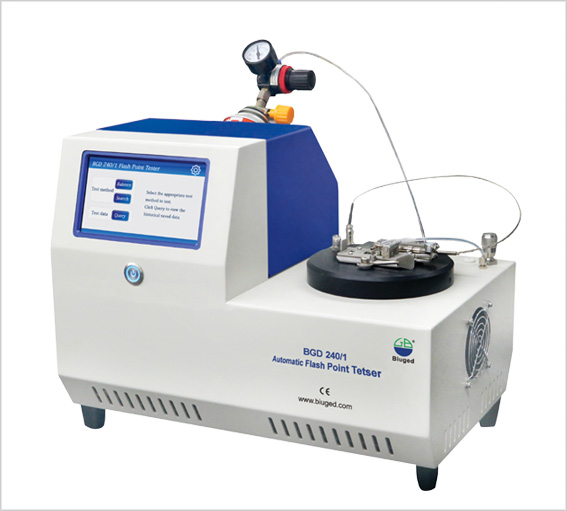
A major part of this product area is dedicated to flash point determination. Depending on the method and sample characteristics, labs may evaluate closed-cup or open-cup techniques using systems such as the Anton Paar ABA 300, ABA 500, PMA 300, PMA 500, TAG 300, TAG 500, or the Anton Paar CLA 5 Cleveland Flash & Fire Point Tester. These instruments are used where ignition behavior and safe temperature handling are important test outcomes.
Another important segment covers distillation and physical property analysis. The Anton Paar Diana 300 and Diana 700 Atmospheric Distillation Analyzer support laboratories that need controlled distillation testing, while the Anton Paar PNR 12 Penetrometer is relevant for penetration-based evaluation of softer petroleum-derived materials. For applications focused on condition monitoring rather than fresh-product QC, the Anton Paar Lyza 7000 Used Oil Package FTIR Oil Analysis helps assess chemical changes in used oils.
For process-oriented viscosity monitoring, the Hydramotion VISCOJET Fuel Oil Viscosity Sensor illustrates how some users may need continuous or near-real-time viscosity information as part of fuel handling and combustion control. If your work is more specifically focused on flow properties, you may also want to review related solutions in oil viscosity measurement equipment.
How to choose the right petroleum testing equipment
Selection usually starts with the test method, sample type, and temperature range. Flash point instruments, for example, are not interchangeable in every workflow because Abel, Pensky-Martens, TAG, and Cleveland methods serve different standards and sample conditions. The expected sample volatility, required cooling or heating behavior, ignition method, and throughput requirements all affect which platform is the better fit.
It is also important to consider the surrounding laboratory workflow. Features such as automated temperature sensing, barometric pressure correction, digital interfaces, memory capacity, and safety functions can reduce operator variability and improve traceability. In laboratories where multiple technicians share the same instrument, usability and data handling can be almost as important as the core measurement principle.
Applications across fuels, lubricants, and used oil analysis
This category supports a wide application range, from gasoline and light fuel testing to lubricating oils, industrial fluids, and condition monitoring programs. Flash point and distillation tests are commonly associated with fuel quality and classification, while penetration and viscosity-related measurements are often linked to product consistency, formulation control, and service performance.
Used-oil analysis adds another layer of value by helping maintenance teams understand lubricant aging, contamination, and chemical breakdown. Instruments such as the Lyza 7000 Used Oil Package FTIR Oil Analysis are especially relevant when laboratories need faster insight into oil condition without relying on a single physical property alone. For organizations that also handle broader lubricant quality checks, related options can be explored in lubricating oils testing equipment.
Featured manufacturers and example solutions
Anton Paar is strongly represented in this category with instruments covering multiple petroleum testing tasks. Its portfolio in the provided range includes flash point testers for different standardized methods, atmospheric distillation analyzers, a penetrometer, and FTIR-based oil analysis equipment. This makes it a practical reference point for laboratories looking for consistency across several test benches.
Hydramotion adds a different perspective with the VISCOJET Fuel Oil Viscosity Sensor, which is especially relevant when viscosity must be monitored as a process variable rather than measured only in periodic lab checks. Together, these examples show that the category is not limited to one testing philosophy; it supports both laboratory characterization and operational monitoring, depending on the application.
Why automation and data handling matter in oil measurement
Modern petroleum laboratories often need more than a reading on the display. They need repeatable setup, user management, stored test methods, exportable data, and connectivity to plant or laboratory systems. Instruments in this category may include USB, LAN, or other communication options that support documentation, result review, and integration into broader quality systems.
Automation is also closely linked to safety and consistency. In thermal test methods such as flash point or distillation, controlled heating, automatic detection, pressure correction, and built-in protective functions can help reduce variation between runs. That is particularly valuable for labs running frequent tests or managing regulated procedures with strict reporting expectations.
Building a more complete petroleum laboratory setup
Choosing one instrument is often only the first step. Many laboratories build a testing setup progressively, starting with the most critical method and then adding complementary capabilities such as flash point, distillation, penetration, and oil condition analysis. This category is therefore useful not only for direct product selection, but also for planning a more complete petroleum and lubricant testing workflow.
Where sample preparation, accessory handling, or lab logistics are part of daily work, supporting equipment can also improve efficiency. For example, general laboratory handling tools such as carts and trolleys may help in larger facilities where samples, glassware, or instruments need to be moved safely between work areas.
Final considerations before purchase
When comparing equipment in this category, the most practical approach is to match the instrument to the required method, sample matrix, operating range, and reporting workflow. A lab focused on low-temperature flash point testing will evaluate different criteria than a team responsible for distillation analysis or online viscosity monitoring. Looking at the full testing context usually leads to a better long-term choice than comparing specifications in isolation.
Whether the goal is routine QC, standards-based fuel analysis, lubricant development, or used-oil monitoring, this category provides a focused starting point for selecting petroleum testing equipment with the right balance of method compatibility, automation, and laboratory practicality.
Get exclusive volume discounts, bulk pricing updates, and new product alerts delivered directly to your inbox.
By subscribing, you agree to our Terms of Service and Privacy Policy.
Direct access to our certified experts