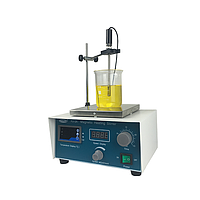
Stirrer
Consistent mixing is a basic but critical step in many laboratory workflows, from sample preparation and reagent dissolution to pH measurement and routine quality control. The right stirrer helps maintain repeatable conditions, reduces manual handling, and supports safer operation when working with sensitive or volatile liquids.
Within laboratory environments, magnetic stirrers are especially valued for their compact footprint, simple operation, and clean mixing method. This category brings together benchtop units suited to small-volume laboratory tasks, higher-capacity models for more demanding applications, and multi-position systems for parallel sample processing.
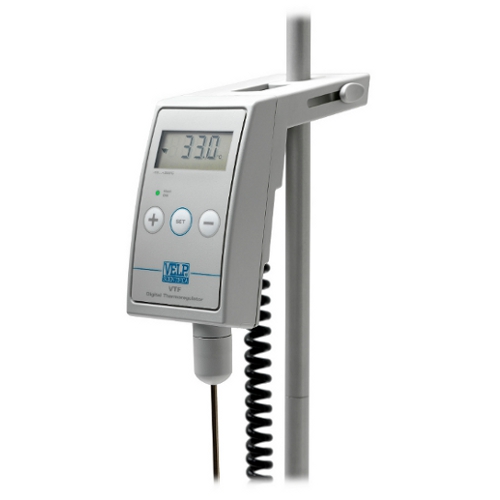
Where stirrers are commonly used
In research, testing, and production support labs, a stirrer is often used whenever a liquid must be kept homogeneous during measurement or preparation. Typical tasks include dissolving powders, blending reagents, preparing buffer solutions, and maintaining sample uniformity during analysis.
Magnetic stirring is particularly practical for low- to medium-viscosity liquids in flasks, beakers, or small vessels. For laboratories that also handle more aggressive thermal processes, related equipment such as burners and torches may be part of the wider workflow, but magnetic stirring remains the preferred option when controlled, contact-free agitation is needed at the bench.
How a magnetic stirrer works
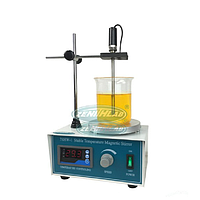
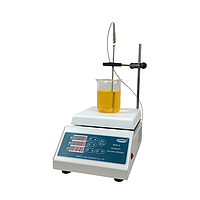
A magnetic stirrer creates a rotating magnetic field beneath the top plate. When a magnetic stir bar is placed inside the container, that field drives the bar to rotate, producing fluid movement and helping the contents mix evenly without inserting a mechanical shaft into the liquid.
This operating principle offers several practical advantages. It supports easy cleaning, helps reduce contamination risk, and is well suited to routine laboratory use where compact size and straightforward speed adjustment matter. Compared with more mechanically intensive mixing methods, magnetic stirring is often the simplest solution for everyday sample handling.
Key selection points for laboratory use
Choosing the right model starts with the actual sample volume and the number of vessels to be processed. Small benchtop units are suitable for routine sample preparation, while larger platforms can support bigger containers or heavier loads. If multiple samples must be stirred at once, a multi-position layout can improve throughput and bench efficiency.
Speed range is another important factor. In this category, representative products cover broad operating ranges such as 150 to 2500 rpm or 200 to 2200 rpm, allowing users to work with both gentle mixing and faster agitation depending on the liquid behavior. Buyers should also review the top plate material, load capacity, protection class, and whether timer or heating functions are necessary for the intended workflow.
Representative product types in this category
For compact laboratory tasks, the JEIOtech MS-12BB magnetic stirrer represents the small-format end of the range. It is designed for modest working volumes and a compact benchtop footprint, making it suitable for routine preparation in educational, analytical, or general laboratory settings. Larger single-position options such as the JEIOtech MS-22BB extend the usable capacity while retaining the familiar magnetic stirring format.
Where higher mixing volume or more advanced operating control is required, the PCE MSR 450 is a useful example. It supports a higher maximum stirring volume and includes timer functionality, which can help standardize repetitive procedures. For parallel processing, the PCE MSR 415 and PCE MSR 405 illustrate the role of multi-position stirrers, enabling several samples to be processed simultaneously and improving productivity in batch-oriented routines.
For very small vessels and light-duty laboratory work, compact mini stirrers also have a place. Models such as the HANNA HI181 series are relevant when users need simple mixing for small volumes, often in testing or measurement setups where a small footprint is an advantage.
Manufacturers commonly associated with this range
This category includes products and brand options relevant to different laboratory preferences and budgets. Among the notable names available are JEIOtech, HANNA, PCE, IKA, Thermo, Cole-Parmer, BYK, YSI, and SI ANALYTICS. In practical purchasing terms, brand choice often comes down to required capacity, control features, material preferences, and compatibility with the lab's existing procedures.
For example, JEIOtech products in this category reflect a strong focus on compact magnetic stirring platforms with broad speed control, while PCE examples cover both single-position and multi-position use cases. This gives buyers flexibility when comparing small routine stirrers with systems intended for parallel sample handling.
When to choose a compact unit, a larger platform, or a multi-position system
A compact stirrer is usually the right choice when the task involves one vessel at a time, limited sample volume, and standard daily bench work. This format is common in teaching labs, water testing, chemical preparation, and simple analytical support where ease of use matters more than high throughput.
A larger platform becomes more suitable when vessel size increases or when a heavier working load is expected on the plate. Meanwhile, a multi-position system is the better fit for laboratories running multiple samples under similar conditions, such as comparative tests, repeated formulations, or routine quality control batches. If a process demands stronger mechanical mixing for more difficult materials, labs may also compare magnetic units with other mixing approaches such as a laboratory blender for broader sample preparation needs.
Practical use and handling considerations
For reliable performance, the stir bar size should match the vessel and liquid volume. Excessive speed can cause instability, splashing, or loss of magnetic coupling, while insufficient speed may result in poor mixing. A stable vessel base and proper centering on the top plate are simple but important details for repeatable operation.
It is also good practice to consider environmental conditions, cleaning requirements, and the chemical compatibility of the top plate and housing materials. In routine lab work, these details have a direct impact on service life and user convenience, especially where instruments are used frequently throughout the day.
Finding the right stirrer for your workflow
The most suitable choice depends less on product naming and more on the actual lab task: sample volume, number of vessels, required speed control, need for timing or heating, and available bench space. Compact magnetic stirrers are ideal for everyday mixing, while larger or multi-position units support higher throughput and more standardized sample preparation.
By comparing capacity, operating range, platform size, and workflow fit, laboratories can narrow this category down to equipment that genuinely supports efficient and repeatable mixing. Whether the need is a small unit for routine bench work or a multi-position setup for parallel processing, this stirrer range provides practical options for modern laboratory operations.
Get exclusive volume discounts, bulk pricing updates, and new product alerts delivered directly to your inbox.
By subscribing, you agree to our Terms of Service and Privacy Policy.
Direct access to our certified experts