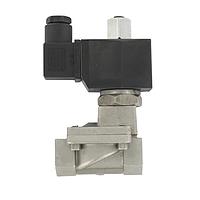
Flow Valves
Precise control of air, gas, and liquid movement is essential in process systems, machinery, and plant utilities. When a line needs to start, stop, divert, or regulate media reliably, flow valves become a key part of the overall flow control strategy. On this page, you can explore valve options used in applications ranging from dust collection pulse systems to pneumatic actuation and compact shut-off or modulation duties.
In many installations, valve selection affects more than simple on/off control. Media compatibility, pressure range, port style, enclosure protection, electrical supply, and mounting requirements all influence long-term performance. This category is intended for buyers and engineers who need practical valve choices for industrial flow systems, whether as standalone components or as part of a broader flow valve solution.
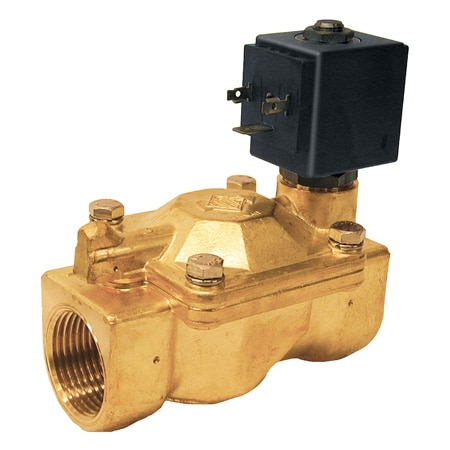
Where flow valves fit in industrial systems
Flow valves are commonly used wherever media must be controlled with repeatable response. Depending on the application, the valve may handle compressed air for pneumatic automation, pulse cleaning in dust collection equipment, or shut-off and metering functions for compatible gases and liquids. In each case, the valve helps maintain process stability while supporting safe and efficient equipment operation.
These products also sit within a wider instrumentation and control ecosystem. In systems where measurement and control work together, valves are often paired with devices such as indicating flow meters or other flow instrumentation to verify performance in the line. That makes valve choice especially important in applications where responsiveness and repeatability matter.
Typical valve types found in this category
This category includes several valve styles suited to different operating needs. Dust collection valves are designed for pulse-jet cleaning systems and are often selected for their ability to deliver quick bursts of air in collector installations. Pneumatic solenoid valves are typically used to control air to actuators and automation components, while compact solenoid shut-off valves may be used in lower-flow gas or liquid circuits.
Examples from the current range include Dwyer DCS and RDCS springless dust collection valves for DCT1000 and DCT500 systems, the Dwyer SVP series for gas/liquid modulation and shut-off, and the Dwyer SN series for pneumatic service. These are not interchangeable by default, but they illustrate how valve construction and operating method vary depending on the job.
Key selection factors before you buy
The first step is to match the valve to the media and the function required. Some valves in this category are intended for air or compatible gases, while others are designed for pneumatic circuits or for gases and liquids in compact process connections. Media compatibility, operating pressure, and temperature limits should always be reviewed before specifying a part.
Connection style is another practical consideration. The listed products include NPT female ports as well as elastomer compression coupling styles, with sizes such as 1/4 in, 3/4 in, 1 in, and 1 1/2 in. Electrical requirements also vary, including 24 Vdc, 24 Vac, 110 Vac, and 220 Vac versions, along with integrated-coil and remote-coil configurations. For users comparing broader control hardware, related options in flow measurement accessories may also be useful when completing an installation.
Examples from Dwyer for different duties
Dwyer is a prominent name in this category, particularly for industrial flow and process control components. Within the available selection, the DCS and RDCS models are geared toward dust collection applications and include 90° angle body designs, multiple port options, and enclosure ratings such as IP65 and NEMA Type 4X. Models such as DCS35C1D and RDCS35T illustrate higher-flow configurations within that family, while DCS25C1D and RDCS25T represent smaller connection sizes.
For more compact control tasks, the SVP-3 and SVP-4 provide normally closed solenoid valve operation for gases and liquids with 0 to 24 Vdc supply. In pneumatic automation, the SN-5B, SN-5C, and SN-5E are examples of 5/2 solenoid valves with manual override and 1/4 in NPT female connections. Together, these product examples show how one manufacturer can support very different flow control needs across industrial environments.
Understanding integrated coil vs. remote coil configurations
One useful distinction in this category is the difference between integrated coil and remote coil valve designs. Integrated-coil versions combine the actuation element directly with the valve body, which can simplify installation and part selection in many standard setups. Remote-coil variants may be preferred where service access, layout constraints, or specific control arrangements make a separated actuation format more practical.
This distinction is especially visible in the dust collection valve range, where DCS models use integrated coils and RDCS models use remote coils. When reviewing alternatives, it is worth considering enclosure needs, wiring approach, and how the valve will be mounted within the collector or manifold assembly.
How flow valves relate to measurement and system optimization
Valve performance is often evaluated together with actual flow conditions in the system. If your process requires confirmation of line performance, it can be helpful to pair control components with appropriate measurement technology such as electromagnetic flow meters where the application and media are suitable. This helps teams verify whether the selected valve arrangement is delivering the intended response.
In other systems, valve sizing and response may be checked alongside portable diagnostics, local indicators, or maintenance procedures. The important point is that a valve should not be chosen in isolation. A well-matched valve supports stable process behavior, easier troubleshooting, and more predictable maintenance intervals over time.
Choosing the right option for your application
If you are selecting for a dust collector, focus first on pulse valve format, connection size, coil style, and operating pressure range. If the application is pneumatic automation, valve action, mounting orientation, and voltage compatibility will usually be the main decision points. For compact shut-off or modulation duties involving gases or liquids, connection size, wetted materials, and control signal requirements become more important.
It is also worth checking environmental protection ratings when the valve will be exposed to dust, washdown risk, or outdoor conditions. Products in this category include models with CE compliance and enclosure ratings such as IP65 and NEMA Type 4X, which can be relevant in demanding industrial settings. A careful review of the operating context usually leads to a better fit than choosing by port size alone.
Final considerations
A good valve selection balances process requirements, installation constraints, and long-term serviceability. This Flow Valves category brings together options for pulse cleaning, pneumatic control, and compact solenoid operation so buyers can compare practical solutions in one place.
Whether you are replacing an existing valve or specifying components for a new system, start with media, pressure, connection, and actuation requirements. From there, it becomes much easier to narrow the range and choose a product that fits the application with fewer compromises.
Get exclusive volume discounts, bulk pricing updates, and new product alerts delivered directly to your inbox.
By subscribing, you agree to our Terms of Service and Privacy Policy.
Direct access to our certified experts