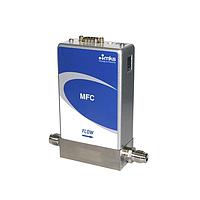
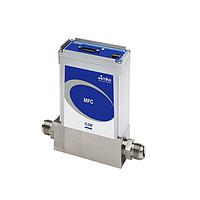
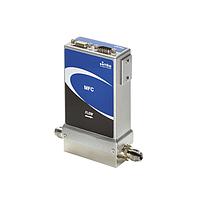
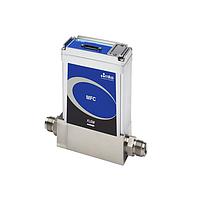
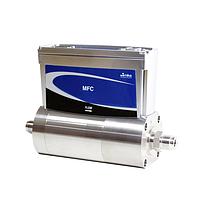
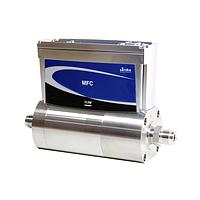
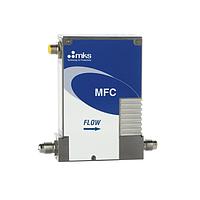
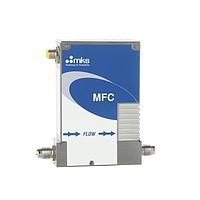
Mass Flow Controllers & Meters
Precise gas delivery is critical in laboratories, OEM skids, analytical systems, and industrial process lines where flow stability directly affects product quality and repeatability. When applications require more than simple indication, Mass Flow Controllers & Meters help measure and, in many cases, regulate gas flow with a higher level of control than basic mechanical devices.
This category brings together instruments used for monitoring and controlling gas flow across low-flow and higher-flow ranges. Whether the priority is compact integration, digital communication, or stable control for multiple compatible gases, these devices support process engineers and system builders who need dependable flow performance in real operating conditions.
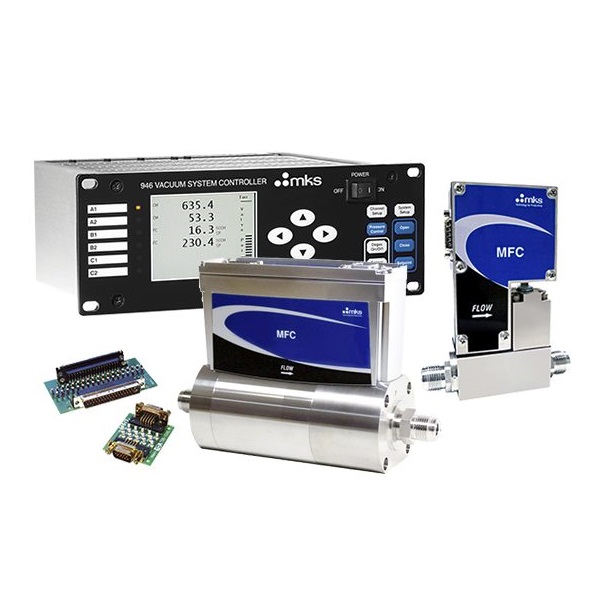
Where mass flow devices fit in a flow measurement system
Unlike general-purpose flow instruments that mainly display line conditions, mass flow measurement is often selected when the application depends on accurate gas dosing, blending, purging, or consumption monitoring. In many systems, a mass flow meter is used to measure flow, while a mass flow controller combines measurement with an active control element to maintain a target setpoint.
This makes the category especially relevant for users comparing it with other technologies such as indicating flow meters or application-specific valve assemblies. If your process needs active regulation rather than simple local indication, a controller-based solution is typically the more appropriate path.
Controllers and meters for gas applications
Within this category, the main distinction is between instruments that only measure and instruments that both measure and control. A mass flow controller is generally used when a target gas flow must be maintained automatically, while a mass flow meter is better suited for verification, trending, or feedback into a wider control system.
Several featured products in this range illustrate that difference clearly. The Dwyer DMF series, including models such as DMF-41407, DMF-41409, DMF-41431, DMF-41433, and DMF-41842, is designed for digital gas flow control across a wide spread of capacities, from SCCM ranges up to tens or hundreds of liters per minute. For users focused on digital gas measurement with integrated control functions and communication options, the Dwyer DFC series also provides useful alternatives across low-flow and high-flow formats.
Typical selection criteria
Choosing the right device starts with the required flow range. In the products shown here, available capacities span from 50 SCCM and 100 SCCM up to 1 l/min, 2 l/min, 5 l/min, 10 l/min, 30 l/min, 50 l/min, and 100 l/min. Matching normal operating flow to the instrument range is important because control stability and usable resolution depend heavily on sizing.
Connection size and integration details also matter. In this category, examples include 1/8 in, 1/4 in, and 3/8 in compression fitting connections, which can affect both installation layout and pressure drop considerations. Electrical and communication requirements should also be reviewed early, especially where analog outputs, RS232, or RS485 must connect to PLCs, data loggers, or supervisory systems.
Materials, gas compatibility, and installation considerations
For many gas handling applications, wetted materials are a key part of device selection. Several of the listed products use 316 stainless steel in wetted construction, which is commonly preferred where corrosion resistance, cleanliness, and compatibility are important. The context here also shows compatibility with gases such as air, nitrogen, argon, helium, carbon dioxide, hydrogen, and oxygen on selected models, though final suitability should always be checked against the specific gas and process conditions.
Pressure limits, particle tolerance, and operating temperature should be reviewed alongside the flow range. A controller that fits the target capacity may still be unsuitable if line pressure, contamination level, or ambient conditions fall outside its intended operating envelope. In gas systems with upstream conditioning, the use of suitable flow measurement accessories can also help improve installation quality and long-term stability.
Examples from the featured range
The featured Dwyer devices show how this category covers both fine control and broader process flow duties. Models such as the DMF-41403, DMF-41404, and DMF-41405 are suitable examples for lower flow capacities in SCCM ranges, while DMF-41407 through DMF-41842 illustrate a progression into liter-per-minute capacities for larger gas delivery requirements.
For applications that need fast response, digital outputs, and traceable measurement-oriented performance, the DFC-39010-V-ALA2, DFC-48010-V-ALA2, and DFC-56100-V-DLA2 demonstrate how digital flow controllers can support both compact and higher-flow setups. If you are comparing product families by supplier, you can also explore the broader Dwyer range for related gas flow instrumentation.
How this category compares with other flow technologies
Not every process requires a mass-based approach. For conductive liquids in process piping, electromagnetic flow meters may be a better fit. For simpler visual confirmation of flow, indicating meters can offer a more economical and straightforward option.
Mass flow devices become more relevant when gas accuracy, repeatability, and controllability are more important than a simple visual reading. In systems where the instrument must work closely with shutoff or regulation hardware, related flow valves may also be part of the overall architecture, especially in custom panels and automated skids.
Brands commonly considered in this segment
This category is often evaluated by engineers who already have supplier preferences based on system standards, communication needs, or service history. Commonly referenced manufacturers in this segment include Brooks Instrument, Dwyer, MKS, OMEGA, and Aalborg, each of which is associated with gas flow instrumentation in different application environments.
In the current featured products, Dwyer is the most visible example, with digital mass flow controllers and digital flow controllers covering multiple connection sizes and flow capacities. That makes the category useful for buyers who want to compare a familiar product family while still keeping broader manufacturer options in view for future projects.
Choosing with application intent in mind
The most practical way to narrow options is to begin with the process objective: monitoring only, closed-loop control, batch dosing, purge regulation, or gas consumption verification. From there, align the device with gas type, operating range, pressure conditions, output signal, communication interface, and mechanical connection. This usually leads to a faster and more reliable shortlist than choosing by nominal size alone.
For many B2B users, the right decision comes down to balancing control performance, integration effort, and maintenance expectations. A well-matched mass flow device can improve repeatability, simplify automation, and support more stable gas handling across both low-flow analytical setups and larger industrial systems.
When gas flow must be measured or controlled with consistency, this category offers a focused starting point for comparing instruments by function, range, and integration requirements. Review the available models carefully against your process conditions, and use adjacent flow categories where helpful to build a complete, application-ready solution.
Get exclusive volume discounts, bulk pricing updates, and new product alerts delivered directly to your inbox.
By subscribing, you agree to our Terms of Service and Privacy Policy.
Direct access to our certified experts