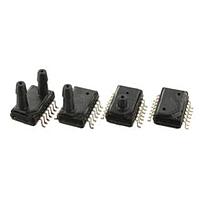
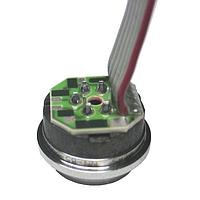
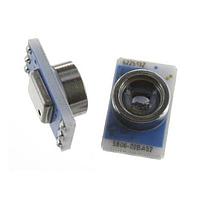
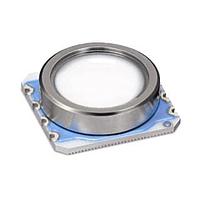
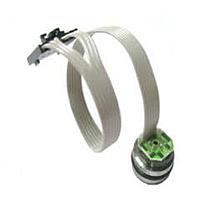
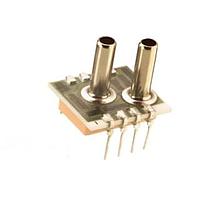
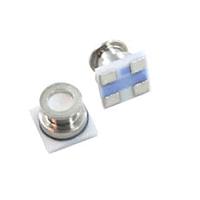
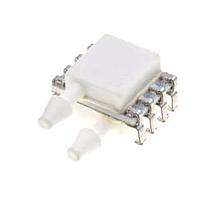
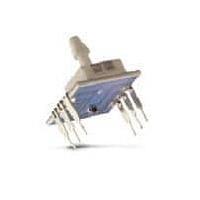
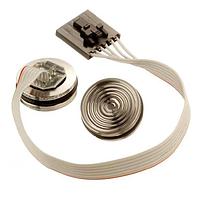
Board Mount Pressure Sensors
Compact pressure measurement is often built directly into the electronics it supports. In embedded control boards, HVAC modules, medical devices, fluid handling systems, and portable instruments, a board-level sensor helps designers capture pressure data without moving to a larger standalone transmitter. This is where Board Mount Pressure Sensors become especially practical: they combine pressure detection with a package format suited for PCB integration, helping simplify system layout and signal acquisition.

Why board mount pressure sensors matter in modern designs
Unlike bulkier field devices intended for direct industrial installation, board mount versions are selected for integration inside equipment. They are commonly used when pressure needs to be monitored as part of a larger electronic assembly, such as air flow control, pump management, leak detection, or sealed-system monitoring. Their value is not only in sensing pressure, but in supporting compact architecture, repeatable assembly, and easier electrical interfacing.
For engineers comparing sensor formats, this category sits at the intersection of pressure measurement and embedded electronics. If your application calls for a rugged external package for process environments, it may also be useful to review industrial pressure sensors. When the sensor is intended to live on the PCB and feed local control circuitry, board mount options are usually the more natural fit.
Common pressure reference types and what they mean
One of the first selection points is the pressure reference. Board mount sensors are available in absolute, gauge, and differential versions, and each serves a different measurement purpose. Absolute devices measure pressure relative to a sealed reference vacuum, which makes them suitable for altitude-related measurement, sealed chamber monitoring, and barometric compensation. Gauge types reference ambient atmospheric pressure, while differential sensors compare two pressure points directly.
This distinction has a direct impact on system behavior. For example, the Infineon SP000700780 is listed as an absolute sensor with a 40kPa to 115kPa range, while the Amphenol NPC-1220-100G-3-S is a gauge version and the Amphenol NPC-1220-005D-1-S is a differential model. If your design goal specifically centers on sealed-reference measurement, you can also explore the broader range of absolute pressure sensor and transducer options.
Package integration and signal considerations
In board-level applications, the mechanical package matters just as much as the sensing element. Designers typically look at port orientation, mounting style, electrical pinout, and how the sensor will interact with tubing, manifolds, or the enclosure. Packages such as 8-pin CDIP and 8-pin DSOF can support different assembly preferences and environmental constraints, especially where space, routing, or serviceability is limited.
Electrical output style is equally important. Some products in this category provide analog output ranges that can be read by ADC stages in a controller or monitoring circuit. A sensor such as the Infineon SP000700780, with a stated 0.1V to 4.85V output, may suit systems that need a straightforward analog interface, while other listed devices from Amphenol are chosen for specific pressure reference types and packaging needs. In practice, engineers should always match output behavior, supply conditions, and board-level signal conditioning with the intended control hardware.
Typical application areas
Board mount pressure sensors are widely used in equipment where the sensor is part of the product electronics rather than a separate field instrument. Typical examples include air and gas handling modules, medical and laboratory devices, appliance control boards, pneumatic monitoring, portable test equipment, and compact fluid systems. Their onboard format helps reduce wiring complexity and can improve response within tightly integrated systems.
Application fit also depends on media type and pressure range. Lower-range devices may be used for subtle pressure changes in airflow or low-pressure channels, while higher-range versions can support more demanding pneumatic or fluid measurement tasks. For designs focused on below-atmospheric measurement, a dedicated vacuum pressure sensor or transducer category may provide a better starting point.
Representative products in this category
The listed range shows how varied board mount solutions can be even within a single category. Several Amphenol models illustrate this clearly: the NPC-410-015A-1-N targets absolute measurement at a lower pressure span, the NPC-410-100A-1-S and NPC-410-100A-1-N extend absolute measurement to higher psi ranges, and the NPC-1220-005D-1-S addresses differential sensing. This diversity is useful for design teams that want to stay within a familiar package family while selecting a reference type and range aligned with the application.
The category also includes NPA series board mount devices such as the Amphenol NPA-730B-030D, NPA-730B-02WG, NPA-700M-10WG, NPA-730B-015G, NPA-700M-05WG, and NPA-300M-005G. These examples are best viewed as part of a broader embedded sensing ecosystem rather than interchangeable parts. Selection should be driven by pressure range, reference type, package compatibility, and how the sensor will be connected to the pneumatic path inside the equipment.
Manufacturers commonly considered
This category is often evaluated across established sensor suppliers with experience in embedded and measurement-oriented components. Amphenol is strongly represented in the current product examples, especially for board mount pressure sensor variants spanning absolute, gauge, and differential measurement needs. Infineon also appears in the category with compact pressure sensing solutions suited to PCB integration.
Depending on design priorities, buyers may also compare offerings from other recognized manufacturers shown in this ecosystem, including Honeywell, Bosch Sensortec, Bourns, EPCOS, Alps Alpine, and TE Connectivity. In B2B sourcing, supplier evaluation typically goes beyond the headline range and includes package suitability, expected production continuity, and compatibility with the broader electronics design.
How to choose the right board mount pressure sensor
A practical selection process usually starts with four questions: what pressure reference is needed, what range is required, how will the sensor connect mechanically, and what electrical output does the circuit expect? These points narrow the shortlist quickly and help avoid choosing a device that fits the spec sheet but not the assembly. It is also important to consider whether the pressure media, tubing arrangement, and enclosure design support stable and repeatable readings.
For engineering and procurement teams, a good category page should make it easier to compare product families without forcing a one-size-fits-all decision. If your project requires onboard sensing in a compact electronic assembly, this category provides a strong starting point for evaluating pressure range, package style, and reference method in a way that matches real design constraints.
Final thoughts
Choosing a board-level sensor is ultimately about system fit. The right part should align with the pressure type being measured, the PCB layout, the signal chain, and the mechanical path that brings pressure to the sensing element. By comparing products such as the Amphenol NPC and NPA series alongside options like the Infineon SP000700780, design teams can approach selection with clearer technical priorities and a more efficient path from prototype to production.
Get exclusive volume discounts, bulk pricing updates, and new product alerts delivered directly to your inbox.
By subscribing, you agree to our Terms of Service and Privacy Policy.
Direct access to our certified experts