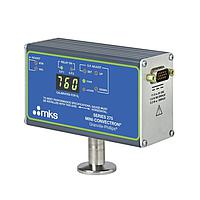
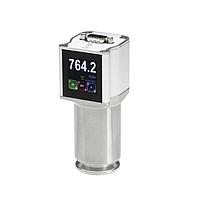
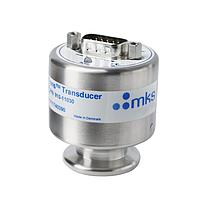
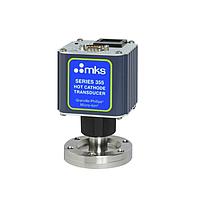
Vacuum pressure sensor, transducer
Precise vacuum measurement is critical anywhere pump-down time, process repeatability, and chamber safety matter. From semiconductor tools and analytical instruments to coating systems and laboratory vacuum setups, selecting the right sensor helps operators monitor pressure reliably across rough, medium, and deeper vacuum ranges.
Vacuum pressure sensors and transducers in this category are intended for applications that need stable output, practical electrical integration, and fitting options suited to vacuum hardware. The range shown here includes solutions for broad vacuum measurement windows as well as capacitance diaphragm gauge technologies for pressure measurement where repeatable control and signal quality are important.
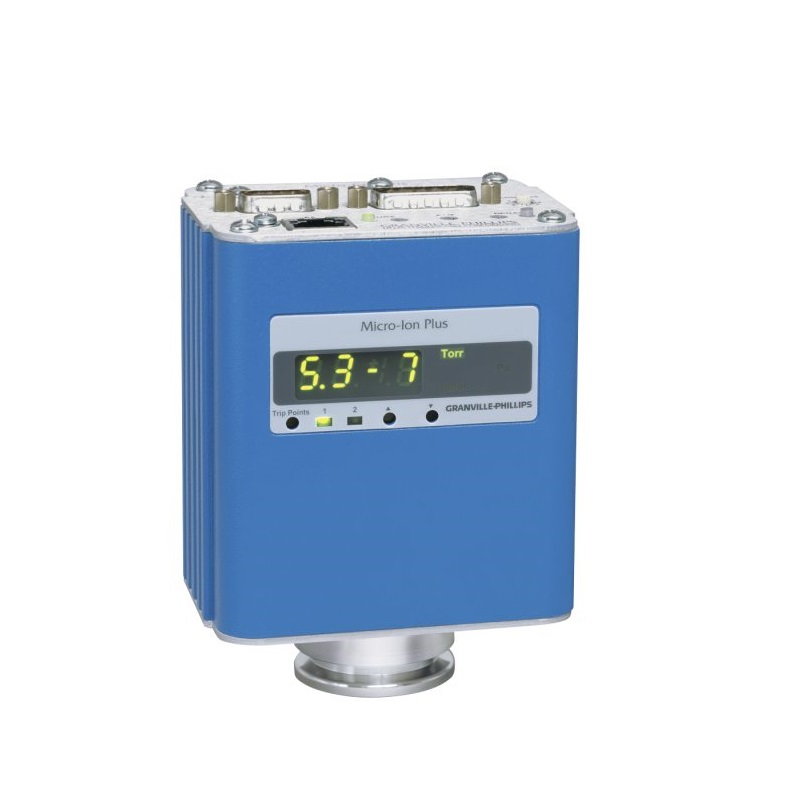
Where vacuum pressure sensors are used
Vacuum systems appear in many industrial and research environments, but the measurement challenge is rarely the same from one process to another. Leak testing, vacuum furnaces, packaging lines, deposition equipment, and laboratory chambers may each require a different combination of measurement range, response time, connection style, and output format.
In these environments, a vacuum sensor does more than display pressure. It supports process control, protects equipment during pump-down and venting, and gives maintenance teams a clearer view of system condition. If your application also involves non-vacuum measurement points elsewhere in the machine, it may be useful to compare with industrial pressure sensors for standard process pressure duties.
Common measurement principles in this category
Vacuum measurement often requires different sensing methods across different parts of the pressure range. One common approach is a combined sensor architecture that blends Pirani and piezo technologies, allowing one device to cover a very wide range without changing instruments. This is especially useful when a system transitions from low pressure toward higher pressure during startup, venting, or process cycling.
Another important approach is the capacitance diaphragm gauge, which is widely used when stable and repeatable pressure measurement is needed. Compared with broader-purpose vacuum devices, this type is often chosen for process control, calibration-related tasks, or applications that benefit from low-percentage full-scale readings and analog output suitable for control systems.
When the application requires comparison with atmospheric reference or nearby ambient monitoring, related technologies such as a barometer pressure sensor or transducer may also be relevant in the wider pressure measurement system.
Representative products and manufacturers
This category features products from Brooks Instrument and INFICON, both well known in vacuum instrumentation. The available product mix shows a practical spread of vacuum transducers and diaphragm gauge solutions for integration into industrial equipment, vacuum lines, and analytical platforms.
Examples from Brooks Instrument include the BVT100 and BVT125 series, with variants such as DN16KF, DN25KF, DN16KF extended, VCR4F, and NPT 1/8'' fittings. These models cover a wide measurement span from 7.5 × 10⁻⁷ to 1000 Torr and are offered with 9-pin or 15-pin D-sub electrical connections, making them relevant for OEM machinery and retrofit work where mechanical and electrical compatibility must be checked carefully.
Representative INFICON products in this category include the Cube CDGsci Capacitance Diaphragm Gauge and SKY CDG025D variants. These devices illustrate the diaphragm gauge side of vacuum measurement, with analog output and industrial electrical interfaces that support integration into monitoring and control architectures.
How to choose the right vacuum transducer
The first selection factor is the usable pressure range. A sensor that performs well near atmosphere may not be the right choice for lower vacuum levels, and a device optimized for deeper vacuum may not be ideal for every rough vacuum duty. For systems that move across a broad operating window, a combined Pirani/piezo design can simplify installation and reduce the need for multiple instruments.
Mechanical connection is equally important. The products listed here include common vacuum fittings such as DN16KF, DN25KF, DN16KF extended, and VCR4F, along with threaded NPT options on certain models. The right fitting depends on the chamber, line configuration, sealing method, and maintenance practices already used in your facility.
Electrical integration should also be reviewed early in the project. Several models in this category provide analog output, digital communication such as RS232 or RS485, and D-sub connection formats. If your system architecture is built around broader pressure measurement standards, you may also want to review absolute pressure sensors and transducers for adjacent use cases outside vacuum-specific duties.
Important specifications to evaluate
Accuracy should be interpreted in the context of the actual operating region, not just the headline range. In wide-range vacuum transducers, accuracy can vary across decades of pressure, so the most important question is how the device performs where your process spends most of its time. Hysteresis, temperature compensation, and response time also matter when pressure changes quickly or when measurement stability influences process quality.
Materials exposed to vacuum deserve close attention, especially in clean processes, analytical systems, or applications sensitive to outgassing and contamination. The listed products include vacuum-compatible material sets and fitting constructions intended for these environments, but the final choice should still align with your chamber design, gas compatibility, and operating conditions.
For automated systems, output resolution, update rate, relay functionality, and communication interfaces can be just as important as the core sensing element. Some models shown here support analog pressure output, digital communications, and configurable relay behavior, which can simplify alarm handling and machine interlocks.
Vacuum sensor selection by application scenario
For general-purpose vacuum equipment that spans from low pressure up toward atmospheric conditions, a versatile transducer such as the Brooks Instrument BVT100 or BVT125 may be a practical choice. These devices are suited to applications where one instrument needs to cover a broad measurement window while still fitting into standard vacuum hardware layouts.
For control-oriented processes where stable full-scale measurement behavior is a priority, capacitance diaphragm gauges such as the INFICON Cube CDGsci or SKY CDG025D models may be more appropriate. This type of device is often considered when the pressure band is more defined and the measurement signal plays a direct role in process control or system verification.
If your broader design also includes compact electronics-level sensing, this category can be complemented by board mount pressure sensors for embedded assemblies, while keeping vacuum-specific measurement on dedicated transducers where chamber conditions require it.
Practical buying considerations for OEM and maintenance teams
For OEM projects, the most common source of delays is mismatch between the selected sensor and the actual installation constraints. Before ordering, confirm fitting standard, connector type, output requirements, available supply voltage, and the pressure range that the system will really experience during operation. A part that looks similar on paper can still differ in port style or interface details that affect commissioning.
For maintenance and replacement purchasing, it helps to compare not only the model family but also the exact connection and mounting variant. In this category, products may share a common sensing concept while differing in flange style, connector format, or ancillary functions such as barometric reference capability on selected models. Checking those details up front reduces rework and avoids unnecessary downtime.
Conclusion
Choosing a vacuum sensor is ultimately about matching measurement principle, pressure range, fitting style, and signal interface to the real operating conditions of the system. This category brings together vacuum transducers and diaphragm gauge solutions from established manufacturers, giving engineers and buyers a practical starting point for both new builds and replacement needs.
If you are narrowing down options, begin with the required range, chamber connection, and control interface, then compare the available product variants accordingly. That approach usually leads to a more reliable selection than focusing on model name alone.
Get exclusive volume discounts, bulk pricing updates, and new product alerts delivered directly to your inbox.
By subscribing, you agree to our Terms of Service and Privacy Policy.
Direct access to our certified experts