ESD simulation
Protecting semiconductor devices from electrostatic and transient stress starts long before full qualification. In lab evaluation, failure analysis, and process validation, engineers need practical tools to reproduce discharge events in a controlled way, compare device behavior, and identify weak points early. ESD simulation equipment supports that workflow by helping teams study susceptibility, verify robustness, and improve test repeatability across development and production environments.
Why ESD simulation matters in semiconductor testing
Electrostatic discharge can damage sensitive components instantly or create latent defects that only appear later in the field. For wafer, chip, and device-level work, simulation tools help engineers understand how products respond to electrical stress under defined conditions, making them useful for both design validation and troubleshooting.
Within semiconductor inspection and reliability workflows, ESD-related testing is often connected to broader evaluation steps such as defect inspection and thermal characterization. Looking at electrical stress together with physical failure signatures gives a more complete picture of product reliability.
Typical applications of ESD simulation systems
These systems are used in IC development, package evaluation, incoming quality control, and reliability engineering. Depending on the test objective, engineers may simulate events associated with human handling, manufacturing processes, or transient disturbances that affect powered devices and subsystems.
In practice, ESD simulation can support device screening, process comparison, latch-up investigation, and pre-compliance assessment before formal testing. It is also relevant when correlating electrical overstress behavior with inspection results from adjacent workflows such as AOI systems, especially when teams need to connect visible anomalies with electrical failure mechanisms.
Common equipment types in this category
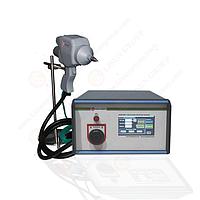
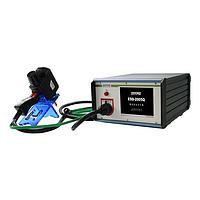
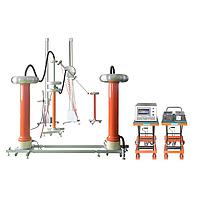
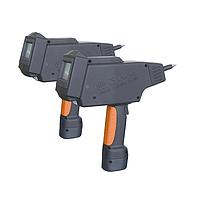
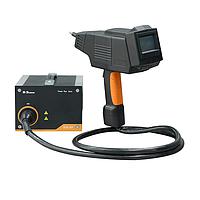
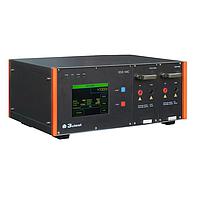
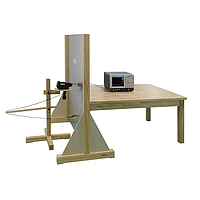
This category may include standalone simulators, automated testers, and supporting test platforms for controlled discharge or transient generation. Some solutions focus on device-level ESD models, while others are intended for subsystem or pre-compliance work where the goal is to reproduce stress events under more application-oriented conditions.
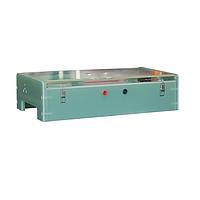
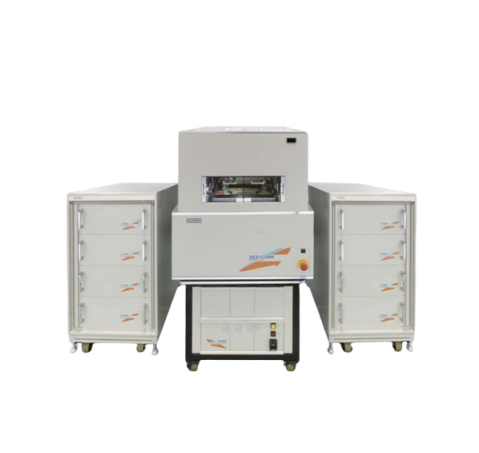
A good example is the SPIROX HED-G5000 Automatic ESD Tester, which is suited to automated test workflows where repeatability, pin coverage, and configurable test models are important. For engineers working on transient evaluation in powered electronics, the Tekbox TBLDS1 Pre-Compliance Load Dump Simulator illustrates another side of this category, where controlled pulse generation is used to study circuit resilience under abnormal electrical events.
How to choose the right ESD simulation setup
The right selection depends first on test objective. Some teams need device-level ESD model evaluation, while others need to investigate latch-up behavior, powered transient susceptibility, or automated high-pin-count testing. Matching the simulator to the intended failure mechanism is more important than simply choosing the most complex platform.
It is also important to review the practical test environment: required voltage or current range, automation level, fixture compatibility, software workflow, and whether an external power source is needed. For semiconductor labs, integration with adjacent equipment can also matter, especially if the same project includes thermal test systems for stress correlation under varying environmental conditions.
Representative manufacturers and solution focus
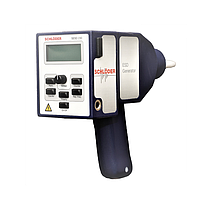
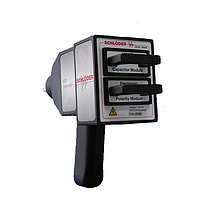
Several established brands are commonly considered for this type of equipment. NOISEKEN, Schloeder, Desco, SPIROX, and Tekbox each fit different testing priorities, from ESD control and simulation support to more specialized transient or automated evaluation tasks.
When comparing manufacturers, it helps to focus on application fit rather than brand visibility alone. Some solutions are better aligned with semiconductor device characterization, while others are more relevant for electronics assembly, EMC-oriented pre-compliance, or bench-level troubleshooting. That distinction can save time when narrowing down instruments for a lab, validation station, or reliability program.
Examples of products in this category
The SPIROX HED-G5000 Automatic ESD Tester is designed for structured and automated evaluation where test model flexibility and broad DUT coverage are valuable. In environments handling high pin-count devices or requiring configurable ESD and latch-up workflows, this type of system supports more consistent execution than purely manual methods.
The Tekbox TBLDS1 Pre-Compliance Load Dump Simulator is relevant when engineers need to generate controlled transient pulses for circuit-level assessment. Although load dump simulation is not identical to every classic ESD model, it is closely related to the broader challenge of evaluating electrical stress tolerance in sensitive electronic systems, especially during early-stage design verification.
Where ESD simulation fits in a broader reliability workflow
ESD-related testing rarely stands alone. In semiconductor and electronics programs, it is usually part of a larger verification path that may include physical inspection, thermal stress, environmental conditioning, and failure analysis. Using simulation results together with these other methods helps teams separate handling-related weakness from design limitations or process variation.
For that reason, buyers often look beyond the simulator itself and consider the surrounding test ecosystem, including fixturing, data capture, operator workflow, and compatibility with other inspection platforms. The goal is not only to reproduce stress events, but to build a repeatable decision-making process around product reliability.
Final considerations for buyers
Choosing ESD simulation equipment is ultimately about matching the instrument to the failure mechanisms and validation stages that matter most in your operation. A compact pre-compliance tool may be sufficient for development screening, while automated systems are better suited to structured semiconductor test programs with higher throughput and documentation needs.
By comparing application scope, automation requirements, and how the equipment fits into your broader inspection and reliability workflow, it becomes easier to shortlist the right solution. If your work spans electrical stress, defect analysis, and environmental validation, this category provides a practical starting point for building a more complete semiconductor test setup.
Get exclusive volume discounts, bulk pricing updates, and new product alerts delivered directly to your inbox.
By subscribing, you agree to our Terms of Service and Privacy Policy.
Direct access to our certified experts