Discrete
Power conversion, switching, signal control, and circuit protection often depend on one essential building block: the discrete semiconductor. Whether you are designing a compact embedded board, selecting replacement parts for industrial electronics, or sourcing components for volume production, this category brings together devices that handle electrical behavior at the component level with precision and flexibility.
Discrete devices are widely used because they let engineers optimize a circuit for current, voltage, thermal conditions, response time, and protection strategy. In practice, they sit alongside integrated circuits and other semiconductor components, but they remain critical wherever individual switching and protection functions need to be chosen deliberately rather than absorbed into a single chip.
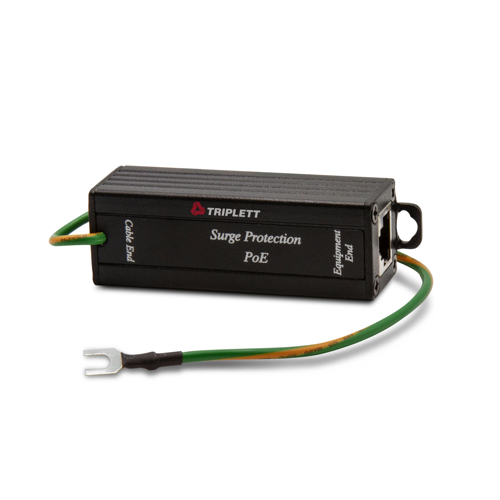
Where discrete components fit in electronic design
The term discrete generally refers to individual semiconductor devices such as transistors, MOSFETs, TVS diodes, rectifiers, thyristors, and related power or protection elements. Instead of combining many functions inside one package, each component performs a specific electrical role, which gives designers tighter control over performance and layout.
This makes the category especially relevant in power supplies, battery-powered devices, industrial control boards, automotive subsystems, communications equipment, and embedded platforms. In many designs, discrete components work together with processors, drivers, and analog front ends from the broader semiconductor component ecosystem to deliver a stable and protected system.
Common device roles inside the category
One of the largest groups in this category is the transistor and MOSFET family. These parts are used for load switching, DC-DC conversion, reverse polarity protection, motor drive stages, and power path management. Selection usually depends on channel type, voltage rating, current capability, package style, and on-state resistance, all of which influence efficiency and thermal behavior.
Protection components are equally important. TVS devices, for example, are commonly applied to suppress transient overvoltage events caused by switching, ESD, or induced surges on power and signal lines. Other discrete product groups support rectification, triggering, or controlled conduction, which is why this category is often explored alongside embedded computing hardware and control electronics during system design.
Representative products in this range
Several products in this category illustrate the practical breadth of discrete semiconductors. On the switching side, devices from Alpha and Omega Semiconductor include compact P-channel MOSFETs such as the AO3401 and AO3419, which are suitable for space-constrained designs where efficient high-side switching is required. For applications demanding stronger current handling and low conduction loss, parts such as the AON6590, AON6588, AON6576, and AON6572 show how power MOSFETs are used in more demanding power paths.
Protection-oriented examples are also present. TVS products such as the ams OSRAM DM5W15AQ-13, ams OSRAM 15BJ30A, ams OSRAM 15BJ30CAH, and Alpha and Omega Semiconductor 5.0SMDJ75A or 5.0SMDJ70CA represent the kind of components commonly selected to help clamp transient events before they propagate into sensitive circuitry. These examples are useful not as one-size-fits-all choices, but as reference points for understanding the range of package formats and electrical roles available in the category.
How to choose the right discrete semiconductor
A good selection process starts with the circuit function. If the device is intended for switching, look first at the required channel type, drain-to-source voltage, continuous current, and expected thermal conditions. Low on-state resistance is often desirable in power applications, but package size, gate drive conditions, and board-level heat dissipation are just as important in real deployments.
For protection devices, the decision logic is different. Engineers typically evaluate working voltage, expected transient behavior, placement on the board, and the type of line being protected. A TVS used on a power input may be chosen differently from one used on a communication interface, even when both are installed in the same product.
It is also helpful to think at the system level. A discrete component that looks suitable on paper still needs to match the surrounding controller, driver, connector, and PCB constraints. This is one reason buyers often compare discrete parts together with related categories such as memory accessories or support electronics when building a complete platform.
Manufacturer coverage and sourcing context
This category includes parts from recognized semiconductor suppliers, with Alpha and Omega Semiconductor and ams OSRAM especially visible in the representative product set shown here. Their presence highlights two major application directions inside discrete semiconductors: efficient switching and robust transient protection.
Depending on project needs, buyers may also review broader portfolios from suppliers active across semiconductor and electronic component markets. The key is not simply choosing by brand name, but by fit: electrical margin, application environment, assembly preference, and long-term sourcing practicality all matter in B2B purchasing.
Typical applications across industrial and embedded systems
In industrial electronics, discrete semiconductors are often used to switch relays, drive loads, protect I/O lines, and manage incoming power. In embedded devices, they support battery charging paths, USB or DC input protection, backlight control, and compact DC power stages. Because these functions are fundamental, discrete parts appear in both simple boards and complex multi-module systems.
They are also valuable when designers need flexibility. An integrated solution may simplify some circuits, but discrete implementation can make it easier to tune performance, isolate failure points, or adapt a design for different power levels. That flexibility is one reason the category remains highly relevant across prototyping, maintenance, and production procurement.
Why this category matters for component procurement
From a sourcing perspective, discrete semiconductors are not just low-level parts; they are often critical-path components that affect reliability, efficiency, and protection performance. A mismatch in voltage headroom, package capability, or switching losses can create downstream problems during validation or field operation. Careful category-level browsing helps buyers narrow options before moving into detailed part-by-part comparison.
If your application requires individual control over switching, rectification, or surge protection, Discrete is the right place to evaluate foundational semiconductor devices. Reviewing the intended electrical function first, then aligning it with package, ratings, and integration requirements, will usually lead to a more reliable shortlist and a better-fit final selection.
Get exclusive volume discounts, bulk pricing updates, and new product alerts delivered directly to your inbox.
By subscribing, you agree to our Terms of Service and Privacy Policy.
Direct access to our certified experts