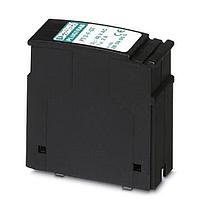
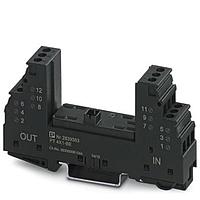
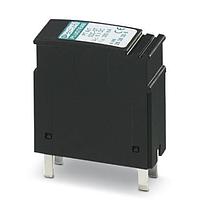
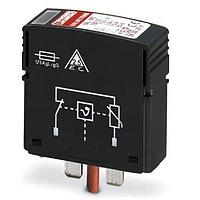
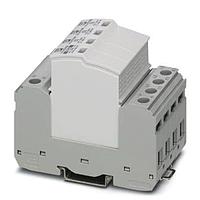
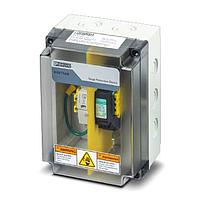
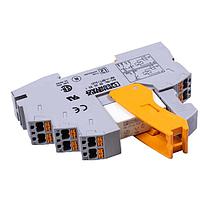
Surge Protector
Unexpected voltage spikes can damage sensitive circuits long before other components show visible signs of stress. In power supplies, communication interfaces, control boards, and field-installed electronics, the right protection strategy helps reduce downtime, avoid premature failure, and improve overall system reliability. That is why Surge Protector components remain an important part of many industrial, automation, and electronic designs.
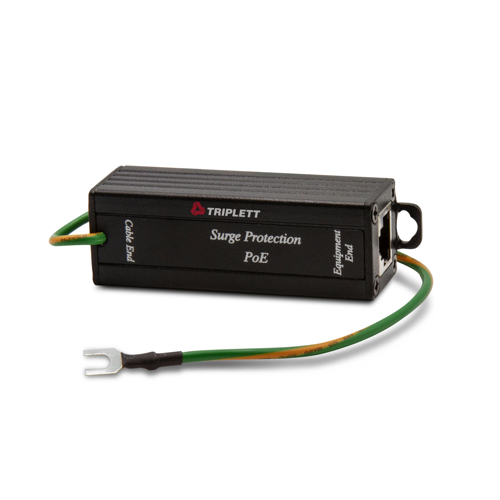
Why surge protection matters in electronic systems
Transient overvoltage events can come from switching operations, inductive loads, electrostatic discharge, or disturbances on nearby power and signal lines. Even when these events last only a very short time, they may still exceed the safe operating limits of semiconductors and interface circuits. A properly selected surge protection device helps clamp or divert excess energy before it reaches more vulnerable parts of the design.
In industrial environments, this becomes especially important because electronics are often exposed to long cable runs, distributed I/O, motors, relays, and electrically noisy equipment. Protection is not only relevant for high-power systems; compact controllers, sensor interfaces, communication ports, and embedded boards can also benefit from carefully chosen surge suppression components.
Where surge protectors are commonly used
Within the broader discrete semiconductor ecosystem, surge protectors are typically used to support circuit robustness rather than act as stand-alone functional devices. They are commonly designed into AC/DC power inputs, DC supply rails, PLC and controller interfaces, Ethernet or serial communication lines, sensor wiring, and equipment connected to external field cabling.
In many applications, designers combine surge protection with other circuit elements to create a layered protection approach. For example, depending on the design objective, a surge protector may work alongside diodes and rectifiers in power paths or be coordinated with switching components and input filtering to improve resilience under abnormal electrical conditions.
How to choose the right surge protection component
Selection should start with the electrical environment of the circuit being protected. Key considerations usually include operating voltage, expected transient level, response behavior, leakage characteristics, capacitance where signal integrity matters, and the type of line involved, such as power, data, or control. The goal is to protect the downstream circuit without interfering with normal operation.
It is also useful to consider installation context. A device used on a compact PCB inside a control panel may face different requirements from one intended for exposed field interfaces or consumer-connected equipment. Designers often compare surge protectors with related categories such as thyristors or transistors when reviewing overall circuit behavior, but the final choice should reflect the specific protection mechanism needed for the target application.
Common design considerations for industrial and embedded applications
In practical engineering work, effective protection depends on more than the component itself. PCB layout, grounding strategy, conductor length, connector placement, and separation between sensitive and noisy sections all influence how well a surge event is controlled. A strong device choice can lose effectiveness if the current path is too long or if the protected node is poorly routed.
For embedded and industrial platforms, engineers also look at long-term reliability, replacement cycles, and maintenance conditions. Systems installed in factories, utility cabinets, machine enclosures, or remote control panels often require a balanced approach between protection level, board space, thermal constraints, and cost of field failure. This is one reason surge protection is often treated as part of a wider hardware reliability plan rather than a last-minute add-on.
Relevant manufacturers and product ecosystem context
This category may be relevant to buyers sourcing components from well-known electronics and industrial suppliers such as Bourns, Diodes Incorporated, Eaton, and Analog Devices. Different manufacturers may focus on different protection technologies, package styles, or target applications, so comparing datasheets within the same voltage and use-case range is typically the most practical way to narrow down options.
For broader circuit design needs, surge protection is often evaluated together with neighboring discrete categories. In some designs, engineers may also review discrete and power modules when building complete power-stage or protection architectures, especially where system robustness and power handling must be considered together.
When surge protection should be reviewed early in the design process
It is often easier and more effective to define surge protection requirements early, before the hardware architecture is fixed. Once connectors, grounding paths, enclosure constraints, and interface circuits are already locked in, improving immunity can become more difficult and more expensive. Early review helps teams align electrical protection with compliance goals, installation conditions, and expected service life.
This is particularly important for products that connect to external wiring or operate in electrically harsh locations. A design that performs well on the bench may still experience stress in the field if transient events were underestimated during development. Integrating circuit protection decisions at the schematic and layout stage usually leads to better outcomes than treating them as an afterthought.
Finding the right fit for your application
The best choice depends on how the equipment is powered, where it is installed, and which circuits are most sensitive to transient events. Some applications prioritize compact size and low leakage, while others focus on handling stronger surge conditions or protecting exposed interfaces. Reviewing the electrical profile of the line, the vulnerability of downstream devices, and the service environment will help narrow the selection more effectively.
As part of the wider discrete semiconductor landscape, surge protectors play a focused but important role in improving resilience at the board and system level. If you are comparing options for new designs, retrofits, or replacement sourcing, this category is a practical starting point for identifying components that support more stable and reliable electronic operation.
Get exclusive volume discounts, bulk pricing updates, and new product alerts delivered directly to your inbox.
By subscribing, you agree to our Terms of Service and Privacy Policy.
Direct access to our certified experts