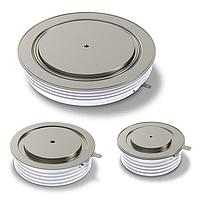
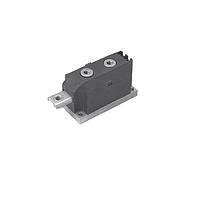
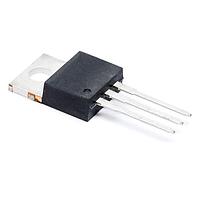
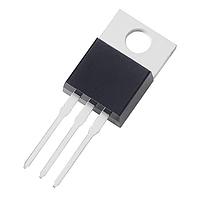
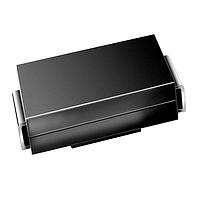
Thyristors
Controlled power switching is a core requirement in many industrial and electronic designs, especially where high voltage, high current, or robust line-frequency control is involved. In these applications, thyristors remain a practical choice for engineers who need reliable triggering, efficient switching behavior, and stable operation in demanding environments.
This category brings together devices commonly used for AC power control, rectification stages, motor drive sections, heater regulation, protection circuits, and other power electronics tasks. Whether you are maintaining legacy equipment or specifying parts for a new design, understanding the role of thyristors helps narrow the selection process and improve system compatibility.
Where thyristors fit in power electronics
A thyristor is a semiconductor switching device designed to handle power by changing from a blocking state to a conducting state when properly triggered. Once turned on, it typically remains conducting until the current drops below a defined holding level, which makes it especially useful in circuits with predictable current behavior.
Compared with general-purpose switching devices, thyristors are often chosen when the application requires high-power control, repetitive operation, and dependable conduction under electrical stress. They are widely used in rectifiers, AC regulators, phase-angle control circuits, soft-start arrangements, industrial heating systems, and power conversion equipment.
Common applications in industrial and electronic systems
In practical use, thyristors are often found in systems that need controlled delivery of electrical power rather than simple low-power signal switching. Typical examples include motor speed control, battery charging circuits, welding equipment, lamp dimming, static switches, and controlled rectifier assemblies used in industrial machinery.
They also appear in support functions such as inrush limiting, crowbar protection, and switching stages inside larger power assemblies. In projects where system designers evaluate related device families, it can also be useful to compare thyristors with transistors or with broader power module solutions, depending on switching method, thermal design, and control architecture.
Key selection points before choosing a device
The right part is usually determined by the electrical and mechanical demands of the target circuit. Engineers typically start with core parameters such as voltage rating, current handling, surge capability, trigger characteristics, thermal behavior, and package style. These factors influence both immediate performance and long-term reliability.
It is also important to look at the operating environment. Ambient temperature, cooling method, switching frequency, isolation requirements, and board or heatsink constraints can all affect suitability. In many cases, a thyristor is not selected in isolation but as part of a complete protection and power path strategy alongside devices such as diodes and rectifiers or a dedicated surge protection stage.
Understanding the broader thyristor ecosystem
Although users often search for thyristors as a single category, the actual application space can include multiple device types and circuit roles. Some designs focus on controlled rectification, others on AC switching, and others on protection-oriented triggering behavior. The load type, whether resistive, inductive, or mixed, plays a major role in determining the appropriate device and gate drive approach.
For that reason, evaluating the full switching path matters more than looking at one rating alone. Commutation conditions, current waveform, line voltage behavior, and transient exposure should be reviewed together. This is especially true in industrial systems where maintenance intervals are long and replacement parts must match the original electrical intent closely.
Manufacturers commonly considered in this category
This category may include components from established semiconductor suppliers such as Infineon, Littelfuse, IXYS, Diodes Incorporated, and HITACHI, along with other recognized manufacturers in power and protection electronics. Different brands are often preferred for different reasons, including package availability, application history, sourcing requirements, and alignment with existing approved vendor lists.
For buyers and engineering teams, manufacturer preference is usually only one part of the decision. The more important question is whether the part aligns with the circuit topology, thermal margin, and expected operating conditions. In repair and replacement scenarios, matching the electrical behavior of the original design is often more important than changing to a different device family without full review.
When to use thyristors instead of other discrete devices
Thyristors are especially relevant when the design benefits from latching behavior and efficient handling of substantial power levels. In controlled AC applications and line-powered industrial systems, they can provide a straightforward and robust solution without the complexity of faster switching architectures that may be unnecessary for the task.
They are not always the default choice for every switching application, however. If the circuit demands very fast switching, linear amplification, or different gate-control behavior, another discrete technology may be more appropriate. The selection process should therefore start with the function of the circuit, then move to ratings, control method, and protection requirements.
What buyers and engineers should review on a category page
When browsing a thyristor category, it helps to compare parts based on the practical needs of the project rather than on a single specification. Voltage class, current capability, mounting format, thermal path, and expected duty cycle usually provide a better starting point than brand alone. This approach is useful for both new design work and replacement sourcing.
If your application involves industrial maintenance, retrofit work, or spare part management, reviewing adjacent categories can also simplify procurement. Devices in related discrete semiconductor families often work together in the same power stage, so understanding those relationships can reduce compatibility issues and speed up selection.
Choosing with application context in mind
A well-chosen thyristor supports stable power control, predictable triggering, and durable operation across a wide range of electrical systems. The best results come from reviewing the full application context, including load behavior, thermal conditions, protection needs, and the role of the device within the larger assembly.
As you compare options in this category, focus on how each part fits the actual switching and protection strategy of your design. That practical approach makes it easier to identify suitable components for industrial electronics, power control equipment, and long-life maintenance applications without overcomplicating the selection process.
Get exclusive volume discounts, bulk pricing updates, and new product alerts delivered directly to your inbox.
By subscribing, you agree to our Terms of Service and Privacy Policy.
Direct access to our certified experts