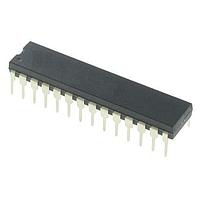
16bit Microcontrollers
When an embedded design needs more control resolution and processing headroom than an 8-bit device can comfortably provide, but does not necessarily require the complexity of a high-end 32-bit platform, 16bit Microcontrollers are often the practical middle ground. They are widely used in industrial control, power conversion, motor drive, communications, and application-specific embedded systems where deterministic performance and peripheral integration matter.
On this page, you can explore a focused range of 16-bit MCU options for engineers, OEMs, and technical buyers looking for devices with the right balance of memory, interfaces, speed, and package style. The selection includes well-known families from Microchip Technology, as well as devices from NXP and Infineon, covering both general embedded control and more specialized signal-control tasks.
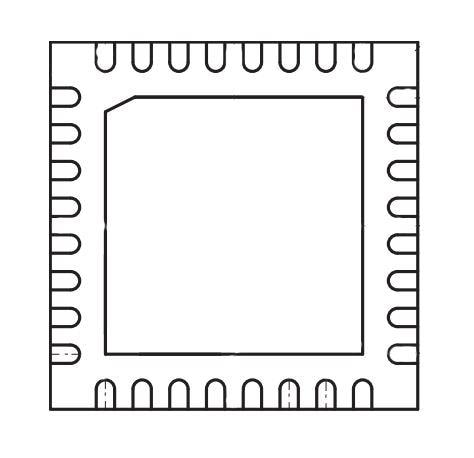
Why 16-bit MCUs remain relevant in embedded design
A 16-bit architecture continues to fit many real-world applications because it offers a strong compromise between cost, efficiency, and functional capability. In control-oriented systems, developers often need more numerical precision, better timer behavior, and richer peripherals than entry-level devices provide, while still keeping hardware and firmware manageable.
These microcontrollers are commonly chosen for designs involving industrial automation, automotive sub-systems, motion control, sensor handling, and communication gateways. Many parts in this category also integrate features such as PWM, watchdogs, ADC channels, CAN, SPI, I2C, and UART interfaces, reducing the need for external support components.
Common application areas for 16-bit microcontrollers
The strongest use case for this category is control-heavy embedded electronics. In practice, 16-bit MCUs are frequently deployed in motor control, power supply regulation, battery management support functions, and machine-level coordination where timing consistency is important.
They also suit equipment that needs multiple communication options and moderate onboard memory. Devices in this range can be a good fit for factory nodes, measurement subsystems, compact HMI support boards, HVAC controls, access equipment, and smart modules that bridge sensors, actuators, and field interfaces.
For buyers comparing architecture classes, it can also be useful to review nearby categories such as 8-bit microcontrollers for simpler control tasks or 32-bit microcontrollers when higher software complexity and broader processing resources are needed.
What you will find in this category
This category includes several 16-bit device types rather than a single narrow family. A large part of the range is built around dsPIC and PIC-based devices from Microchip Technology, which are often selected for control algorithms, mixed-signal tasks, and communication-rich embedded designs. You will also find examples of 16-bit-oriented devices from NXP and Infineon that address different performance and interface requirements.
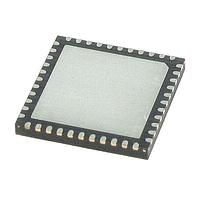
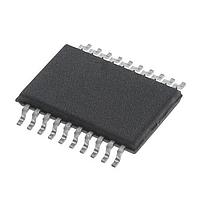
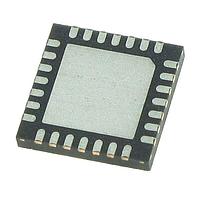
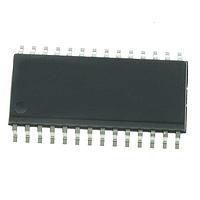
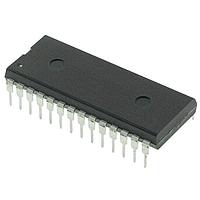
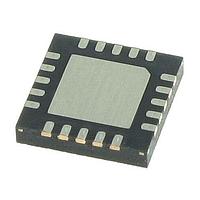
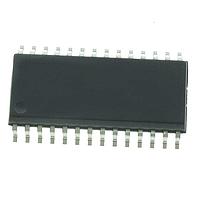
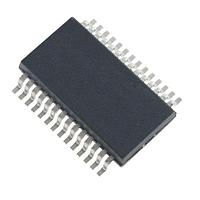
Representative products include parts such as the Microchip Technology DSPIC33EV128GM104-E/PT, DSPIC33EP512GP506-I/MR, DSPIC33EP256MC504-E/ML, DSPIC33FJ64GP206A-E/PT, and PIC24FJ32GA102-I/SP. For broader comparison, the category also features devices like the NXP LPC2925FBD100,551 and the Infineon XC164CS32F20FBBAKXUMA1. The result is a catalog that supports both compact embedded control and more communication-intensive designs.
Key selection criteria for engineers and buyers
The right MCU choice usually starts with the application profile rather than raw clock speed alone. First, consider the processing style: some designs need general-purpose control, while others benefit from a digital signal control approach, especially in motor, power, or waveform-related applications. dsPIC-based options are often relevant where control loops and peripheral coordination must work together efficiently.
Next, review memory size, I/O count, and interface availability. In this category, available devices span compact to larger Flash and RAM configurations, with support for combinations of CANbus, LINbus, SPI, UART, USART, I2C, IrDA, and in some cases USB. If your design depends on analog measurement, PWM outputs, or DMA support, those embedded peripherals can be just as important as the core architecture.
Voltage range, package format, and temperature rating are also important in B2B sourcing. Some listed devices support 3.3 V designs, some operate in 5 V environments, and package options include both surface-mount and through-hole formats. For industrial or automotive-adjacent environments, operating temperature range may be a decisive factor during part selection and qualification.
Examples of device profiles in this range
Several products in this category illustrate how 16-bit MCUs can be optimized for very different design priorities. The Microchip Technology DSPIC33EP32MC202-I/MM is a compact option aimed at control-oriented applications, while the DSPIC33EP512GP506-I/MR and DSPIC33EP512GP506-H/PT provide a much larger memory footprint for more feature-rich firmware.
For designs that need communication flexibility and control capability, the DSPIC33EV256GM106-I/MR and DSPIC33EV256GM006-I/MR combine multiple serial interfaces with a robust peripheral set. If the project requires a simpler or legacy-friendly package approach, the DSPIC30F4013-30I/P and PIC24FJ32GA102-I/SP show that through-hole or lower-complexity implementation paths are still relevant in some industrial and maintenance-driven environments.
There are also cases where comparing architecture families is helpful. For example, the NXP LPC2925FBD100,551 brings a different core and broader interface perspective, while the Infineon XC164CS32F20FBBAKXUMA1 may suit projects evaluating established 16-bit control platforms from another ecosystem.
How 16-bit MCUs fit within a broader controller portfolio
Not every embedded system should default to 16-bit, but many should at least evaluate it. If the application is too advanced for low-resource controllers yet does not justify the software overhead or hardware scale of a larger platform, this category often represents a balanced choice. That is especially true in systems with moderate memory needs, real-time control behavior, and substantial use of integrated peripherals.
In product development workflows, 16-bit devices often sit between general low-cost controllers and more demanding application processors. If your design focus shifts toward application-specific control hardware, it may also be worth exploring specialized microcontrollers for more targeted functionality. Likewise, teams standardizing on ARM-based ecosystems may want to compare against ARM microcontrollers to understand trade-offs in tooling, software portability, and system architecture.
Practical sourcing considerations
For engineering procurement and project teams, the best choice is rarely only about performance. Long-term maintenance, acceptable package type, required interfaces, thermal conditions, and development familiarity all influence the final decision. A device with the right CAN, UART, ADC, and PWM mix may reduce both BOM complexity and firmware development effort.
This category is therefore useful not only for component selection at the design stage, but also for replacement sourcing, second-round engineering evaluation, and platform comparisons across industrial and embedded product lines. Reviewing the available product mix carefully can help narrow candidates before moving into deeper electrical and software validation.
Find the right 16-bit MCU for your application
Choosing among 16bit Microcontrollers is ultimately about matching architecture, peripherals, voltage domain, and environmental suitability to the application itself. Whether you are developing motor control hardware, upgrading an industrial controller, or selecting a communications-capable MCU for embedded equipment, this category provides a practical starting point for technical comparison.
Use the product listings to compare memory capacity, interface support, package style, and operating range, then narrow down to the devices that best fit your system constraints. A well-chosen microcontroller can simplify board design, reduce integration risk, and support more reliable long-term deployment in demanding embedded environments.
Get exclusive volume discounts, bulk pricing updates, and new product alerts delivered directly to your inbox.
By subscribing, you agree to our Terms of Service and Privacy Policy.
Direct access to our certified experts