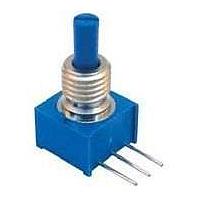
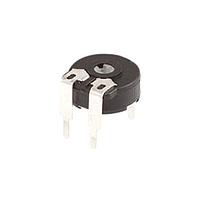
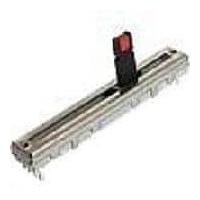
Potentiometers
In many electronic designs, precise and repeatable adjustment is just as important as the active circuitry itself. Whether the goal is tuning a signal path, setting a reference level, calibrating a control board, or providing a user-adjustable interface, potentiometers remain a practical and widely used component across industrial, embedded, and general electronic applications.
This category brings together variable resistive components used for manual adjustment, calibration, and analog control. For engineers, buyers, and maintenance teams, choosing the right type depends less on a single specification and more on how the device will be used in the circuit, how often it will be adjusted, and what mechanical format best fits the assembly.
Where potentiometers fit in electronic design
A potentiometer is commonly used to vary resistance or create an adjustable voltage divider. In real-world systems, that can mean setting gain, trimming thresholds, adjusting sensor response, controlling interface parameters, or allowing an operator to make manual changes without redesigning the board.
They are often part of a broader analog signal chain, especially in systems that also rely on amplifier ICs for conditioning low-level signals or on dedicated analog processing stages. In calibration-heavy designs, a well-selected potentiometer can simplify commissioning and field adjustment while keeping the overall circuit compact.
Common use cases in industrial and embedded systems
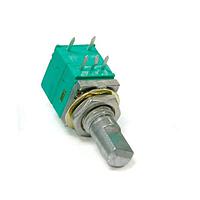
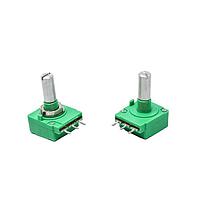
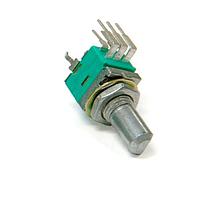
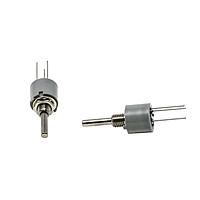
Potentiometers appear in a wide range of environments, from development boards and embedded interfaces to industrial control electronics. They may be used as front-panel controls, internal trim elements for setup, or adjustment points in instrumentation, power regulation, communication devices, and custom PCB assemblies.
In embedded platforms, they are frequently paired with controllers or companion hardware where analog input remains useful for prototyping and operator control. For broader system architecture, teams working on configurable electronics may also evaluate nearby categories such as embedded computers when the design includes both user input hardware and local processing.
How to choose the right potentiometer
The first selection factor is usually the intended function: continuous user control, infrequent calibration, or fine trimming during setup. A panel-adjustable part may prioritize ergonomics and shaft style, while a board-level trim component is typically chosen for compact size and stable adjustment.
Electrical considerations are equally important. Designers typically review resistance value, taper behavior, power handling, tolerance, and how the part interacts with surrounding analog circuitry. In some applications, potentiometers work alongside active filter stages or other tuning-sensitive blocks, where adjustment smoothness and repeatability can directly affect performance.
Mechanical fit should not be overlooked. Mounting style, footprint, orientation, adjustment access, and expected environmental exposure all influence suitability, especially in compact products or serviceable industrial equipment. For B2B procurement, consistency across batches and long-term service replacement can be just as important as the nominal electrical rating.
Different formats and application priorities
Not every potentiometer is intended for the same duty cycle. Some are designed for frequent manual operation by the end user, while others are better suited for occasional calibration during manufacturing or maintenance. Understanding that difference helps avoid premature wear, unstable settings, or awkward integration during assembly.
Application priorities usually fall into a few practical groups: user interface control, board-level trimming, and circuit calibration. In interface-oriented products, smooth adjustment and mechanical feel may matter most. In calibration-focused electronics, stability, compact form, and precise setting behavior often take priority over user accessibility.
Manufacturers commonly considered for this category
This selection includes components from recognized electronics manufacturers such as Bourns, Analog Devices, Honeywell, Alps Alpine, and Eaton. Each brand is relevant in electronic and industrial supply chains, and buyers may prefer one over another based on approved vendor lists, packaging preferences, legacy design compatibility, or application history.
Some manufacturers in this ecosystem are more closely associated with analog design, interface hardware, or industrial control components. For example, Analog Devices is often referenced in signal-conditioning and precision electronics environments, while Alps Alpine and Honeywell are familiar names in interface and control-related component sourcing. The right choice usually depends on project requirements rather than brand alone.
Potentiometers within the wider IC and component ecosystem
Although listed within a broader electronics catalog structure, potentiometers are rarely selected in isolation. They are part of a complete design chain that may include analog front ends, memory devices, embedded processing, and application-specific functions. In that context, the component should be evaluated based on the signal it influences and the system behavior it helps control.
For more specialized architectures, engineers may also compare supporting categories such as specialized ICs when the adjustable element is part of a dedicated control or interface circuit. This broader view helps ensure the selected potentiometer supports both the electrical objective and the product’s manufacturing constraints.
What matters for sourcing and long-term maintenance
From a purchasing perspective, the best fit is often the one that balances electrical suitability, assembly compatibility, and ongoing availability. In industrial and OEM environments, that means looking beyond basic resistance adjustment and considering lifecycle planning, replacement consistency, and whether the component supports the expected maintenance model.
For retrofit, service, or recurring production, having a clear understanding of the form factor and intended adjustment method can reduce qualification time and prevent mismatches during installation. This is especially relevant when the potentiometer is not directly user-facing but still affects calibration, signal response, or machine setup.
Find a suitable option for your design
A well-chosen potentiometer can make analog adjustment simpler, improve serviceability, and support more practical tuning during development or field operation. Whether the requirement is a compact trim element or a manual control component, the most effective selection comes from matching the part to the circuit role, adjustment frequency, and mechanical constraints.
Explore the available range in this category to identify components that align with your design, procurement, and maintenance needs. For technical buyers and engineers alike, a focused selection process helps ensure the chosen part works reliably within the larger electronic system.
Get exclusive volume discounts, bulk pricing updates, and new product alerts delivered directly to your inbox.
By subscribing, you agree to our Terms of Service and Privacy Policy.
Direct access to our certified experts