NFC/RFID Tags & Transponders
Contactless identification has become a practical requirement in modern products, from asset tracking and access control to smart packaging and industrial data capture. When a design needs a compact way to store or exchange information without physical contact, NFC/RFID Tags & Transponders offer a flexible path for embedding identification, memory, and authentication functions directly into the system.
This category brings together ICs and tag-oriented devices used in short-range wireless identification applications. It is relevant for engineers building connected products, OEM teams selecting components for embedded electronics, and buyers sourcing parts for traceability, service, or secure interaction workflows.
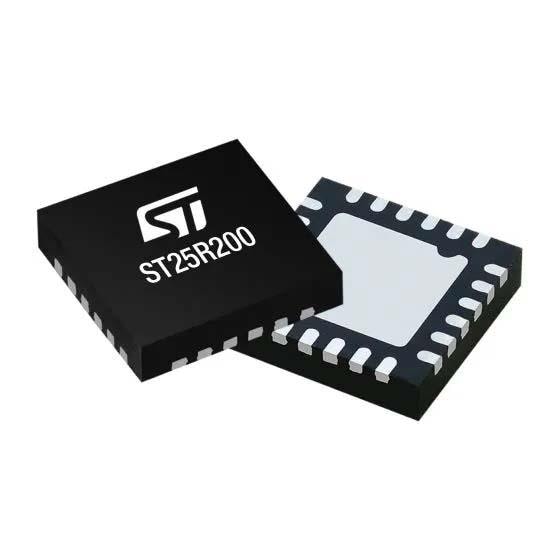
Where NFC and RFID tags fit in electronic design
Tags and transponders are typically used as the endpoint of a contactless system. In simple terms, they hold an identifier, user data, or application-specific information that can be read by a compatible device. Depending on the architecture, they may support inventory control, product authentication, maintenance records, pairing, or user interaction through a nearby reader.
Within this ecosystem, the tag itself is only one part of the solution. A complete implementation may also involve a dedicated reader IC, firmware logic, and signal handling components. If your project includes the interrogation side of the link, it may also be useful to review modulator and demodulator devices used in broader RF signal chains.
Typical product types in this category
This range includes both ready-to-use tag devices and ICs intended for integration into custom hardware. Some parts are designed primarily as tag/transponder components, while others support reader or development functions that help validate a design before production.
For example, the Adafruit 884 NFC/RFID Tag/Transponder represents a practical tag-side option for prototyping and evaluation, while the Adafruit 923 NFC/RFID Reader/Writer is useful when testing how tags are initialized, read, or updated in a real workflow. On the IC side, devices such as the ams OSRAM AS3956-ATDM-S4 and Littelfuse NCD1015ZP illustrate how compact NFC/RFID functionality can be embedded more directly into electronic assemblies.
Examples of devices and manufacturers in this range
Several well-known suppliers appear in this category, each supporting different design priorities. Infineon is represented here by multiple intelligent EEPROM devices with contactless interfaces complying with ISO/IEC 15693 and integrated security logic, making them relevant where memory retention and controlled data access matter. Examples include SP000680974, SP000680672, SP000680642, SP000678954, and SP000679910.
Other representative options include the 3M 1253-XR/ID tag/transponder, the Maxim Integrated MAX66140K-000AA+, and the ams OSRAM AS3990-BQFT reader/writer. Rather than treating every device the same, it is more useful to evaluate whether your application needs a simple identifier, memory-based interaction, security-oriented data handling, or reader-side support for development and validation.
How to choose the right NFC/RFID tag or transponder
A good selection process starts with the application itself. Consider the required read/write behavior, expected reading distance, memory needs, whether the tag will store static or changing data, and whether any security or authentication layer is important. In industrial and B2B environments, environmental constraints and integration method also matter, especially when the tag must fit into a limited enclosure or product label format.
It is also important to align the tag with the rest of the communication chain. Some projects need a straightforward transponder for identification only, while others require memory-equipped devices for service logs, digital records, or configuration transfer. If your implementation is centered more on the endpoint device than the reader side, browsing related tag and transponder options can help narrow the shortlist by function and integration style.
Common application scenarios
In practice, these components are used across many workflows where fast, contactless data exchange improves reliability or convenience. Typical examples include product identification, consumable recognition, field maintenance records, configuration transfer, access credentials, and anti-counterfeit measures. In some designs, the tag acts as a low-friction interface between the physical product and a mobile device or dedicated reader.
For industrial teams, one of the main advantages is the ability to connect identity or status data directly to an object without requiring a wired interface. That can simplify servicing, reduce operator error, and support more consistent traceability across production, warehousing, and after-sales processes.
Design and sourcing considerations for B2B buyers
When selecting parts for production or recurring procurement, engineering fit should be balanced with supply planning. Buyers often need to verify package suitability, lifecycle stability, compatibility with the intended protocol environment, and whether the device is aimed at evaluation, embedded deployment, or end-use tagging. A reader-oriented device and a tag IC may appear close in naming, but they serve very different roles in the final architecture.
Manufacturer ecosystem can also influence the decision. Teams already working with Adafruit for prototyping may prefer fast proof-of-concept tools, while production-focused projects may look more closely at integrated semiconductor options from suppliers such as Infineon, ams OSRAM, Littelfuse, or Maxim Integrated. Choosing with the full product lifecycle in mind usually reduces redesign effort later.
Relationship to the wider RF and wireless IC landscape
NFC and RFID tags do not operate in isolation. They sit inside a broader wireless and RF design framework that may include front-end signal conditioning, timing control, and protocol support. In more advanced systems, adjacent functions such as phase locked loops and other RF building blocks contribute to stable communication performance at the system level.
That broader context matters when moving from prototype to production. A component that works well in a bench setup still needs to fit the electrical, mechanical, and operational constraints of the final device, especially in products that combine wireless identification with sensing, control, or connected service functions.
Finding the best fit for your application
The most suitable choice depends on how the tag will be used, what data it must handle, and how it will interact with the rest of the hardware and software stack. Some projects call for a simple transponder, while others benefit from contactless memory, security logic, or a paired reader/writer setup for deployment and service operations.
By comparing device role, protocol fit, and integration requirements, engineers and procurement teams can shortlist parts more effectively and avoid over-specifying the design. This category is a practical starting point for sourcing contactless identification components that support real-world embedded, industrial, and product-traceability applications.
Get exclusive volume discounts, bulk pricing updates, and new product alerts delivered directly to your inbox.
By subscribing, you agree to our Terms of Service and Privacy Policy.
Direct access to our certified experts