Wireless & RF Integrated Circuits
Wireless connectivity at the IC level is essential in modern embedded design, whether the goal is short-range identification, contactless data exchange, signal conditioning, or RF communication inside a larger electronic system. This category brings together Wireless & RF Integrated Circuits used in products such as readers, tags, transponders, and supporting radio-frequency building blocks for industrial, commercial, and development applications.
For engineers, buyers, and system integrators, the value of this category is not only in product availability but also in the ability to compare device roles within the broader RF signal chain. From NFC/RFID implementations to specialized wireless functions, these ICs help designers build compact, connected systems with the right balance of integration, performance, and design flexibility.
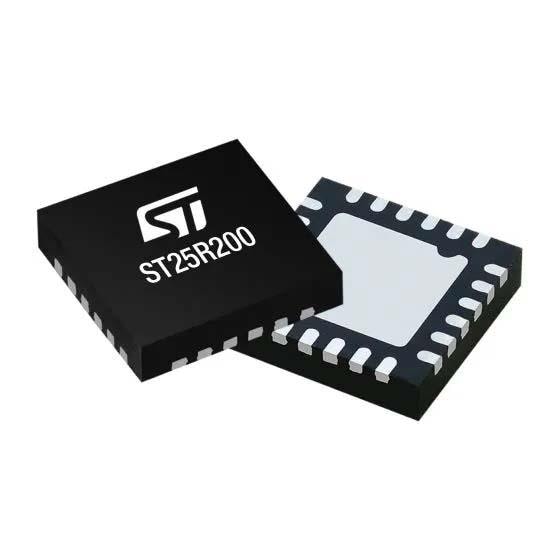
Where these ICs fit in real-world designs
Wireless and RF devices are used across asset identification, access control, equipment tracking, consumer interfaces, industrial automation, and smart embedded products. In many cases, the IC is only one part of the overall architecture, working alongside antennas, controllers, memory, and application firmware to create a complete communication function.
Within this ecosystem, NFC and RFID components are especially common because they support contactless interaction between a reader and a tag or transponder. Designers working on broader embedded platforms may also pair these devices with embedded computing hardware when building gateways, smart terminals, or edge-connected industrial equipment.
Reader/writer ICs and tag devices serve different purposes
A practical way to evaluate this category is to separate reader/writer ICs from tag or transponder devices. Reader ICs are typically used in equipment that initiates communication, energizes or interrogates a target, and manages the data exchange process. Tag and transponder devices, by contrast, are integrated into labeled items, cards, test objects, or products that need to be identified or read by a compatible system.
Examples in this category illustrate that distinction well. Devices such as the Adafruit 923 NFC/RFID Reader/Writer and several ams OSRAM reader solutions including AS3990-BQFT, AS3992-BQFP, and AS3911-BQFT-1K are relevant when the design requires an active reading interface. On the tag side, parts such as the 3M 1253-XR/ID, Adafruit 884, Adafruit 5459, and ams OSRAM AS3956-ATDM-S4 reflect use cases where the RF element is attached to or embedded in the object being identified.
Representative manufacturers in this category
This range includes products from established suppliers such as ams OSRAM, Adafruit, and 3M. Each serves a slightly different need in the market. Some parts are more aligned with component-level integration into production designs, while others are useful for prototyping, lab validation, or rapid development of NFC/RFID-enabled devices.
For example, ams OSRAM appears prominently in reader/writer solutions, making it relevant for engineers selecting RF interface ICs for embedded products or identification systems. Adafruit devices are often useful when teams want to evaluate concepts quickly or shorten proof-of-concept cycles, while 3M tag products can be relevant where durable labeling or transponder-based identification is part of the application.
How to choose the right wireless or RF IC
Selecting the right part starts with a clear understanding of the device role in the system. A design intended to poll, detect, or communicate with external tags needs a reader/writer architecture, while item-level identification typically calls for a tag or transponder. It is also important to consider how the IC will interact with the host controller, antenna design, physical form factor, and the expected operating environment.
Buyers should also think about integration depth. Some projects need a highly focused RF function, while others may require companion devices from nearby categories such as specialized ICs or support circuitry like memory ICs for data handling, configuration storage, or embedded application support. Looking at the complete system instead of the RF component in isolation usually leads to a better part selection.
Common application scenarios
In industrial and commercial settings, these ICs can support asset tracking, electronic labeling, access identification, equipment authentication, and touchless user interaction. NFC/RFID implementations are also common in test fixtures, smart accessories, service tools, and products that need a quick way to exchange or retrieve information without a direct wired connection.
For development teams, components such as the Adafruit 923 reader/writer or tag devices like Adafruit 884 can help validate interaction flows before moving to a production-focused IC. In more integrated designs, ams OSRAM devices such as AS3991-BQFT-33, AS3990-BQFT-33, or AS3992BQFP may be reviewed when evaluating a more component-centric RF design path. The right choice depends less on brand preference and more on system architecture, interface needs, and deployment conditions.
Why category-level comparison matters
Wireless and RF design decisions often happen early in product development, and the initial IC choice can affect antenna layout, firmware structure, mechanical design, and future scalability. Reviewing the category as a whole makes it easier to compare available approaches rather than jumping directly to one part number too soon.
This is especially useful for procurement teams working with engineering stakeholders. A category view helps identify whether the project needs a ready-to-evaluate reader, a production-oriented RF interface IC, or a tag/transponder for deployment at scale. It also provides better context when building a shortlist of alternatives that can be assessed for compatibility and sourcing continuity.
Finding a suitable fit for your project
When browsing Wireless & RF Integrated Circuits, it helps to start from the communication task: reading, writing, identification, or support of a broader RF signal path. From there, narrow the selection by device role, integration level, and how the part will connect to the rest of the application hardware.
A well-matched RF IC can simplify development and improve system reliability, especially when chosen with the end application in mind rather than by part number alone. Whether you are evaluating NFC/RFID readers, comparing transponder options, or building out an embedded wireless design, this category provides a practical starting point for structured selection.
Get exclusive volume discounts, bulk pricing updates, and new product alerts delivered directly to your inbox.
By subscribing, you agree to our Terms of Service and Privacy Policy.
Direct access to our certified experts