PCB Connectors
When a temperature sensor has to connect directly into an electronic assembly, the connector matters just as much as the sensing element. A poor interface can introduce installation complexity, make service work harder, or reduce reliability in compact control boards and instrumentation designs. PCB Connectors for temperature sensors are used to create a practical, repeatable connection point between thermocouples or RTD-related assemblies and the circuit board itself.
In this category, the focus is on board-mountable connector solutions designed for temperature measurement systems where space, orientation, and assembly method need to be considered early in the design process. These products are especially relevant for OEM builds, embedded measurement devices, lab equipment, and industrial electronics that require a clean transition from sensor wiring to PCB-level integration.
Designed for direct PCB integration
Unlike general-purpose wiring accessories, PCB-mounted temperature sensor connectors are intended to become part of the board layout and assembly process. They help engineers move from loose field wiring to a more structured connection architecture, which is useful in systems where sensors need to be connected, replaced, or routed in an organized way.
Depending on the application, a connector in this category may be selected for surface-mount installation or for solderable board mounting in horizontal or vertical orientation. That distinction can affect enclosure clearance, cable routing, operator access, and production workflow. In compact electronics, even small changes in connector direction can simplify the overall thermal measurement design.
Typical use cases in temperature measurement systems
These connectors are commonly used where thermocouple signals must be brought onto a PCB without relying on ad hoc solder joints or improvised terminal solutions. Typical examples include data acquisition modules, laboratory instruments, compact transmitters, thermal monitoring boards, process control electronics, and embedded assemblies used inside larger machines.
They are also useful in designs that need repeatable servicing or modular replacement. A board-level connector can make maintenance easier by separating the sensor connection from the PCB assembly itself. In applications where multiple temperature channels are organized across a cabinet or test rack, related solutions such as jack panels may also be relevant alongside direct board-mounted interfaces.
Product styles available in this category
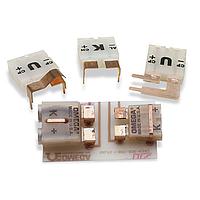
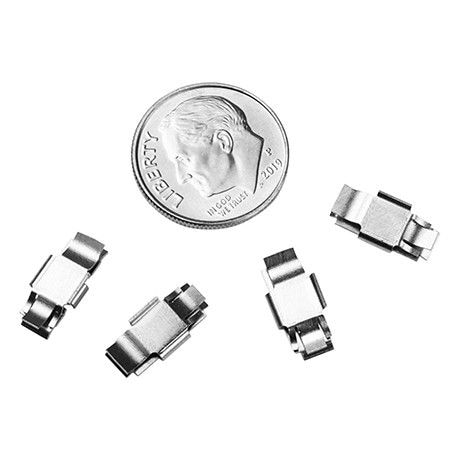
The products shown here highlight several practical approaches to board mounting. For example, the OMEGA PCC-SMD-20, PCC-SMD-500, and PCC-SMD-1000 are SMT circuit board mountable thermocouple and RTD connectors designed for compact assemblies. Their surface-mount format makes them suitable where automated PCB assembly and reduced footprint are important considerations.
For applications that favor through-board or solderable installation, this category also includes miniature female thermocouple connector formats such as OMEGA PCC-SMP-V-UCB-100 and PCC-SMP-V-UCB-50 for vertical mount layouts, as well as PCC-SMP-UCB-100-CE and PCC-SMP-UCB-50-CE for horizontal closed-end configurations. Other variants, including PCC-SMP-UCB-100-R and PCC-SMP-UCB-50-R, incorporate a transistor retainer clip style that may be useful where component retention is part of the assembly approach.
What to consider when selecting a PCB connector
The first selection factor is the sensor interface itself. In this category, the listed products are centered on U-type thermocouple connection formats, with miniature female thermocouple connector arrangements and board-mount protection circuit board connector styles. Compatibility between the sensor type and connector format should always be confirmed before specifying a part.
Next, review the mounting method and mechanical layout. A surface-mount connector can support dense board designs, while solderable vertical or horizontal versions may be easier to integrate depending on board edge access and enclosure geometry. Material choice, temperature capability, and pin/socket arrangement also affect long-term suitability, especially in equipment exposed to repeated thermal cycling.
It is also worth considering how the board-level connector fits into the wider wiring architecture. If the application needs user-assembled terminations in the field, field wireable connectors may be a better companion category. Where higher channel density or grouped signal handling is needed, multi-pin connectors, pins & sockets can help extend the system design.
Why orientation and form factor matter
In temperature measurement hardware, connector geometry can have a direct effect on assembly convenience and final product packaging. A vertical board connector often helps when cables need to enter from above or when board edge space is limited. A horizontal version may be easier to use where the connector must sit lower in the enclosure or align with a front-access layout.
Small SMT styles can be particularly valuable in modern electronics where board real estate is tightly managed. At the same time, larger solderable connector bodies may offer practical handling advantages during installation and service. The right choice depends less on general preference and more on the mechanical, electrical, and maintenance priorities of the equipment being built.
OMEGA solutions in this range
This category is centered on products from OMEGA, a widely recognized name in temperature measurement components and connectivity. The available range reflects different pack sizes, mounting options, and mechanical styles, which is useful for both prototype work and production planning.
Examples in this selection include compact SMT connector families and board-mount miniature female thermocouple connectors with vertical, closed-end, or retainer-style configurations. Rather than treating them as interchangeable parts, it is better to compare each option based on assembly method, orientation, and the sensor connection style required by the target design.
How PCB connectors fit into a broader temperature connector ecosystem
Board-mount connectors are one part of a larger temperature interconnection strategy. In many systems, the signal path may begin at the sensor, pass through a field connection or panel interface, and then terminate at a PCB-level input inside the device. Choosing the right category at each stage can improve signal organization, simplify maintenance, and support cleaner system integration.
For example, installations that transition from cabinet wiring into modular hardware may also use panel mount connectors at the enclosure boundary. PCB connectors then handle the final transition from accessible wiring to the electronics layer, helping maintain a more structured and serviceable design.
Choosing the right connector for your build
If your design requires direct board integration for thermocouple connectivity, this category offers a focused set of options for compact and practical implementation. The most effective selection usually comes down to a few essentials: sensor type compatibility, mounting style, connector orientation, expected operating temperature range, and how the connection will be assembled or serviced over time.
By reviewing those factors carefully, engineers and buyers can narrow the range to the most suitable format without overcomplicating the design. Whether the priority is SMT assembly, vertical access, or a specific miniature female connector style, these PCB connector options support more reliable and organized temperature measurement integration at the board level.
Get exclusive volume discounts, bulk pricing updates, and new product alerts delivered directly to your inbox.
By subscribing, you agree to our Terms of Service and Privacy Policy.
Direct access to our certified experts