Tool box
Keeping hand tools organized is not just about storage. In workshops, maintenance teams, production lines, and field service work, the right case, chest, or trolley helps reduce downtime, protects tools from damage, and makes daily work more efficient. This category brings together Tool box solutions for different working styles, from compact portable units to larger drawer-based cabinets and mobile trolleys.
Whether you need a simple box for essential hand tools or a heavier-duty setup for structured tool management, choosing the right format depends on how tools are transported, how often they are used, and how much organization is required. The products in this range support common industrial and technical environments where access, layout, and durability matter.
Tool storage options for workshop, maintenance, and service work
A toolbox can serve very different purposes depending on the job. Portable models are useful for technicians who move between machines, service points, or project sites, while drawer cabinets and trolleys are better suited to fixed work areas where tools need to be sorted by type, task, or maintenance sequence.
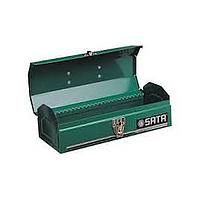
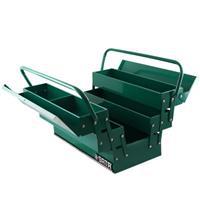
Within this category, you can find formats such as classic metal boxes, multi-section portable chests, suspended cabinets, and mobile trolleys. Some options are intended mainly for carrying tools, while others are designed for organized storage with drawers, compartments, and larger capacities for busy workshop environments.
Common product types in this category
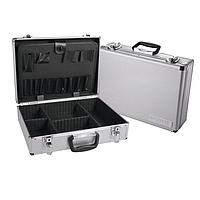
For basic transport and everyday use, compact metal toolboxes remain a practical choice. Models such as the KTC EK-10A Tool box or the KTC SKX0213 Tool Box with one chamber and three drawers illustrate the difference between a straightforward portable box and a more structured unit with separate storage zones.
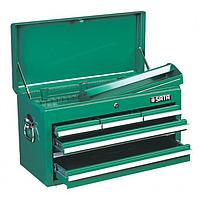
For users who need more capacity and better separation between tool groups, a portable chest such as the TOPTUL TBAC0501 3-Sections Portable Tool Chest or TBAC0502 can be a better fit. These formats are often preferred when tools need to be accessed quickly without unloading the entire case.
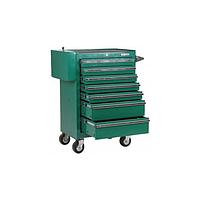
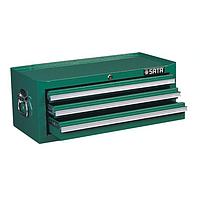
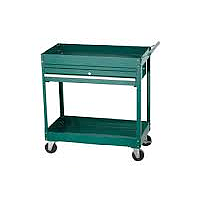
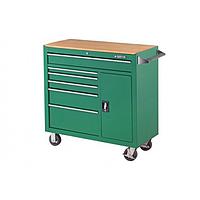
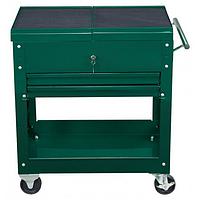
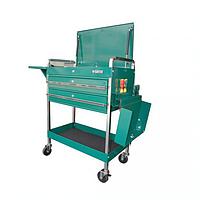
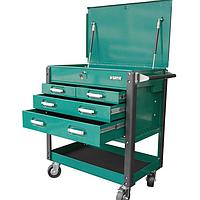
At the larger end, drawer trolleys and cabinets support workshop layout and inventory control. Examples include the TOPTUL TCCA0703 7-Drawer Mobile Tool Trolley, the TOPTUL GE-20820 W/7-Drawer Tool Trolley, and the KOCU KC-322 9 Drawers Tool Cabinets. These are generally selected when teams need more storage volume, clearer tool segregation, or easier movement within the work area.
How to choose the right toolbox format
The first decision is usually portability versus capacity. If a technician carries tools to different locations, a compact box or sectional chest is often more practical than a full trolley. If the tools stay near a maintenance bay or assembly bench, a trolley or cabinet may improve workflow by keeping everything visible and easier to categorize.
Another important factor is internal layout. Drawers help separate sockets, pliers, drivers, fastener tools, and measuring accessories, while a single chamber may be enough for general-purpose hand tools. If your workflow already depends on grouped tools such as a socket wrench set or a hex wrench set, choosing a storage format with defined sections can make daily retrieval much faster.
Physical footprint also matters. In tight service areas, a portable chest with modest dimensions may be more practical than a wide trolley. In larger workshops, drawer count, caster mobility, and loading capacity become more relevant, especially when tools are shared across shifts or departments.
Examples of use in industrial environments
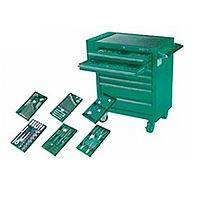
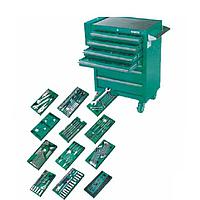
In preventive maintenance, technicians often need a mobile storage solution that can move between machines. A multi-drawer trolley helps keep commonly used hand tools arranged by maintenance step, reducing time spent searching for the right item. Tool trolleys with preloaded tool sets, such as the TOPTUL GT-16308, GT-16307, or GE-21351, may suit teams that want a more structured starting point.
In assembly and repair stations, a fixed or semi-mobile cabinet can support better workstation discipline. Suspended units like the TOPTUL TBBF0703 or TBBF0903 fit applications where wall or bench-area storage is preferred, while larger drawer cabinets help store both everyday tools and less frequently used equipment.
For service engineers working off-site, a simpler portable toolbox remains a reliable option. It is easier to carry, faster to load into a vehicle, and often sufficient for standard repair calls when only a core set of tools is required.
What to look for beyond size alone
When comparing toolboxes, it helps to think beyond external dimensions. The number of drawers or compartments affects how well tools can be separated, while material and finish influence durability in shop-floor conditions. Units built for regular industrial use typically need to handle repeated opening, transport, and exposure to dust, grease, and routine handling.
Weight is another practical consideration. A heavier cabinet may offer better stability in a workshop, but a portable toolbox should still be manageable in real field conditions. If the toolbox is expected to move frequently, wheel configuration, handle design, and the balance between stored content and mobility become important selection points.
It is also useful to consider how the toolbox fits your wider hand-tool ecosystem. Many users combine storage with application-based tool groups such as repair kits or general workshop accessories, so the right storage format should support not only capacity but also retrieval speed and logical organization.
Brands commonly selected for this category
This category includes products from brands already familiar in industrial hand tools and workshop equipment. KTC is often associated with compact and practical metal tool storage, while TOPTUL appears strongly in portable chests, suspended cabinets, and multi-drawer trolleys for workshop use. KOCU is also relevant for larger cabinet-style storage solutions.
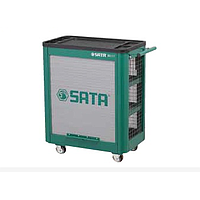
Depending on procurement standards or existing tool ecosystems, buyers may also review broader manufacturer options such as SATA, STANLEY, YATO, CROSSMAN, or other listed brands. Brand choice usually depends on required build style, preferred layout, and how the storage unit will be used in daily operations rather than on name alone.
Choosing a practical storage setup for your team
The most suitable toolbox is the one that matches real working conditions. A small maintenance crew may benefit from portable chests and compact boxes, while a larger workshop often needs drawer trolleys or cabinets to improve control, visibility, and consistency across tool locations. In many cases, a mixed setup works best: portable units for field tasks and larger cabinets for centralized storage.
By comparing mobility, drawer layout, storage volume, and working environment, buyers can narrow down the right solution more effectively. This Tool box category is intended to support that process with options ranging from simple carry cases to workshop-ready trolley systems, helping teams keep tools protected, accessible, and easier to manage over time.
Get exclusive volume discounts, bulk pricing updates, and new product alerts delivered directly to your inbox.
By subscribing, you agree to our Terms of Service and Privacy Policy.
Direct access to our certified experts