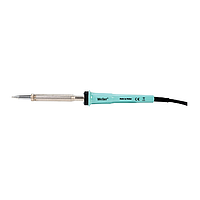
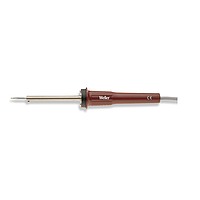
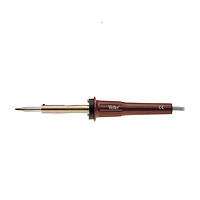
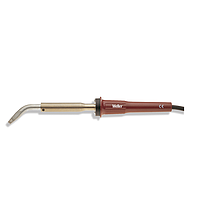
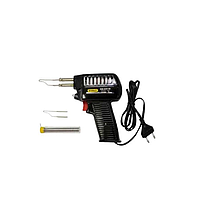
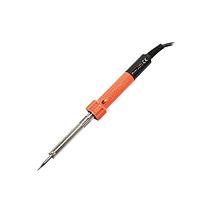
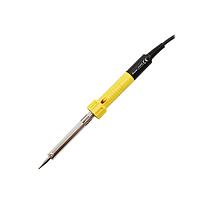
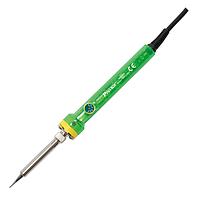
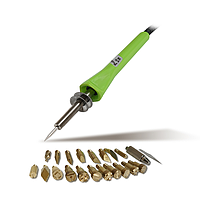
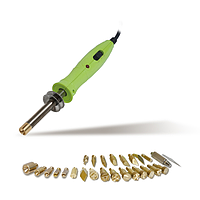
Soldering Iron
Reliable soldering work depends on more than heat alone. In electronics assembly, cable work, repair benches, and field service, the right tool helps maintain stable temperature, cleaner joints, and better control over delicate components or heavier conductors. That is why choosing a suitable Soldering Iron matters for both productivity and consistency.
This category brings together handheld soldering tools used for joining wires, terminals, connectors, and electronic parts in a controlled way. Whether the job involves routine maintenance or mobile repair work, the selection should match the working environment, the size of the joint, and the level of thermal performance required.
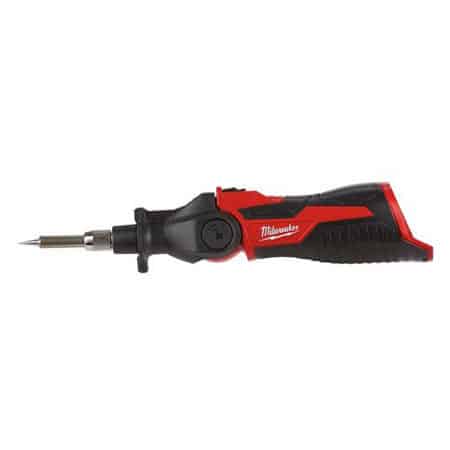
Where soldering irons are commonly used
Soldering irons are widely used in electronics manufacturing, equipment servicing, electrical installation, prototyping, and workshop repair. Typical tasks include attaching wires to terminals, assembling circuit boards, reworking connectors, and repairing small electrical parts where controlled localized heating is needed.
In many workplaces, the soldering iron is part of a broader tool set that may also include mechanical and installation equipment. For teams handling mixed maintenance tasks, it can be useful to review other power hand tool solutions by application, although soldering itself requires a more precise heat-focused approach than cutting or drilling tools.
What to consider when selecting a soldering iron
The first point is the actual job profile. Fine electronics work usually benefits from a compact, responsive tool that gives the operator better control on small pads and sensitive parts. For heavier joints, cable lugs, or connectors with higher thermal mass, a model with stronger heat recovery can make the process more stable and efficient.
Power source is also important. Corded tools are often preferred for fixed benches, while battery-powered models can be practical for maintenance teams that need mobility. Temperature capability, heater type, ergonomics, warm-up behavior, and tip suitability all influence day-to-day usability. In many cases, buyers compare options within the broader soldering iron range based on the balance between portability and continuous-use performance.
Common product types in this category
Not every soldering iron is designed for the same working style. A simple handheld unit may be enough for general repair, while some users prioritize quick heat-up, lightweight handling, or the flexibility to work away from a fixed bench. Understanding these differences helps narrow the selection faster.
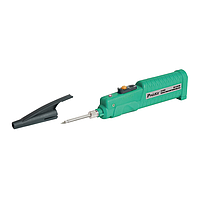
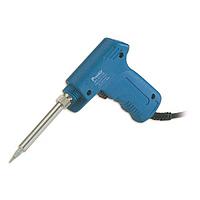
Battery-powered models are useful where access to mains power is limited or where technicians move frequently between locations. Conventional electric irons remain common for repetitive bench work because they are straightforward to use and easy to integrate into everyday maintenance or assembly routines. For users evaluating brand ecosystems, pages such as HAKKO tools can offer helpful context around available product styles and related equipment.
Examples from leading brands
Among the representative products in this category, the Milwaukee (tool) M12 SI-0 Soldering Iron is a clear example of a battery-powered option intended for mobile work. Its Li-ion platform and 12 V operation make it relevant for technicians who need portability, while the stated temperature capability supports general soldering tasks where on-site flexibility matters.
Another practical reference is the HAKKO PRESTO 980 Soldering Iron/Ceramic Heater Type. This model illustrates a lightweight handheld format with a ceramic heater, a design often associated with responsive heating behavior in manual soldering applications. Depending on workflow, buyers may compare this type of tool with other solutions from Milwaukee (tool) or traditional bench-oriented brands to match operating habits and service conditions.
How heater design and temperature behavior affect work quality
A soldering iron should deliver enough heat to form a reliable joint without overheating nearby materials. In practice, this means the tool needs to recover temperature efficiently when it touches the workpiece. If recovery is too slow, solder flow may become inconsistent, especially on larger connectors or wires that draw heat away quickly.
Heater construction plays a role here, as does overall power delivery. For delicate electronics, steady control helps reduce the risk of lifting pads or stressing temperature-sensitive parts. For electrical maintenance, stronger heat transfer may be more important than compactness alone. This is why buyers should think in terms of application fit, not just headline wattage or maximum temperature.
Choosing the right tool for bench work or field service
For bench-based tasks, comfort over long sessions is often more important than mobility. A lightweight body, predictable heating behavior, and easy handling can improve operator accuracy and reduce fatigue. These factors are especially relevant in repetitive assembly or rework processes where consistency matters from one joint to the next.
For field service, portability and fast deployment become more important. A cordless soldering iron can help when working on-site, inside control panels, or in maintenance scenarios where power access is inconvenient. Teams that regularly combine soldering with installation work may also browse adjacent tools such as drill machines, but soldering equipment should still be selected according to thermal control and joint requirements rather than general workshop convenience.
Why this category is relevant for technical buyers
B2B buyers often need more than a generic repair tool. They may be sourcing for maintenance departments, electronics production, service technicians, educational labs, or contract assembly teams. In these cases, selection criteria typically include reliability in daily use, compatibility with the job environment, and suitability for the scale of soldering work being performed.
This category supports that evaluation by bringing together products from recognized manufacturers such as HAKKO, Milwaukee (tool), WELLER, GOOT, Proskit, and others listed for this range. Rather than focusing only on brand names, it is better to compare how each tool aligns with the intended workload, mobility needs, and operator handling preferences.
Final considerations before purchase
A good soldering iron choice starts with the real task: small PCB work, cable termination, connector repair, or mobile maintenance. From there, it becomes easier to decide between corded and cordless formats, lighter or more heat-capable designs, and tools intended for quick occasional jobs or regular production use.
By reviewing the working environment, joint size, and expected duty pattern, buyers can select a soldering tool that supports cleaner joints and more dependable daily performance. If you are comparing options in this category, focus on practical use conditions first, then narrow the shortlist by heating method, portability, and brand ecosystem.
Get exclusive volume discounts, bulk pricing updates, and new product alerts delivered directly to your inbox.
By subscribing, you agree to our Terms of Service and Privacy Policy.
Direct access to our certified experts