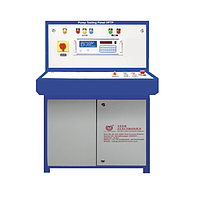
Hydraulics practice
Understanding fluid behavior is easier when learners can see pressure, head, flow rate, and pump performance in action rather than only in theory. In technical schools, universities, and industrial training centers, Hydraulics practice equipment helps bridge that gap by turning abstract principles into measurable experiments and repeatable demonstrations.
This category is intended for hands-on learning in hydraulics, fluid mechanics, and pump technology. It supports teaching environments that need reliable training rigs for demonstrating flow characteristics, pump curves, series and parallel operation, and the practical relationship between hydraulic variables in a controlled laboratory setting.

Where hydraulics training equipment fits in education and technical labs
Hydraulic training systems are commonly used in engineering education, vocational programs, research labs, and maintenance training environments. They give students and trainees a practical way to observe how fluid moves through channels, tanks, valves, and pumps while connecting the results to the equations taught in class.
Compared with purely theoretical study, a well-designed training setup makes it easier to interpret flow behavior, head losses, pump efficiency, and system response under changing operating conditions. For institutions building a broader teaching environment, hydraulics labs are often complemented by related areas such as civil engineering training and general application training resources.
Typical equipment found in this category
This category includes benches and demonstration units designed specifically for repeated instructional use. Some systems focus on basic hydraulic principles, while others are built to illustrate pump operation, system configuration, and the effect of changing flow paths or load conditions.
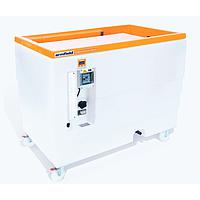
A core example is the Armfield F-10 Hydraulics bench, which serves as a practical base unit for many fluid mechanics exercises. In a teaching lab, this type of bench supports experiments involving volumetric measurement, water circulation, and the connection of accessories or demonstration modules that expand the range of lessons available.
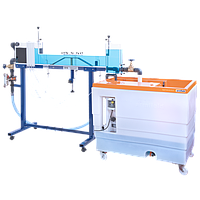
For visualizing channel flow and hydraulic phenomena, the Armfield S16 Hydraulic flow demonstrator is a relevant example. Equipment in this class is especially useful when the goal is to help students observe how water behaves across a defined working section and to connect what they see with core fluid mechanics concepts.
Pump training and system behavior in real laboratory exercises
Pump-focused trainers are a major part of hydraulics practice because they show how energy is transferred to fluid and how system conditions influence performance. Instructors can use these units to explain the relationship between speed, head, flow, and power, while also introducing basic measurement methods and data interpretation.
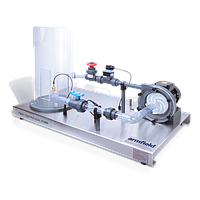
The Armfield FM50 Centrifugal pump demonstration unit is suitable for illustrating the operating characteristics of a centrifugal pump in a controlled educational setup. Students can compare measured values, observe how flow and pressure change with operating conditions, and better understand the shape and meaning of a pump performance curve.
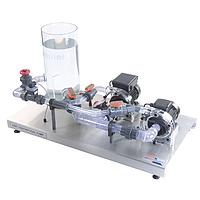
More advanced lessons often require comparison between different system layouts. The Armfield FM51 Series and parallel pumps demonstration unit helps learners study how pump arrangement affects total head and flow delivery, which is valuable for courses covering system design, pump selection, and hydraulic network behavior.
How to choose the right hydraulics practice setup
Selection should start with the learning objectives rather than the equipment list alone. A teaching lab focused on introductory fluid mechanics may prioritize a hydraulics bench or flow demonstrator, while a program centered on rotating equipment, maintenance, or pump systems may need dedicated pump demonstration units.
It is also important to consider the level of the learners, the time available for each lab session, and whether experiments need to be instructor-led or independently repeatable by students. In many cases, the best result comes from combining a foundational bench with targeted modules that support progressively more advanced exercises.
Another practical factor is how clearly the equipment helps users measure and compare results. Training systems that allow learners to observe pressure, flow, and head in a structured way are typically more effective for developing troubleshooting skills and engineering judgment than setups that only provide a visual demonstration.
Why Armfield is often specified for hydraulics education
Within this category, Armfield is a notable manufacturer for educational and laboratory-focused hydraulic equipment. Its product range in this context aligns well with institutions that need structured experimentation, repeatable training outcomes, and equipment designed for teaching rather than only for industrial process duty.
The value of an education-oriented manufacturer is not just in the hardware itself, but in how the system supports lesson planning, demonstration clarity, and progression from basic to more advanced topics. That is particularly relevant for hydraulics, where students benefit from equipment that makes cause-and-effect relationships visible and measurable.
Applications across technical disciplines
Although this category is centered on hydraulic principles, its relevance extends beyond a single course. Mechanical engineering, civil engineering, water systems education, and technician training programs can all use hydraulics practice equipment to support laboratory work related to fluid transport, pump operation, and system analysis.
It can also serve as a practical foundation before students move into adjacent disciplines. For example, institutions developing wider laboratory capabilities may also review basic practice equipment for core science teaching or specialized platforms in areas such as information technology training where instrumentation and control skills may later connect with process systems.
What makes a hydraulics practice category useful for buyers
For B2B buyers, the value of this category lies in comparing equipment by instructional purpose, not just by dimensions or headline figures. Some products are better suited to entry-level demonstrations, while others support deeper investigation into pump configuration, measurement, and system response.
A useful category page should therefore help purchasers identify whether they need a general-purpose bench, a hydraulic flow demonstrator, or a more focused pump training rig. This makes procurement easier for universities, vocational schools, training centers, and laboratory planners who are matching equipment to course outcomes and lab space.
Short FAQ
Who typically buys hydraulics practice equipment?
Common buyers include universities, vocational colleges, technical training centers, research labs, and organizations running engineering or maintenance training programs.
Is this category only for fluid mechanics courses?
No. It is also relevant for pump training, water systems education, and broader engineering laboratory programs where learners need hands-on experience with hydraulic behavior.
What is the difference between a hydraulics bench and a pump demonstration unit?
A hydraulics bench is generally used as a base platform for multiple fluid mechanics experiments, while a pump demonstration unit is more specifically focused on pump performance and operating characteristics.
Choosing the right hydraulics training equipment depends on the depth of instruction, the type of experiments required, and how the lab will be used over time. A well-matched setup supports clearer teaching, better learner engagement, and more meaningful understanding of real hydraulic systems.
Get exclusive volume discounts, bulk pricing updates, and new product alerts delivered directly to your inbox.
By subscribing, you agree to our Terms of Service and Privacy Policy.
Direct access to our certified experts