Industral 4.0
Modern manufacturing training increasingly needs more than isolated PLC benches or single-machine demos. Engineering schools, vocational centers, and industrial training labs often look for platforms that connect automation, communication, process control, and smart production workflows in a way that reflects real factory environments. That is where Industral 4.0 training equipment becomes relevant: it helps learners understand how individual devices, networks, and control logic work together inside an integrated system.
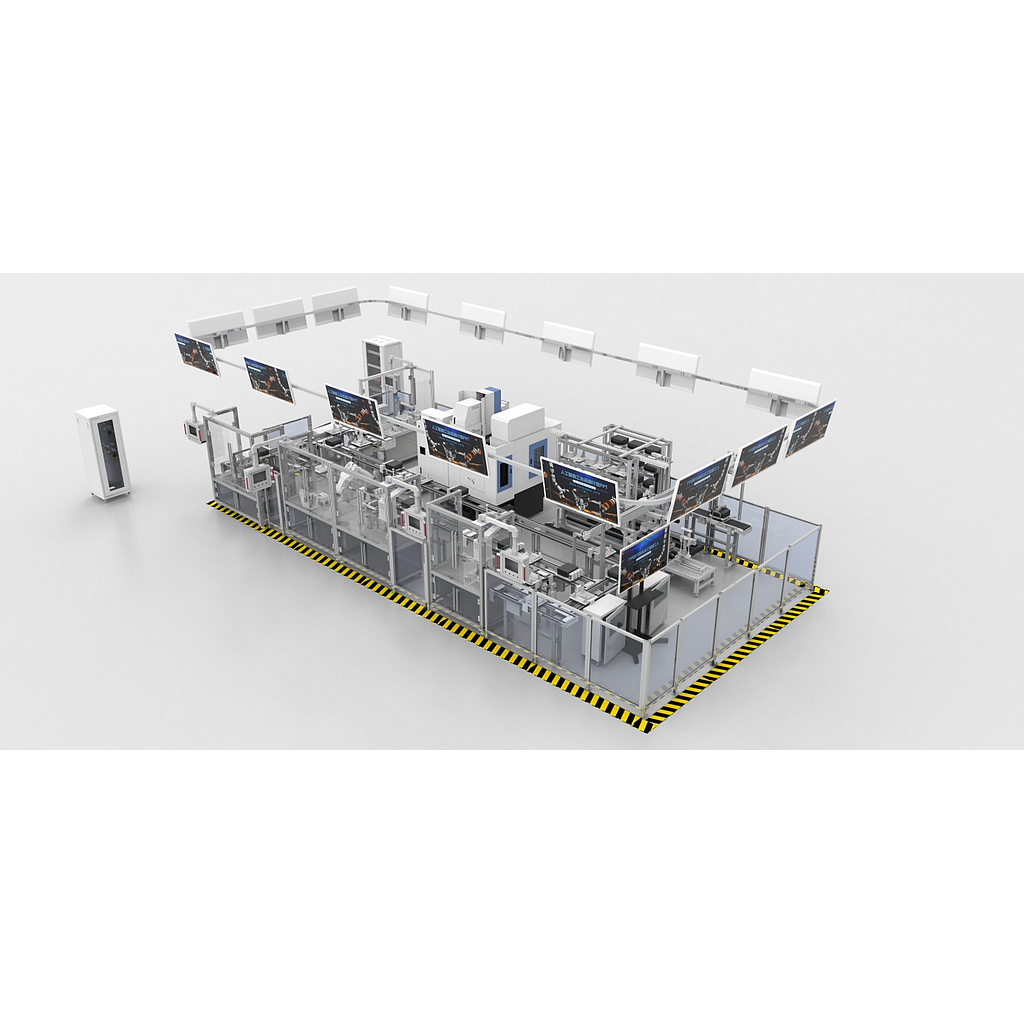
Within this category, the focus is on training systems designed for hands-on learning in industrial automation, network integration, production line control, and intelligent manufacturing concepts. These solutions are suited to technical education environments where users need practical exposure to PLC-based control, HMI interaction, motion and drive elements, sensor integration, and industrial communication structures rather than only theoretical instruction.
Why Industry 4.0 training systems matter in technical education
Industry 4.0 is not only about adding software to machines. In training environments, it usually means building a realistic bridge between field devices, control hardware, operator interfaces, and higher-level monitoring or communication layers. A well-designed platform allows students and trainees to see how signals move from sensors to controllers, how commands are executed by actuators, and how production data can be exchanged across a wider automation architecture.
For schools, laboratories, and workforce development programs, this approach supports both foundational and advanced learning. Learners can start with wiring, safety, and basic I/O logic, then move toward networking, coordinated control, process visualization, and system-level troubleshooting. If your training scope also includes broader hands-on technical modules, it may be useful to explore related areas such as application training equipment.
Typical equipment scope in the Industral 4.0 category
This category generally covers integrated educational platforms rather than simple standalone devices. Many systems combine PLCs, HMIs, inverters, motor control elements, sensor interfaces, and communication networks into one teaching structure. That makes them suitable for demonstrating how a complete automation chain is built, commissioned, and maintained.
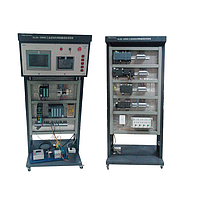
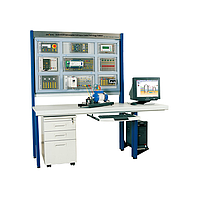
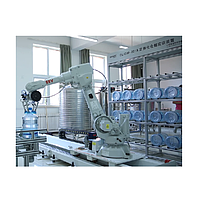
Representative examples include the DOLANG DLIM-412 Industrial 4.0 Technology Application System, which is positioned around multi-station industrial training, and the DOLANG DLIM-201 pure water automatic production line training system, which reflects process-oriented automation and logistics-related training content. For users comparing supplier ecosystems, the DOLANG product range is especially relevant in this segment because it spans both process and network-focused training platforms.
Core learning topics supported by these systems
A major advantage of integrated training equipment is that it supports multiple disciplines on one platform. Instead of teaching PLC programming, drive control, and industrial communication as separate topics, these systems can present them as connected parts of one operational workflow. This is closer to how real production environments are engineered and maintained.
Depending on the selected platform, typical training activities may include PLC programming, analog and digital signal handling, HMI operation, industrial network configuration, inverter control, and sensor wiring. Some systems in this category also support process control exercises, palletizing or handling workflows, and production line sequencing. In practical terms, this helps learners understand both machine-level control and system-level integration.
Examples of training platforms in this category
For institutions that need a broad Industry 4.0 demonstration platform, the DOLANG DLIM-412 can serve as an example of a system that brings together multiple stations, controlled power architecture, and safety-oriented design elements such as overload protection, emergency stop, and alarm indication. This kind of setup is useful when the goal is to expose trainees to coordinated industrial operations rather than only single-point experiments.
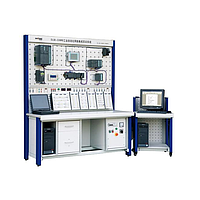
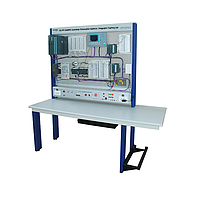
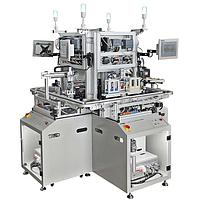
Where the emphasis is on automation control fundamentals, the DOLANG DLGK-ACDE1300 Industrial Automation Control Technology Platform Training Set illustrates a more focused control-drive-execute structure, combining PLC, frequency converter, HMI, motor-related components, and other essential modules. For training centers that want to teach communication between controllers and devices, the DOLANG DLGK-SIMNA, DLGK-SIMND, and DLGK-SIMNA-A platforms point toward industrial network integration topics, including multi-level communication architectures and practical automation networking scenarios.
How to choose the right Industral 4.0 training system
The best fit depends on the learning outcomes you need to support. If the objective is introductory automation education, a platform centered on PLCs, HMI, drives, and basic electrical control may be the most efficient starting point. If the curriculum is intended for advanced technical programs, systems with network integration, process visualization, and multi-station coordination may provide a better long-term training value.
It is also important to consider whether the training environment is focused on discrete manufacturing, process automation, logistics, or mixed mechatronic applications. Some labs need a compact platform for repeated classroom exercises, while others need a larger setup for project-based learning, troubleshooting practice, and collaborative training. Institutions that also teach digital systems or software-oriented modules may benefit from reviewing adjacent categories such as information technology training to build a more complete learning ecosystem.
Important evaluation points for labs and training centers
Before selecting equipment, buyers should look at more than the headline configuration. In an educational context, ease of instruction, visibility of system architecture, safety features, and suitability for repeated student use are just as important as the hardware list. Power requirements, working environment limits, and maintenance practicality also matter, especially for shared labs with fixed infrastructure.
Another useful criterion is how clearly the platform demonstrates real industrial workflows. A training system becomes more valuable when trainees can move from device recognition and wiring to programming, monitoring, fault diagnosis, and communication setup in a structured way. This is particularly important for centers preparing learners for work in automation maintenance, smart manufacturing, and industrial digitalization.
Applications across education, research, and workforce development
Industral 4.0 training equipment is relevant in vocational colleges, university engineering departments, corporate academies, and technical research labs. It can be used for routine instruction, practical exams, instructor-led workshops, and project-based assignments related to production control, industrial communication, and smart factory concepts.
In broader education environments, these platforms may also complement interdisciplinary training. For example, institutions that support laboratory teaching across engineering fields sometimes combine automation labs with adjacent practice areas such as basic practice equipment for science and engineering. This helps create a more complete technical training framework from fundamentals to applied industrial systems.
Building a more practical Industry 4.0 learning environment
A strong training setup should help learners connect theory with real operation. That means using equipment that can demonstrate control logic, data flow, device coordination, and safe machine interaction in a visible and repeatable way. In this category, integrated systems from DOLANG provide examples of how educational platforms can be structured around production processes, automation networks, and multi-technology training objectives.
When selecting from the Industral 4.0 range, it is worth matching the platform to the actual teaching plan, student level, and lab resources. A system that aligns with your curriculum will do more than showcase modern automation hardware—it will support meaningful skill development in industrial control, communication, and smart manufacturing practice.
Get exclusive volume discounts, bulk pricing updates, and new product alerts delivered directly to your inbox.
By subscribing, you agree to our Terms of Service and Privacy Policy.
Direct access to our certified experts