
Innovative Industrial Automatic Control Technology Training (scanda, DCS)
Modern process plants and manufacturing lines rely on integrated control platforms to keep production stable, safe, and efficient. For schools, training centers, and industrial learning environments, hands-on access to these technologies is essential for building practical skills in monitoring, supervision, data handling, and control strategy development. This category is designed for users looking for training solutions related to supervisory control and distributed control environments used in real industrial automation.
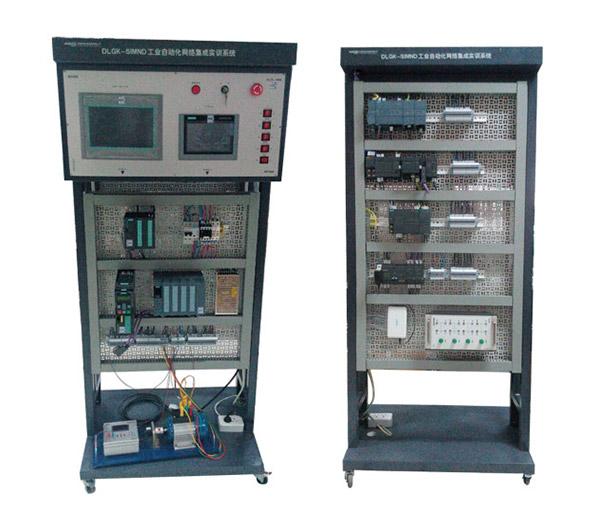
Training focused on real industrial control workflows
Innovative Industrial Automatic Control Technology Training (scanda, DCS) supports learning around the core logic of industrial automation systems, where operators and engineers need to observe process values, manage alarms, analyze trends, and coordinate control actions across multiple parts of a plant. In educational settings, this type of training helps bridge the gap between theory and actual control-room practice.
Rather than treating automation as an isolated PLC task, this category fits a broader view of plant operation. It is useful for understanding how field signals, operator interfaces, process visualization, and higher-level supervisory functions work together in an integrated system. That makes it relevant for technical institutes, universities, vocational centers, and industrial training departments.
Why SCADA and DCS training matters
SCADA and DCS are widely associated with process monitoring and coordinated control in sectors such as utilities, manufacturing, water treatment, energy, and industrial infrastructure. Even when learners already understand sensors, actuators, or basic controllers, they still need to see how information is collected, displayed, and used for decision-making across a complete automation architecture.
Training in this area typically helps learners develop skills in screen navigation, process visualization, alarm interpretation, trend review, supervisory commands, and an understanding of how distributed control structures improve reliability and operational clarity. For B2B buyers, these training systems can support workforce development, lab modernization, and industry-oriented curriculum design.
Typical learning outcomes in this category
A well-structured industrial automatic control training environment can help users move from component-level knowledge to system-level thinking. Instead of focusing only on wiring or isolated device setup, learners gain a clearer understanding of how control information flows through an operational plant environment.
- Understanding the relationship between field devices, controllers, operator stations, and supervisory layers
- Practicing process visualization and interpreting live operating conditions
- Learning how alarms, events, and historical data support troubleshooting
- Studying the basics of distributed control concepts in multi-point industrial processes
- Improving familiarity with operator workflow, system response, and monitoring logic
These outcomes are especially useful where training must prepare students or technicians for real industrial interfaces rather than purely theoretical automation exercises.
Where this training is used
This category is suitable for organizations that need practical exposure to industrial control concepts without going directly to full-scale plant systems. Technical schools may use it to strengthen automation and instrumentation programs, while universities can include it in mechatronics, process engineering, or industrial control laboratories.
It can also support corporate learning programs for maintenance teams, operators, and junior engineers who need a clearer understanding of supervisory systems before working on actual production assets. In broader education environments, it may complement areas such as application-oriented training equipment and interdisciplinary technical labs.
How to evaluate a training setup for industrial control education
When selecting equipment in this category, the main consideration is not only whether learners can see a display screen, but whether the setup supports meaningful interaction with industrial control logic. A good training solution should help users connect operating data, control actions, and process behavior in a way that reflects real-world plant operation.
Buyers often look at factors such as training objectives, learner level, available lab space, and whether the system needs to support instructor-led demonstrations or student-based exercises. It is also useful to consider how the training equipment fits alongside related educational areas such as information technology training, especially where networking, data communication, or interface software are part of the curriculum.
Relationship with broader automation and engineering education
Industrial automatic control training does not exist in isolation. In many programs, it is most effective when connected with foundational subjects such as physics, instrumentation principles, electrical basics, or process behavior. This makes it a practical extension to more general basic practice equipment for science and engineering education, where learners first develop technical fundamentals.
At a more advanced level, the category can also support multidisciplinary teaching by showing how control systems interact with physical infrastructure, utilities, and engineered processes. For institutions building broader technical labs, there may also be useful overlap with civil engineering training where monitoring and control concepts apply to facilities and infrastructure systems.
Choosing the right category for your training objectives
If your goal is to teach operator awareness, supervisory monitoring, and distributed process control concepts, this category provides a focused starting point. It is especially relevant when the learning objective goes beyond single-device automation and moves toward complete industrial control environments.
For procurement teams, educators, and lab planners, the best approach is to match the training system to the expected learner profile, course depth, and intended application area. A well-chosen platform can help create more realistic automation training, improve technical readiness, and support long-term development in industrial digital control skills.
Whether the requirement comes from a vocational lab, a university program, or an industrial training center, this category helps support practical education in supervisory and distributed control technologies. Reviewing the broader training ecosystem alongside this category can also make it easier to build a more coherent and industry-relevant learning environment.
Get exclusive volume discounts, bulk pricing updates, and new product alerts delivered directly to your inbox.
By subscribing, you agree to our Terms of Service and Privacy Policy.
Direct access to our certified experts