Machinery Theory & Design Training
Building practical understanding in mechanical transmission, assembly, and system design usually requires more than static diagrams or classroom theory. Training platforms that combine visible mechanisms, hands-on adjustment, and guided experimentation help learners connect design principles with real machine behavior. This is where Machinery Theory & Design Training becomes especially valuable for technical schools, vocational centers, engineering departments, and industrial training programs.
In this category, the focus is on equipment that supports learning across mechanical structure, motion transfer, component fitting, and assembly practice. Rather than treating theory and workshop work as separate topics, these systems are typically used to demonstrate how gears, shafts, couplings, bearings, drives, and alignment tasks work together in a complete training environment.
What this training category is designed to support
Machinery theory and design training equipment is generally used to teach the relationship between mechanical principles and real-world assembly or adjustment tasks. In a lab or workshop setting, learners can observe motion transmission, practice fitting procedures, and understand how individual machine elements influence overall performance.
This type of category is relevant for institutions that need structured platforms for technician training, engineering education, maintenance instruction, or skills assessment. It is also useful where instructors want to move from abstract explanation to repeatable hands-on exercises involving transmission systems, fastening, alignment, and mechanical troubleshooting.
Typical learning scope in machinery theory and design
The learning scope often includes core machine elements such as gear transmission, belt and chain drives, screw mechanisms, bearings, couplings, and brake or clutch concepts. These topics are easier to understand when learners can assemble modules, inspect movement paths, and compare how different mechanisms behave under controlled conditions.
Another important aspect is mechanical assembly and adjustment. Students are not only expected to recognize components, but also to install, align, secure, and verify them correctly. That practical layer makes the training suitable for technical education environments that emphasize both theory and workshop competency.
For broader skills development, organizations may also compare this category with application training equipment when building a more complete technical training setup.
Representative systems in this category
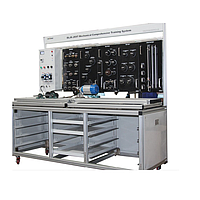
Several systems from DOLANG illustrate how this category can be used in practice. The DOLANG DLJX-JXXT Mechanical Comprehensive Training System is suited to teaching a wide range of mechanical principles through modular practice. Based on the available context, it supports instruction around transmission elements and design practice, with optional modules that help expand the range of mechanical demonstrations.
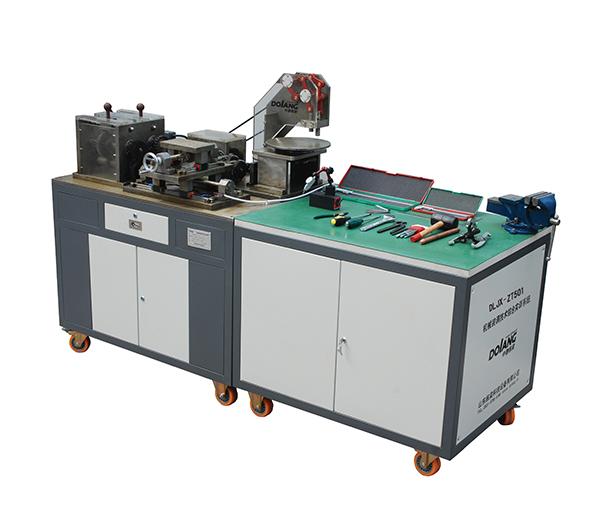
The DOLANG DLJX-ZT501 Mechanical Assembly and Adjustment technology Comprehensive Training System is more closely aligned with assembly workflow, adjustment tasks, and structured operational practice. It is relevant where the training objective includes component installation, motion verification, and the relationship between assembly quality and machine function.
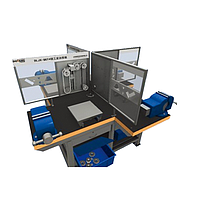
For fitting-oriented workshop training, the DOLANG DLJX-QGT4 Fitter Training System provides another useful example. It fits scenarios where trainees need to develop bench skills and understand how mechanical parts and transmission modules are integrated within a protected, station-based setup.
How to choose suitable equipment for a training lab
Selection should begin with the intended learning outcome. If the goal is to teach broad machine-element principles, a comprehensive modular platform may be more appropriate. If the priority is skill development in fitting, assembly, and adjustment, then a more task-oriented system may deliver better training value.
It is also important to consider the balance between theoretical demonstration and practical intervention. Some users need equipment mainly for instructor-led explanation, while others require repeated student operation, disassembly, reassembly, and assessment. Training capacity, workstation layout, and the expected learner level should all be matched to the equipment style.
Where institutions also run introductory laboratory courses, related solutions in basic practice equipment may help complement more specialized mechanical training systems.
Why modular and simulation-ready systems matter
Mechanical education benefits from equipment that can cover more than one concept without forcing the instructor to switch between unrelated setups. A modular platform can support progression from basic motion transmission to more advanced topics such as mechanism interaction, fault observation, and design logic. This helps create a more coherent training path across different learner levels.
The context also shows optional software and simulation-related resources on selected systems. In training environments, this can be useful for previewing assembly processes, visualizing internal movement, or reinforcing lessons before and after hands-on work. Used properly, digital support does not replace physical practice; instead, it strengthens understanding of mechanism behavior and sequence-based operations.
Common application environments
This category is well suited to vocational schools, technical colleges, university laboratories, industrial training centers, and workforce development programs. Instructors can use the equipment for guided teaching, practical assignments, module-based demonstrations, or competency evaluation in mechanical subjects.
It may also support cross-disciplinary training where mechanical principles intersect with automation or industrial maintenance. In that context, users sometimes expand into neighboring educational areas such as information technology training when building modern teaching labs that combine mechanical and digital learning methods.
Key evaluation points before procurement
Before selecting a system, buyers should review the number of learners per session, available floor space, power requirements, safety expectations, and whether optional modules are necessary for the planned curriculum. A compact lab focused on core machine elements may have different needs than a workshop intended for multi-station skill assessment.
It is also useful to confirm whether the equipment will be used for introductory teaching, advanced technical practice, or instructor-led demonstrations. The most suitable choice is usually the one that matches the training objective clearly, supports repeatable exercises, and allows learners to link design principles with real mechanical tasks.
Supporting effective mechanical training programs
Well-chosen machinery theory and design trainers help bridge the gap between textbook concepts and workshop execution. By combining visible mechanical systems, guided assembly tasks, and structured practice, they give learners a more realistic understanding of how machine elements function in operation.
For schools and training providers planning or upgrading a mechanical education lab, this category offers a practical foundation for teaching transmission principles, fitting work, assembly logic, and mechanical system understanding. Reviewing the available platforms carefully will make it easier to select equipment that fits both curriculum goals and long-term training use.
Get exclusive volume discounts, bulk pricing updates, and new product alerts delivered directly to your inbox.
By subscribing, you agree to our Terms of Service and Privacy Policy.
Direct access to our certified experts