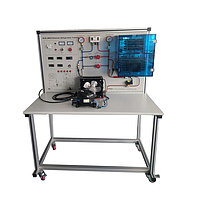
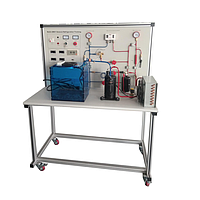
Refregeration Training
Hands-on refrigeration education becomes much more effective when learners can move beyond theory and work with equipment that reflects real cooling, vacuum, and moisture-removal processes. In technical schools, laboratories, and industrial training environments, this type of setup helps students understand how refrigeration principles are applied in controlled experiments, equipment handling, and process observation.
Refregeration Training covers practical devices used to demonstrate low-temperature generation, vapor capture, cold trapping, and related lab-scale refrigeration functions. For instructors and procurement teams, the value of this category lies in selecting equipment that supports clear training outcomes, safe operation, and realistic exposure to core thermal and vacuum concepts.
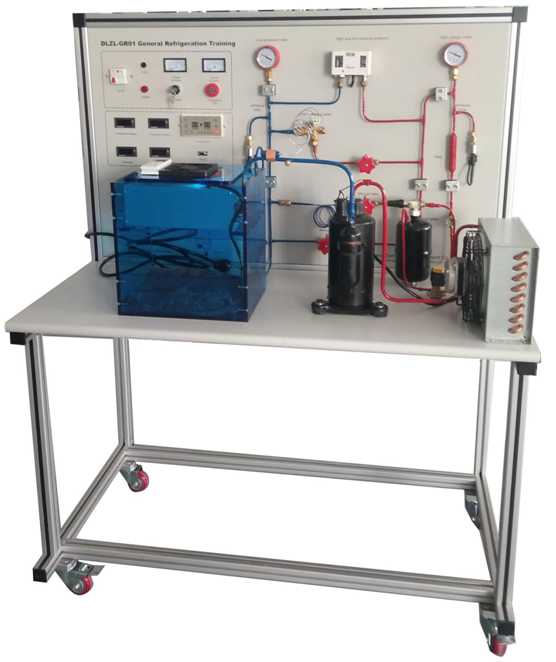
Where refrigeration training equipment fits in education and research
Refrigeration training is relevant across technical education, laboratory instruction, and research support environments where learners need to understand how cooling systems behave under real operating conditions. Instead of studying only diagrams or formulas, trainees can observe temperature reduction, condensation control, defrost behavior, and the relationship between refrigeration and vacuum systems.
This makes the category useful for universities, vocational centers, laboratory training rooms, and applied research facilities. It can also complement broader learning environments focused on application training, where practical operation and system-level understanding are important.
Typical equipment scope in this category
The products represented here are oriented toward laboratory-scale refrigeration and trapping processes rather than large HVAC training rigs. In practice, that means equipment such as freeze dryers and cold traps that help users study low-temperature collection, dehumidification, and vacuum-assisted drying workflows.
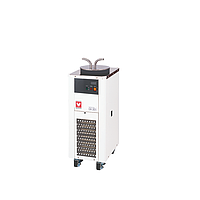
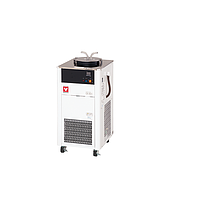
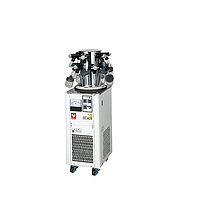
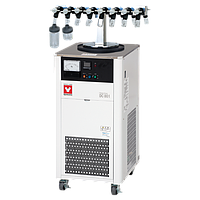
For example, the Yamato DC801 Freeze Dryer and Yamato DC401 Freeze Dryer illustrate how different low-temperature ranges can support different training or process scenarios. Likewise, the Yamato CA801 Cold Trap and Yamato CA301 Cold Trap are useful for demonstrating how a trap protects vacuum systems by capturing vapor before it reaches downstream components.
Why freeze dryers and cold traps are relevant for refrigeration learning
A freeze dryer provides a practical way to teach how cooling and vacuum conditions work together to remove moisture from materials. In training settings, this helps learners connect refrigeration performance with phase change, temperature control, and dehumidification behavior. It is especially useful when the goal is to introduce process-oriented cooling applications rather than only compressor theory.
A cold trap, by contrast, is a focused training tool for vapor capture in vacuum lines. It helps learners understand how low temperatures are used to condense and collect moisture or other vapors, reducing the load on the pump and improving process stability. This kind of equipment is valuable when teaching the relationship between refrigeration hardware and vacuum-based laboratory operations.
Examples from the Yamato range
Yamato is the main manufacturer highlighted in this category, with equipment suited to educational and research-oriented environments. The DC801 Freeze Dryer offers a lower trap temperature than the DC401, making it a relevant example when training requires comparison between deeper cooling performance and more standard freeze-drying conditions.
The CA801 Cold Trap and CA301 Cold Trap provide a similar comparison approach on the trapping side. Both are compact laboratory units, but they help illustrate how differences in low-temperature capability and cooling design can affect vapor capture behavior, operating conditions, and the type of experiment or training module being performed.
Key points to consider when choosing refrigeration training equipment
Selection should start with the intended learning outcome. If the program focuses on moisture removal under vacuum, a freeze dryer may be more appropriate. If the objective is to teach vapor protection and condensation in vacuum systems, a cold trap is often the more direct choice.
It is also important to evaluate practical factors such as temperature range, chamber or trap capacity, display and sensor visibility, safety features, and compatibility with the surrounding lab setup. In education, ease of observation matters almost as much as technical performance, because learners benefit from equipment that clearly shows operating status and process response.
For institutions building a broader technical lab, refrigeration training may also sit alongside foundational teaching resources such as basic practice equipment for mechanics, chemistry, physics, and biology. This is often useful when refrigeration topics are taught as part of a wider science or engineering curriculum.
Safety and usability in a training environment
In instructional settings, equipment should support repeatable use by different groups of learners while maintaining safe operation. Features such as overload protection, leakage protection, controlled defrosting, and clear temperature monitoring are especially relevant because they help instructors manage demonstrations and supervised lab exercises more effectively.
Usability also matters in day-to-day teaching. Compact footprints, straightforward connections, and accessible maintenance points can make it easier to integrate equipment into classroom labs or research support spaces. When systems are easier to prepare and monitor, instructors can spend more time on teaching concepts and less time on setup complexity.
How this category supports broader technical training
Refrigeration-related learning often overlaps with laboratory methods, biomedical handling, and process-oriented technical education. For that reason, this category can work well alongside resources used in biomedical training, where controlled temperature and sample-handling principles may also be part of the learning environment.
It can also support multidisciplinary teaching by giving students exposure to real equipment behavior, not just theoretical refrigeration cycles. That is particularly valuable for institutions preparing learners for laboratory work, research support roles, and technical operations where understanding low-temperature systems is part of everyday practice.
Choosing the right setup for your program
The right refrigeration training equipment depends on whether the priority is concept demonstration, lab process training, or exposure to real equipment used in research environments. A compact cold trap may be enough for teaching vapor capture and vacuum-line protection, while a freeze dryer can offer a broader view of low-temperature dehydration processes.
By comparing equipment types, operating temperature ranges, and training objectives, buyers can build a more effective learning environment for students, technicians, and researchers. This category is best approached as part of a practical teaching ecosystem, where each unit supports clearer understanding of low-temperature processing, vacuum-related operation, and safe laboratory refrigeration practice.
Get exclusive volume discounts, bulk pricing updates, and new product alerts delivered directly to your inbox.
By subscribing, you agree to our Terms of Service and Privacy Policy.
Direct access to our certified experts