Software
Modern training labs, research environments, and technical classrooms increasingly depend on software as much as on the instrument itself. From data acquisition and waveform analysis to lab workflow support and result visualization, software helps turn hardware platforms into practical tools for learning, testing, and development.
In education and research settings, the right software layer can simplify measurement tasks, improve repeatability, and make it easier to interpret results across multiple instruments or experiments. This category focuses on software options used alongside electronic test systems, oscilloscopes, and specialized laboratory equipment, with examples from brands such as KEYSIGHT and BROOKFIELD.
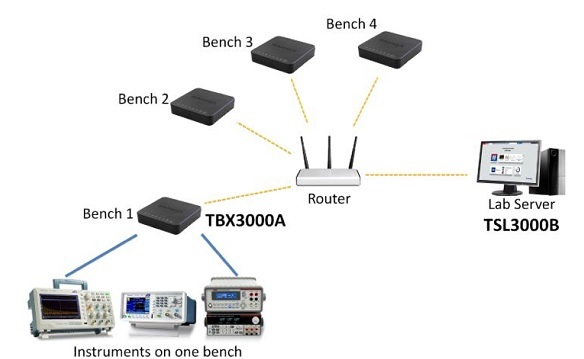
Why software matters in technical training and research
In many labs, instrument capability is no longer defined only by front-panel controls or hardware channels. Analysis packages, bundled options, and data handling applications often determine how efficiently users can capture, process, and compare results. This is especially important in teaching environments, where students need clear workflows, and in research settings, where traceable data handling supports better decision-making.
Measurement software also helps bridge the gap between theory and practical experimentation. Instead of manually recording values or relying on isolated screenshots, users can work with structured datasets, repeatable setups, and more consistent interpretation of results. That makes software relevant not only for advanced research, but also for routine lab exercises and technical education programs.
Typical software roles in this category
The software listed in this category can support several parts of the testing and learning process. Some tools are designed for embedded or instrument-based analysis, while others focus on application control, data acquisition, licensing, or broader feature activation for a compatible platform.
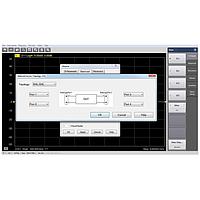
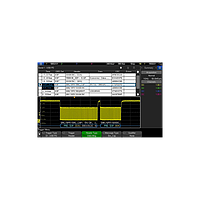
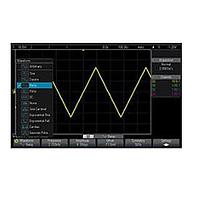
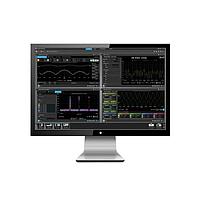
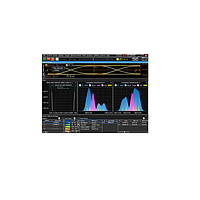
For example, oscilloscope-related options such as the KEYSIGHT P9240GENC Embedded Analysis Software for the P924xA Keysight Streamline Series Oscilloscopes are aligned with waveform interpretation and instrument-level analysis. Other options, such as KEYSIGHT DSOX4WAVEGEN2 software or the KEYSIGHT D4000BDLB Ultimate Software Bundle for the 4000 X-Series, illustrate how software can expand available functions within an existing instrument family rather than replacing hardware.
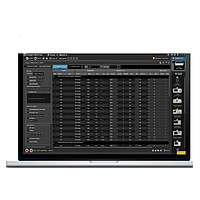
There are also applications built around lab connectivity and workflow support. The KEYSIGHT BV0006B PathWave BenchVue Data Acquisition App is a useful example of software intended to assist with collecting and managing measurement data from connected instruments. In a different type of laboratory environment, BROOKFIELD Wingather SQ Software represents software used alongside viscosity or material testing workflows where data handling and reporting are part of day-to-day work.
How software supports laboratory efficiency
One of the most practical benefits of instrument software is improved efficiency during setup, testing, and review. Instead of repeating manual steps at the bench, users can standardize how data is collected and how test sessions are documented. In educational labs, this helps instructors create more repeatable exercises. In research teams, it helps reduce variation between users or test stations.
Data acquisition and analysis tools can also shorten the path from raw measurement to usable insight. When users can collect data directly into an application and organize it more clearly, they spend less time on manual transcription and more time on interpretation. This is particularly relevant when multiple learners, engineers, or researchers need access to the same testing process.
For organizations building broader lab capability, software may be used together with adjacent resources such as information technology training programs or structured application training activities, where users need both instrument familiarity and workflow competence.
Choosing software for your equipment and workflow
Software selection should start with compatibility. Before comparing licenses or application scope, it is important to confirm the target instrument family, intended usage, and whether the software is an analysis package, a functional add-on, a bundle, or a support-related license. This helps avoid choosing a tool that fits the brand but not the exact platform or educational objective.
A second consideration is how the software will be used in practice. Some teams need instrument-resident analysis for faster bench work, while others need PC-based applications for data collection, review, or lab-wide usage. In teaching labs, ease of use and repeatable workflows often matter more than feature depth alone. In research projects, the priority may be integration into a larger test process and the ability to preserve consistent datasets over time.
It is also useful to evaluate the licensing model and support horizon where that information is relevant. The presence of license-oriented products such as the KEYSIGHT BV9201B License and subscription-based entries related to PathWave BenchVue indicates that software planning may involve both functional needs and lifecycle considerations.
Examples from leading manufacturers
KEYSIGHT is strongly represented in this category, reflecting its wide software ecosystem for oscilloscopes, data acquisition, and instrument feature expansion. Products such as P9240GENC, DSOX4WAVEGEN2, and the D4000BDLB bundle show different ways software can enhance a test platform, whether through embedded analysis, generated signal capability, or packaged functionality for a specific series.
BROOKFIELD adds another perspective, where software supports measurement tasks associated with material and viscosity-related laboratory work. This broadens the category beyond mainstream electronic test software and highlights how software serves different instrument ecosystems across research and education.
Depending on the wider lab environment, buyers may also consider software-related workflows alongside brands active in industrial computing, sensing, or test and measurement, such as Advantech, Banner Engineering, FLUKE, HIOKI, and Eaton. Even when specific software products are not the focus of this page, the overall category is relevant to organizations building connected, teachable, and scalable technical environments.
Where software fits in training and educational setups
In technical education, software is often the layer that makes a complex instrument easier to teach. Students can move from theory to measurement with clearer on-screen guidance, more accessible result handling, and better visibility into how signals or variables change over time. For instructors, software can support structured lab exercises and make it easier to compare outcomes across groups.
Software is also valuable when training programs become more multidisciplinary. A lab that combines instrumentation with computing, automation, or engineering fundamentals may benefit from stronger digital workflows and more standardized measurement handling. That is why software often complements other learning environments, including basic practice equipment used for core scientific instruction.
What to review before ordering
Before purchasing, confirm the intended instrument model or series, the required function, and whether the item is a standalone application, feature-enabling option, software bundle, or license-related part number. This is especially important when product names are similar but differ by support term, node-locking, or delivery format.
It is also worth checking how the software will be deployed in your environment. A single-user bench setup, a teaching laboratory, and a shared research facility may have different expectations for licensing, updates, and support continuity. Clear alignment between hardware, users, and workflow goals usually leads to a more practical selection.
Building a more capable lab environment
Software is not just an accessory to modern instruments; in many cases, it is the part that makes advanced measurement, repeatable teaching, and efficient data handling possible. Whether the requirement is embedded analysis for oscilloscopes, a bundled feature set for a test platform, or an application for collecting and organizing measurement data, the right choice can improve both usability and long-term lab productivity.
For buyers in training, education, and research, this category provides a focused starting point for selecting software that matches real instrument workflows. Reviewing compatibility, intended use, and licensing details will help narrow the options and support a setup that is easier to operate, teach, and scale over time.
Get exclusive volume discounts, bulk pricing updates, and new product alerts delivered directly to your inbox.
By subscribing, you agree to our Terms of Service and Privacy Policy.
Direct access to our certified experts