Training telecommunication device, RF
Practical RF and telecommunications training depends on more than theory alone. In laboratories, vocational centers, and engineering programs, learners need platforms that let them build, test, and measure real signal paths across analog, digital, wireless, microwave, and fiber-based communication topics. This is where Training telecommunication device, RF equipment becomes especially useful, helping bridge classroom concepts with hands-on experimentation.
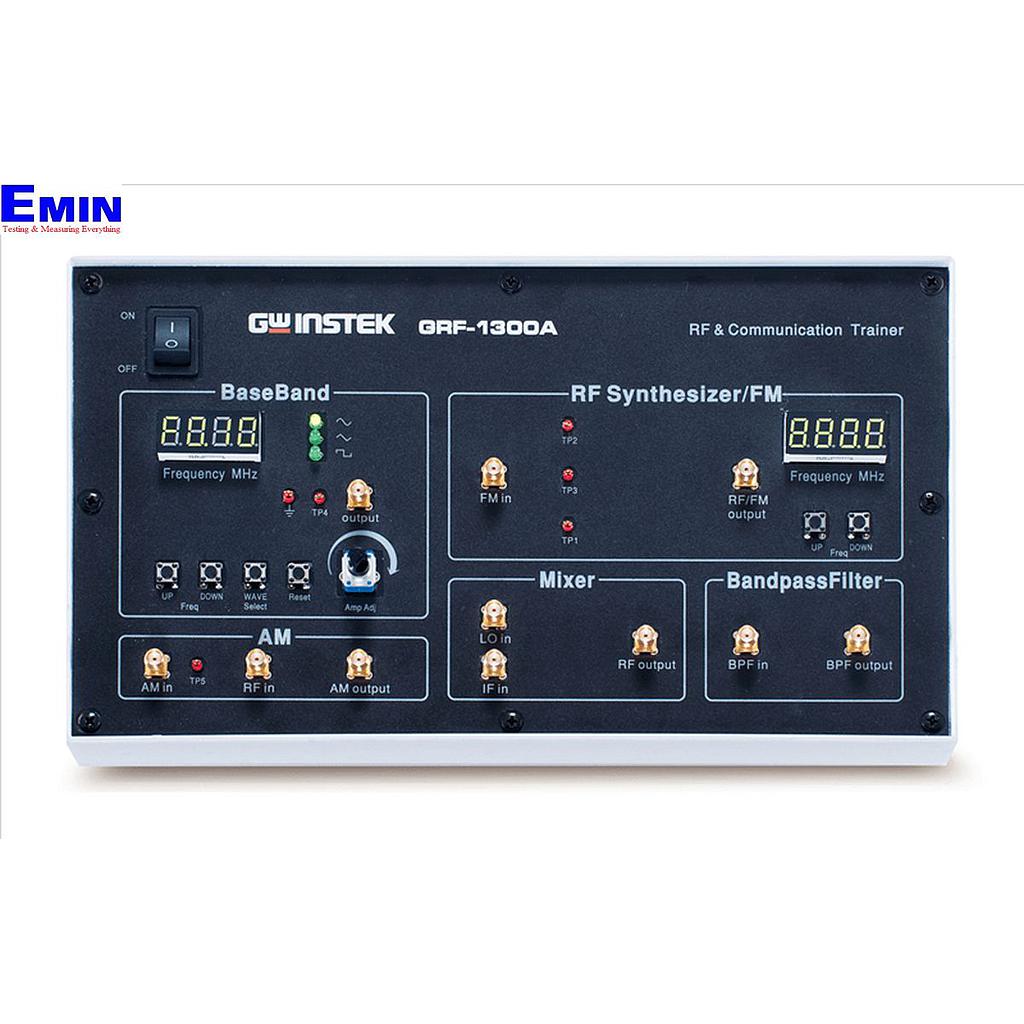
This category brings together training systems designed for communication electronics, RF fundamentals, microwave circuits, modulation techniques, and transmission experiments. It is suited to institutions that need structured teaching hardware for lab exercises, instructor-led demonstrations, and research-oriented training environments where measurement and circuit behavior must be observed directly rather than discussed abstractly.
Where RF and telecommunication trainers fit in education
Telecommunication training platforms are commonly used in technical colleges, universities, industrial training centers, and research labs. They support learning outcomes in subjects such as signal generation, modulation and demodulation, transmission lines, mixer behavior, amplifier stages, oscillators, and receiver architecture.
Compared with purely software-based teaching, these systems offer a clearer understanding of signal flow, component interaction, and measurement results under real operating conditions. They are also valuable for guided troubleshooting exercises, especially when training kits include fault simulation, modular blocks, or predefined experiments that make abstract RF topics easier to teach.
Typical learning topics covered by this category
The product mix in this category spans several layers of telecommunications education. Some kits focus on communication electronics basics, while others move into microwave active and passive circuits, wireless transceivers, optical fiber transmission, and design-oriented RF measurement workflows.
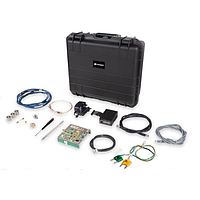
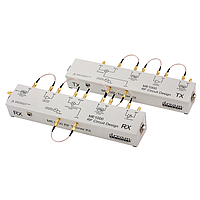
For example, the KEYSIGHT U3851A courseware is geared toward RF and microwave circuit design, simulation, and measurement, with lab work around transmission lines, filters, low-noise amplifiers, mixers, oscillators, and simplified 5G receiver concepts. On the other hand, modular systems from ETEK support broader bench-level instruction in AM, FM, ASK, FSK, PSK, DSB, SSB, PLL, and fiber communication experiments.
Examples of training systems in this range
A useful way to understand this category is to look at how different trainers serve different teaching levels. The ETEK CE-2002 Communication Electronics Trainer is structured as a multi-module platform covering filters, RF oscillator circuits, radio transmitter and receiver functions, telephone system circuits, and digital modulation topics such as ASK, FSK, and PSK. This makes it relevant for foundational communications lab work.
For more advanced RF instruction, the ETEK MSA-2003 Microwave Active Circuit Trainer and the ETEK MSP-2005 Microwave Passive Circuit Trainer support study of matching circuits, LNAs, voltage-controlled oscillators, mixers, IQ modulation, couplers, filters, attenuators, and power dividers. These systems are better aligned with programs that want students to understand microwave circuit behavior and related measurement methods at a deeper level.
There are also compact wireless training options such as the ETEK ASK-200 AM/ASK Wireless Transceiver Kit, ETEK FSK-300 FM/FSK Wireless Transceiver Kit, ETEK FM-6021/22 FM Stereo Transceiver Modules, and ETEK ISM-800 Wireless Transceiver Kit. These are useful when teaching modulation methods, channel selection, transceiver architecture, and practical receiver sensitivity concepts without moving immediately to a more complex microwave bench.
Optical and hybrid communication training applications
Not every telecommunications lab is limited to RF over the air. Many curricula also include optical links, signal transport, and media conversion concepts, which is why fiber-based communication trainers can be relevant within a broader telecom training environment.
The ETEK OFC-9000 Optical Fiber Communication Trainer and ETEK OFS-9500 Optical Fiber System Trainer provide examples of how schools can teach transmitter and receiver blocks, data communications, modulation and demodulation principles, and audio or video transport over fiber. For programs that combine wireless, RF, and transmission media topics in one syllabus, this kind of equipment helps create a more complete communications training ecosystem.
How to choose the right training telecommunication equipment
Selection usually starts with the intended learning depth. If the goal is introductory lab teaching, modular trainers that cover communication electronics, AM/FM radio principles, and basic digital modulation are often easier to deploy and support. If the objective is advanced design and measurement education, systems focused on microwave active/passive circuits or simulation-linked coursework may be a better fit.
It is also important to consider whether the lab emphasizes experiment-based learning, troubleshooting practice, or measurement methodology. Some platforms are centered on structured chapters and modules, while others are designed around complete courseware with editable lab sheets and guided assignments. Institutions building broader technical labs may also compare these systems with adjacent educational setups such as information technology training equipment or application training systems to align laboratory investment across departments.
Why modularity and measurement access matter
One of the main strengths of telecom training hardware is the ability to separate a communication chain into understandable blocks. Students can observe how a filter affects selectivity, how an amplifier changes gain and compression behavior, or how a mixer converts frequencies under defined conditions. This block-level visibility is essential for teaching RF troubleshooting and design logic.
Modular systems also make it easier to scale a lab over time. An institution might begin with general communication trainers and later add more focused microwave or fiber platforms as course requirements expand. For programs that want design-to-measurement continuity, solutions from KEYSIGHT can be relevant where simulation, RF concepts, and practical measurement are taught together.
Who this category is designed for
This range is suitable for universities, engineering faculties, vocational schools, telecom training centers, and research environments that require repeatable lab exercises. It is especially relevant when instructors need students to move beyond equations and understand how transmitters, receivers, modulation blocks, microwave components, and communication links behave in practice.
Procurement teams often evaluate these products based on syllabus coverage, lab capacity, module structure, serviceability, and how well the hardware supports instructor-led lessons or self-guided assignments. In many cases, the right platform is the one that best matches the course sequence rather than the one with the broadest feature list.
Supporting clearer lab planning and course alignment
Choosing from this category is usually a matter of matching training objectives with the right technical scope. Basic communication electronics trainers, wireless transceiver kits, microwave active and passive circuit platforms, and optical communication systems each support a different stage of learner development.
For institutions building or upgrading telecommunications labs, this category offers a practical starting point for comparing hardware that supports real experiments, measurable outcomes, and structured teaching. A well-matched training setup can improve lab effectiveness, make RF concepts easier to teach, and help learners connect theory with the measurement tasks they will encounter in engineering and industrial environments.
Get exclusive volume discounts, bulk pricing updates, and new product alerts delivered directly to your inbox.
By subscribing, you agree to our Terms of Service and Privacy Policy.
Direct access to our certified experts