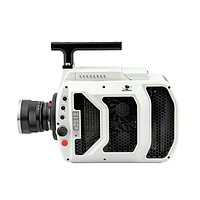
High speed camera
Capturing events that unfold in microseconds requires more than a standard imaging system. In testing, manufacturing analysis, R&D, and failure investigation, a high speed camera helps engineers slow down rapid motion so impact, vibration, deformation, ignition, flow behavior, and other transient phenomena can be examined frame by frame.
This category brings together high-speed imaging solutions for different levels of technical demand, from compact USB-based systems for practical industrial troubleshooting to advanced science-grade and ultra-high-frame-rate platforms for laboratory and specialist applications. If your project involves fast processes that are difficult to observe in real time, this range is designed to support more accurate visual analysis and better decision-making.
Where high-speed imaging is used
High-speed cameras are commonly selected when conventional video cannot capture enough detail. Typical use cases include observing machine motion, validating actuator timing, checking packaging line behavior, analyzing component failure, monitoring drop or impact tests, and documenting short-duration test events in research environments.
They are also valuable in process optimization. By recording at high frame rates and replaying motion in slow motion, users can detect small timing errors, identify the origin of unstable movement, or confirm whether a product and fixture behave as expected under real operating conditions. For broader machine vision needs outside this category, you may also review our industrial camera range.
Key performance factors when choosing a high-speed camera
The right system is usually defined by the balance between frame rate, resolution, exposure capability, and data handling. Higher frame rates let you resolve faster motion, but many cameras increase speed by reducing the active image area. In practice, this means users should decide whether seeing a larger field of view or capturing more temporal detail is more important for the test.
Exposure time is equally important. Fast events often require short exposures to reduce motion blur, which in turn increases lighting demand. Sensor type, pixel size, trigger options, interface, available memory, and workflow for data export all influence day-to-day usability. For some applications, compact systems connected directly to a PC are sufficient; for others, dedicated onboard memory and advanced synchronization features are essential.
Product examples in this category
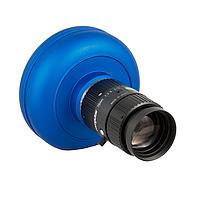
For practical industrial use, the PCE range offers accessible solutions such as the PCE HSC 1660 and PCE HSC 8960. These models illustrate a common requirement in production and service environments: capturing fast movement with straightforward USB connectivity, external triggering, and portable form factors that are easier to integrate into a temporary test setup.
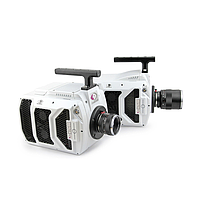
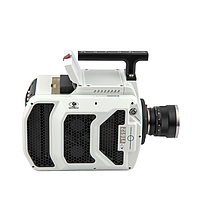
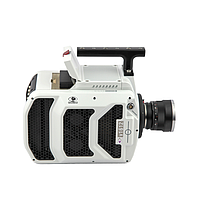
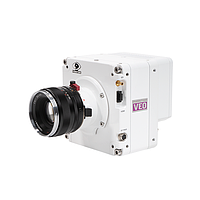
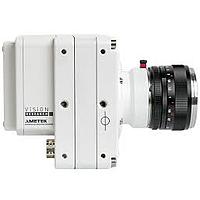
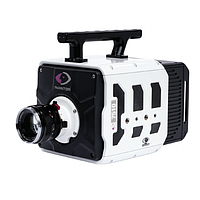
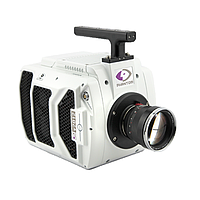
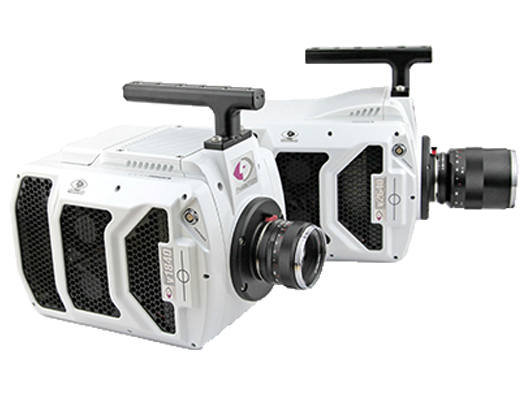
At the other end of the spectrum, PHANTOM systems such as the KT1210 and VEO4K 590 are geared toward demanding motion analysis where very high recording speeds, short exposure times, and robust recording architecture matter. These are typically considered for advanced engineering tests, ballistics, fluid dynamics, crash-related analysis, or other applications where event timing and image throughput are critical.
For thermal and scientific imaging of fast phenomena, FLIR science-grade models such as the X6980-HS, X6981-HS, X6982-HS, and X6983-HS add another dimension. Their MWIR capabilities make them relevant when users need to analyze rapid thermal behavior rather than visible-light motion alone, such as combustion studies, hot target observation, or heat-related process research.
Visible-light vs. MWIR high-speed cameras
Most industrial high-speed cameras in this category are based on visible-light CMOS imaging. These systems are suitable when the objective is to observe shape, motion path, mechanical interaction, breakage, or sequence timing under controlled illumination. They are often the preferred choice for troubleshooting automated equipment, recording repetitive machine actions, or validating product handling steps.
MWIR high-speed cameras serve a more specialized role. Instead of focusing only on visible motion, they help reveal thermal signatures and temperature-related behavior in fast events. This can be important in research or high-energy processes where the thermal response is as critical as the physical movement. Choosing between these approaches depends on whether your measurement goal is motion visualization, thermal analysis, or a combination of both.
Integration, triggering, and workflow considerations
In many real-world test environments, camera selection is influenced as much by integration as by image quality. Trigger input, synchronization, interface type, power arrangement, and mounting flexibility affect how easily the camera fits into an existing bench, machine, or laboratory setup. USB-based units can be convenient for mobile or desktop use, while higher-end platforms may offer expanded I/O, Ethernet connectivity, or more advanced timing control.
Triggering and synchronization are especially important when events are brief or difficult to repeat. External triggers allow recording to start at the right moment, while programmable recording behavior and memory partitioning can help capture multiple events efficiently. If your inspection task involves confined spaces rather than open test scenes, a video borescope may be a better fit than a high-speed camera.
How to match the camera to your application
A practical selection process starts with the event itself. Consider how fast the motion is, how much detail must be visible, how long the event lasts, and whether the subject is self-illuminated or requires external lighting. Once these basics are clear, it becomes easier to define an appropriate frame rate, field of view, exposure requirement, and storage strategy.
For routine troubleshooting and general industrial diagnostics, compact models such as the PCE HSC series may be enough. For ultra-fast events, larger data loads, or more advanced test synchronization, PHANTOM platforms can be more suitable. If the project centers on thermal dynamics in the mid-wave infrared range, FLIR science-grade cameras become the more relevant option. This application-first approach usually leads to a more effective purchase decision than comparing headline frame-rate figures alone.
What to expect from this category page
This page is intended to help buyers compare solutions across different performance classes without losing sight of application fit. You will find systems for general motion analysis, advanced engineering capture, and specialized thermal imaging of fast events, with representative products from PCE, PHANTOM, and FLIR included in the range.
When reviewing products, pay attention not only to maximum speed but also to usable resolution, trigger capability, lens compatibility, interface, memory workflow, and the level of portability required. A well-matched high-speed imaging system delivers better insight into fast processes, reduces trial-and-error during testing, and supports more reliable analysis over time.
Whether the need is production troubleshooting, laboratory visualization, or specialist research, selecting the right camera depends on the event you need to capture and the workflow around it. A clear understanding of speed, lighting, resolution, and integration requirements will help narrow the options and lead to a system that is technically appropriate for your application.
Get exclusive volume discounts, bulk pricing updates, and new product alerts delivered directly to your inbox.
By subscribing, you agree to our Terms of Service and Privacy Policy.
Direct access to our certified experts