Industrial camera
Reliable image acquisition is a core requirement in automated inspection, laboratory imaging, machine vision, and optical measurement. When selecting an industrial camera, buyers usually need more than a simple list of products—they need to understand sensor type, interface, triggering options, resolution, and how the camera will fit into a larger inspection or imaging system.
This category brings together industrial and scientific camera solutions used in production environments, research setups, and specialized optical applications. From compact USB vision cameras to beam profiling and scientific CMOS imaging, the available range supports different tasks such as defect detection, laser analysis, motion capture, and precision observation.
Where industrial cameras are used
An industrial camera is typically chosen when standard consumer imaging devices cannot provide the required stability, integration, or image quality. In manufacturing, these cameras are commonly installed in automated inspection stations, barcode or object verification systems, robotic guidance cells, and quality control lines. In laboratories and photonics environments, they are also used for beam characterization, low-noise image capture, and repeatable measurement workflows.
The exact camera type depends on the task. A compact model such as the FLIR BFS-U3-200S6M-C Monochrome Camera is suitable for USB-based machine vision setups where space is limited and hardware or software triggering is needed. For optical and laser-related work, specialized devices such as the THORLABS BC207VIS or BC207UV beam profilers are more appropriate because they are designed for wavelength-specific measurement rather than general-purpose scene capture.
Key factors to compare before buying
The most important specifications usually start with sensor format, resolution, and shutter type. Higher pixel count can support finer inspection detail, but it also affects data load, frame rate, and storage requirements. Shutter design matters as well: global shutter is often preferred for moving targets or measurement accuracy, while rolling shutter may still be practical in slower or more controlled imaging conditions.
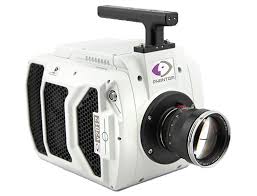
Interface and synchronization are equally important in B2B deployments. USB 3.0 or USB 3.1 cameras are often selected for easy integration with industrial PCs, while trigger inputs and GPIO help synchronize the camera with conveyors, strobes, or other automation devices. If your project requires imaging of fast processes, it may also be worth exploring a dedicated high speed camera category instead of relying on a standard frame-rate model.
Environmental and mechanical considerations should not be overlooked. Housing size, mounting format, connector reliability, and operating temperature all affect long-term stability in industrial environments. C-mount compatibility, compact body dimensions, and secure cable retention can simplify integration into tight machine enclosures.
Different camera types within this category
This category includes more than one imaging approach. Some products are intended for mainstream machine vision tasks, while others serve scientific imaging or optical analysis. That distinction is important because a camera optimized for factory inspection is not necessarily the right choice for low-light microscopy, laser beam measurement, or multispectral imaging.
For example, the FLIR BFS-U3-200S6M-C uses a Sony IMX183 sensor in a compact form factor and supports USB3 Vision-style integration for vision systems. THORLABS Kiralux models such as the CC126MU, CC895MU, CC505MU, CS126CU, and CS126MU are better aligned with scientific and research-oriented imaging, where cooling, low noise, and controlled exposure are often more important than ruggedized factory deployment.
There are also highly specialized options like the Surface Optics DuoChrome-SM SWIR / MWIR Imager, which is intended for simultaneous imaging across two infrared bands. Products like this are typically selected for advanced optical observation or thermal and spectral applications rather than general inspection. If your requirement is broader production imaging rather than a specialized optical setup, you may want to browse the wider industrial imaging selection available in this category.
Understanding monochrome, color, and cooled sensors
Choosing between monochrome and color is often application-driven. Monochrome cameras are commonly preferred for measurement, edge detection, contrast-sensitive inspection, and low-light work because they can offer better sensitivity and cleaner signal response. Color cameras are useful when the application depends on color differentiation, visual documentation, or appearance-based inspection.
Cooled scientific CMOS cameras add another layer of capability. In longer exposure or low-light imaging, active cooling helps reduce noise and improve repeatability. This is why models such as the THORLABS CC126MU or CC895MU are relevant in laboratory and optical research environments, while passively cooled models like the THORLABS CS126CU and CS126MU can be practical when thermal performance needs are less demanding.
For beam analysis rather than object imaging, a beam profiler such as the THORLABS BC207VIS/M or BC207UV/M is designed for measuring beam shape and intensity distribution over specific wavelength ranges. These devices should be selected based on optical wavelength, power handling, and the expected beam diameter, not just on resolution alone.
Manufacturer ecosystems and integration considerations
Many buyers prefer to align with established suppliers because camera selection is rarely isolated from the rest of the system. Lens availability, software support, interface standards, documentation quality, and long-term replacement planning all influence purchasing decisions. In this category, recognized brands include FLIR, THORLABS, Cognex, SICK, Basler, Zebra, Edmund, Surface Optics, and others listed for industrial and technical imaging applications.
Even when comparing products from different manufacturers, it helps to think in terms of system compatibility rather than brand name alone. A compact USB camera may be the right fit for embedded inspection, while a scientific CMOS platform may be better for controlled laboratory imaging. The best choice depends on the workflow, not on a single specification headline.
How to choose the right industrial camera for your application
A practical selection process starts with the imaging task itself. Ask whether the camera is being used for detection, documentation, measurement, or analysis. Then narrow the requirement by target size, movement speed, lighting conditions, required field of view, and whether image capture must be synchronized with another device.
- Choose resolution based on the smallest detail that must be detected or measured.
- Choose shutter type based on whether the object or process is moving.
- Choose monochrome or color based on contrast needs and inspection logic.
- Choose interface and trigger options based on the control architecture of the machine or lab setup.
- Choose standard or cooled scientific cameras based on exposure time, sensitivity, and noise requirements.
If the imaging problem involves inaccessible internal spaces rather than open-view inspection, a video borescope may be a more suitable tool. That is especially true for maintenance, pipe inspection, cavity checks, and service tasks where a traditional fixed camera cannot reach the target area.
Representative products in this category
Several products in this category illustrate the range of use cases. The FLIR BFS-U3-200S6M-C Monochrome Camera is a compact industrial imaging option with USB connectivity, making it suitable for machine vision integration where size and straightforward interfacing matter. It is a practical example of a camera used in inspection and automation environments.
For optical and scientific work, THORLABS offers multiple paths depending on the requirement. The BC207VIS and BC207UV series focus on beam profiling across visible and UV ranges, while the Kiralux CC and CS series support research-grade image capture with different cooling and sensor configurations. The Surface Optics DuoChrome-SM extends the category into dual-band SWIR / MWIR imaging for more specialized infrared applications.
This variety is exactly why industrial camera selection should be application-led. A good category page should help users identify not only available products, but also the logic behind choosing one imaging platform over another.
Final considerations
The right camera improves more than image quality—it supports stable integration, repeatable results, and more efficient decision-making in production or research environments. Whether you need a compact vision camera, a scientific CMOS platform, or a wavelength-specific beam analysis device, the key is to match the camera architecture to the actual imaging task.
Use this category as a starting point to compare formats, sensor approaches, and intended applications. A clear understanding of resolution, shutter behavior, interface needs, and operating context will make it easier to shortlist the most suitable industrial camera for your system.
Get exclusive volume discounts, bulk pricing updates, and new product alerts delivered directly to your inbox.
By subscribing, you agree to our Terms of Service and Privacy Policy.
Direct access to our certified experts