Cable cutters are designed to handle a wide variety of wires, but the cutting efficiency varies between materials. This is especially true given the hardness, ductility, and structure of each type of cable. Without proper identification, users often reinforce the pliers to compensate, leading to rapid degradation or chipping of the pliers.
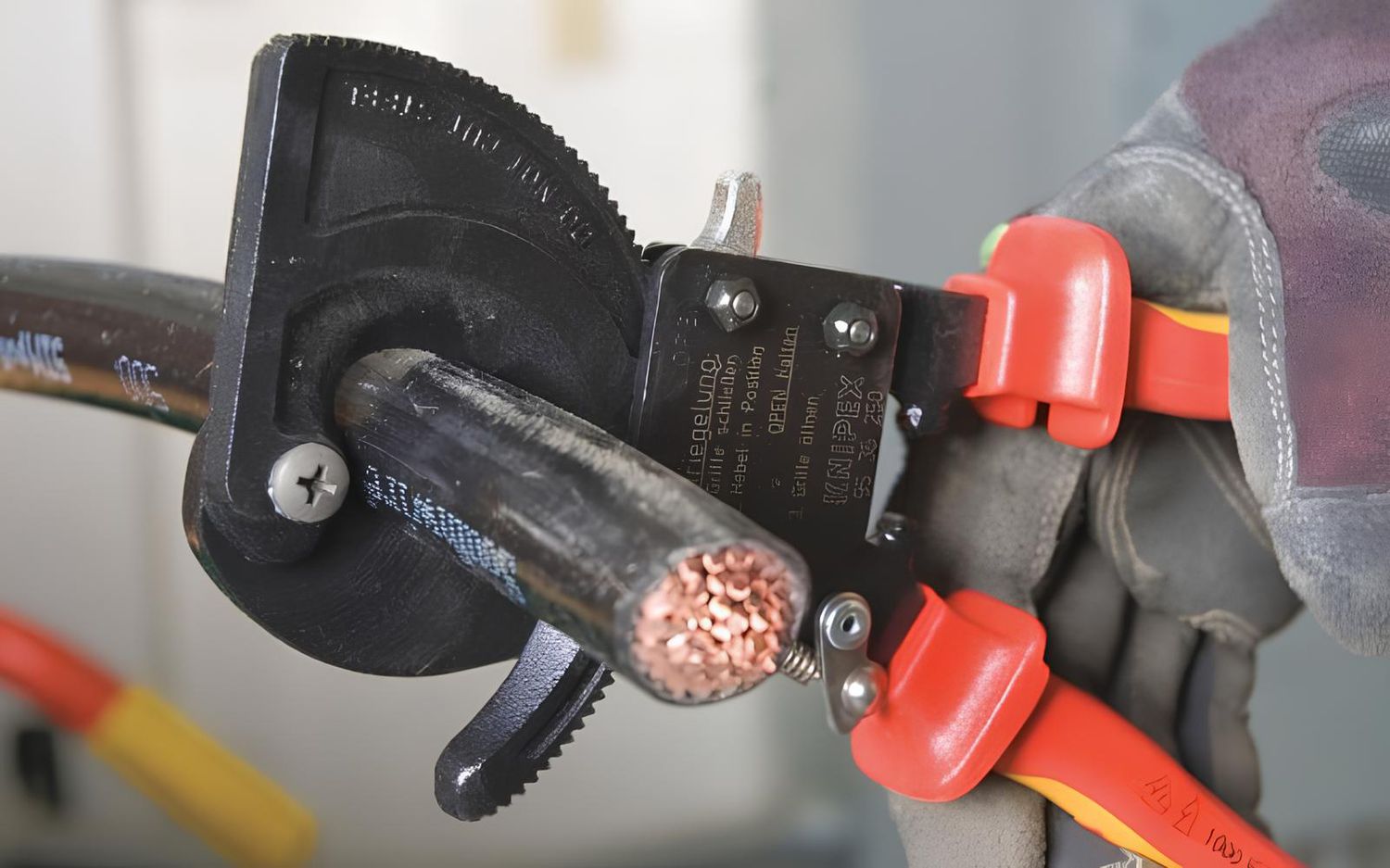
Copper cables are easy to work with, but the blades still need to be sharp enough
Copper cables are commonly used in electrical systems due to their excellent conductivity and high flexibility. Cutting this material doesn't feel overly strenuous, but the pliers still need sharp blades to create a clean cut on the first try. When the blades are dull, the pliers will flatten the wire before cutting it, resulting in an unsatisfactory cut surface and potentially affecting the connection process.
For small and medium cross-sections, manual wire cutters are sufficient. As the cable diameter increases, the force required becomes less consistent; using power-assisted or hydraulic pliers will ensure a more precise cut.
Aluminum cables are lighter but wear down the blades faster
Aluminum is less durable than copper, so less force is usually needed when cutting it. This makes the process seem simpler. However, the aluminum surface forms a hard oxide layer when exposed to air, and this layer increases the rate of blade wear.
When the blade is no longer sharp enough, the pressure will deform the core before it breaks, resulting in an uneven cut. With this material, keeping the blade sharp and maintaining a steady operation is more effective than increasing the force.
Steel-armored cables are beyond the capabilities of ordinary wire cutters
Steel-armored cables are much harder than copper and aluminum cables. Using ordinary cable cutters often requires more force than the tool can handle. Users typically have to press the pliers repeatedly or apply excessive force, leading to chipped or bent blades.
Even if the cable is cut, the cut surface may not be of good quality and could damage the inner core. For this type of cable, hydraulic pliers or specialized equipment are necessary to ensure efficiency and safety during operation.
Additionally, you can read more tips on sharpening chipped cable cutters at home if you want them to last longer.
Multilayer cables require precise handling to maintain their structure
Some types of cables have a structure consisting of multiple layers of different materials. When cutting, if the blade is not straight or the force is uneven, the inner layers are easily crushed or displaced, affecting the quality of use.
Instead of using excessive force, holding the cable steady and making a single, decisive cut with a sharp blade will yield better results. This method helps preserve the internal structure and minimizes errors in subsequent steps.
The outer layer of the bark also affects the cutting process
Not only the core, but the sheath also makes a significant difference in handling. PVC sheaths are highly elastic and easily stick to the blade if not cleaned regularly, reducing cutting efficiency. Some types of sheaths with special additives are harder and more prone to tearing if the force is inconsistent.
With thin shields, the blade needs to be sharp enough to cut cleanly rather than stretching the material. Conversely, with braided fibers, the blade surface needs to be smooth to reduce snagging. Adjusting the handling method according to the type of sheath helps improve cutting quality and reduce tool wear.
Non-metallic and synthetic strings require tight tension control
Non-metallic wires typically have a soft outer sheath, but contain multiple conductive cores inside. When excessive force is applied, the sheath is compressed, deforming the core and directly affecting the connection quality.
With synthetic wires, the multi-layered structure of different materials makes the blade prone to slipping or failing to cut cleanly if not handled correctly. The effective solution is to position the wire correctly and cut it cleanly in one go, avoiding multiple cuts as this does not improve the result and increases the risk of damaging the internal structure.
The materials listed above are those this pliers can handle, but each requires a different approach. Copper cable is easy to work with but still needs sharp blades, aluminum cable requires less force but wears down the blades quickly, and steel-armored cable requires specialized tools.
By understanding the characteristics of each type and using the pliers correctly, you will achieve clean cuts while maintaining their durability for a long time.