A corn moisture meter provides reliable data to help farmers proactively plan harvesting, storage, and post-harvest drying. Harvest timing should not be determined solely by the number of days after planting or by observing the color of the field. Grain maturity, moisture content, intended use, and weather conditions toward the end of the growing season should all be considered together.
Harvest requirements also change with the intended use of the crop. Grain, silage, and CCM do not follow the same targets, so a useful harvest plan begins with a clear understanding of how the corn will be used.
When does corn reach harvest maturity?
For grain production, corn harvest may begin when grain moisture falls within the 28–35% range. For silage, the cited moisture guidance is generally in the 30–35% range. These figures help frame the decision, but moisture should be considered alongside the crop’s stage of development rather than as an isolated number.
Physiological maturity is an important milestone. A key field indicator is the black layer at the base of the kernel. Its appearance signals that the kernel has reached physiological maturity. This visual check can support harvest decisions, particularly when it is combined with a moisture measurement.
Field signs that corn is ready to harvest
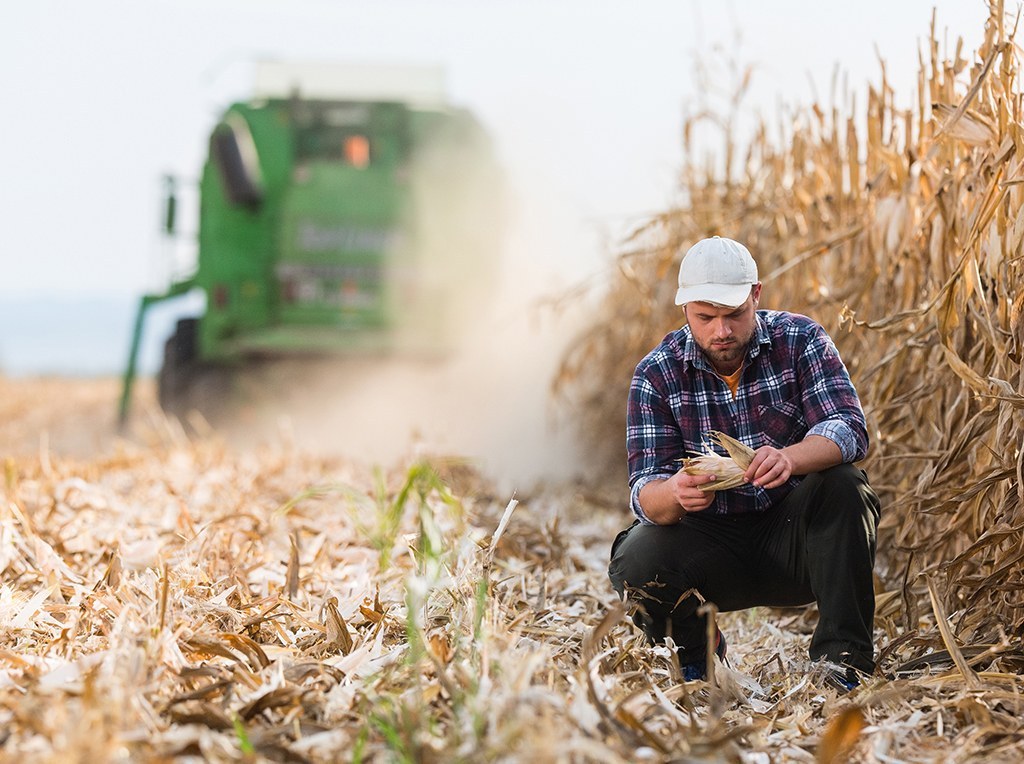
Several visible changes can help growers evaluate crop readiness. Mature kernels are typically well developed, hard, and smooth, often with a glassy appearance. As the crop advances, husk leaves and stalks may become noticeably drier and more brittle.
Cob condition is another practical observation. Cobs may detach more easily from the stalk, while kernels can fall out under light pressure. These signs should not replace moisture assessment, but they provide useful context when checking whether corn is approaching the desired harvest stage.
A practical pre-harvest check
- Confirm the intended use of the crop, such as grain, silage, or CCM.
- Inspect kernels for the black layer and overall development.
- Observe husks, stalks, and cob condition for signs of drying.
- Measure grain moisture to compare the crop with the target range.
- Review field conditions and the late-season weather pattern before scheduling harvest.
What affects the corn harvest date?
Corn does not ripen at the same rate in every field. Variety characteristics and earliness, including FAO classification, influence how quickly the crop reaches the required parameters. Earlier varieties can reach harvest readiness sooner than later varieties.
Soil conditions and field fertility also influence crop development. Weather is especially important during the final stage of vegetation: accumulated temperature and rainfall distribution can affect the rate at which corn matures and loses moisture.
Crop health deserves attention as well. Phytosanitary issues, including fusarium, can accelerate the need to harvest. In addition, late varieties grown on cooler sites may face a greater risk of not reaching maturity before the first frosts. These factors make regular field monitoring more useful than relying on a planned date alone.
Why moisture measurement matters
Moisture is a central harvest parameter because it helps determine whether the crop is suitable for its intended use and whether harvest should be advanced or postponed. Measuring moisture allows growers to assess grain condition directly rather than estimating it only from appearance.
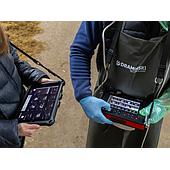
The Draminski GMSv2 is a grain moisture meter with sample grinding. According to the available product information, it can measure moisture up to 45% and is intended to provide results in field conditions. A measurement taken from a representative sample can help support a timely harvest decision and reduce uncertainty around grain moisture.
Plan harvest around crop conditions
Determine whether the corn will be harvested for grain or intended for silage.
Inspect ears from multiple locations across the field rather than checking only easily accessible areas.
Examine the black layer at the base of the kernels, kernel condition, husks, and stalks.
Collect representative grain samples to measure moisture content.
Monitor late-season weather, the rate of moisture loss, and the overall health of the crop.
Select the harvest time based on a combination of data rather than relying on a single indicator.
The right time to harvest corn depends primarily on grain maturity and moisture content, followed by the intended use and the actual field conditions. A grain moisture meter provides useful data for making an informed decision about the optimal harvest time.