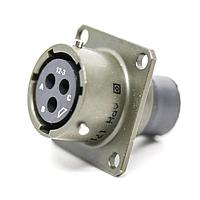
MILSpec / MILType
When reliability matters as much as signal integrity, connector selection becomes a critical design decision. In aerospace, defense, transportation, industrial control, and other harsh-duty environments, engineers often look for interconnect solutions built around MILSpec / MILType expectations for mechanical strength, stable mating performance, and dependable electrical contact under demanding conditions.
This category brings together connector solutions commonly associated with military-style design practices, where consistency, durability, and application fit are often more important than low-cost commodity sourcing alone. It is especially relevant for projects that need robust panel interfaces, cable terminations, or board-level interconnects in systems exposed to vibration, repeated mating cycles, or tightly controlled installation requirements.
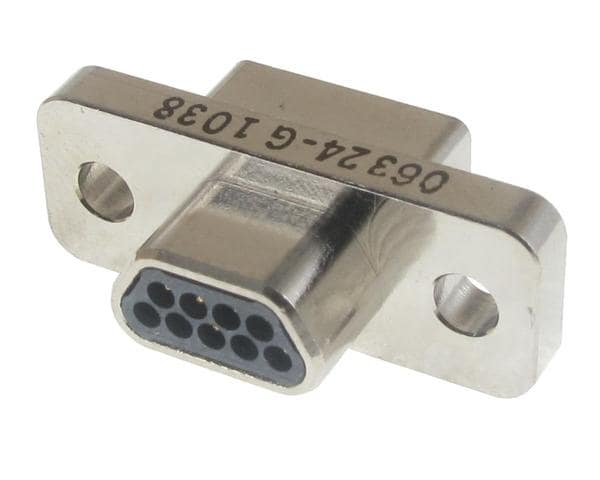
Where MILSpec / MILType connectors fit in real-world systems
Military-style connectors are widely used in equipment where failure is not acceptable simply because the environment is difficult. Typical use cases include avionics interfaces, rugged communication systems, embedded control cabinets, transport electronics, field instrumentation, and legacy equipment maintenance. In many of these applications, connector choice affects not only electrical continuity but also serviceability, shielding strategy, and long-term maintenance.
Within this broader space, D-Sub, circular, rectangular, fiber optic, and RF formats each solve different interconnect problems. For example, D-Sub interfaces remain common where compact multi-pin layouts and familiar fastening methods are useful, while circular formats are often preferred for sealed or rugged cable-to-equipment connections. If your project also requires ready-to-install harnesses, related cable assemblies can help simplify integration and reduce field wiring time.
Why engineers choose military-style connector platforms
The value of this category is not limited to compliance language alone. What makes these products attractive is the combination of rugged mechanical design, repeatable mating geometry, and broad ecosystem support across inserts, shells, accessories, and compatible termination methods. That is particularly important in B2B procurement, where sourcing continuity and cross-reference potential can influence both prototype and production decisions.
Another advantage is familiarity. Many engineering teams already work with established military-style connector families, so replacement, retrofit, and qualification planning become easier when form factors and installation methods align with known standards. In practical terms, that can shorten redesign cycles and reduce risk when upgrading older systems or maintaining installed equipment over long service lifetimes.
D-Sub remains a key format within this category
A significant share of visible products in this category points to the ongoing relevance of D-Subminiature connectors in MILType applications. These connectors are still chosen for control signals, serial communication, I/O breakout, and equipment back-panel interfaces where proven geometry and straightforward fastening are preferred. Their continued presence in industrial and defense-related designs reflects a balance of density, serviceability, and established design practice.
Examples from Amphenol include the Amphenol FDL2XPRAA07X Connector D-Subminiature, Amphenol M24308/2-362K Connector D-Subminiature, and Amphenol L717DD50PAJ4 Connector D-Subminiature. Other listed parts such as the Amphenol L717DC37PA4 and Amphenol M83513/10-B01CP also illustrate the range of military-style D-Sub options available for different pin counts, mounting preferences, and installation approaches. Rather than treating these as interchangeable, buyers should match each part to the intended mating pattern, panel layout, and electrical load profile.
How to evaluate the right connector for your application
For technical purchasing and design teams, the best starting point is the application environment. Consider vibration exposure, available installation space, cable routing constraints, maintenance access, and whether the connector will be mated frequently or left in place for long periods. These practical factors often narrow the field faster than catalog browsing alone.
Next, review the essentials of contact arrangement, current handling, mounting style, and termination method. Some listed D-Sub products show rated current values such as 5A or 7.5A, which highlights the need to check electrical load requirements rather than selecting by shell size only. It is also worth confirming whether the project needs straight or right-angle mounting, board termination or cable termination, and whether separate contacts are part of the assembly strategy.
Manufacturer ecosystem and sourcing considerations
Brand ecosystem matters in this segment because connector families are often selected with long-term maintenance in mind. This category includes recognized names such as 3M, AMP Connectors - TE Connectivity, Amphenol, Amphenol Aerospace, Amphenol Commercial Products, Amphenol FCI, Amphenol Industrial, Amphenol RF, Analog Devices, and Aptiv. Depending on the design goal, one manufacturer may be more relevant for rugged circular interfaces, another for D-Sub variants, and another for adjacent signal or RF connectivity needs.
Among the currently highlighted products, Amphenol is especially visible, which makes it a practical reference point for buyers comparing military-style D-Sub options. At the same time, a good sourcing process should still verify mating compatibility, material suitability, and documentation requirements before standardizing on any one line. That approach helps avoid overcommitting to a part family that may not fully match the mechanical or electrical demands of the end system.
How this category relates to the wider connector landscape
MILSpec / MILType connectors are not isolated from the rest of the interconnect ecosystem. Many projects combine military-style interfaces with more application-specific connector types for testing, panel access, or subsystem integration. For example, some development benches and maintenance environments may also use banana and tip connectors for temporary measurement access, even when the final equipment interface relies on more rugged permanent connectors.
Likewise, connector selection is often influenced by what happens downstream in the system: cable harness design, PCB interface constraints, shielding methods, and maintenance workflow. That broader view is useful because a connector that looks correct in isolation may become difficult to assemble, inspect, or replace once the full enclosure and wiring layout are considered.
Practical buying guidance for OEMs, integrators, and maintenance teams
For OEMs and machine builders, the priority is usually a repeatable platform that supports production documentation and future revisions. System integrators often focus on installation efficiency, panel access, and compatibility with available cable and tooling practices. Maintenance and repair teams, by contrast, may place more weight on cross-reference visibility, field replacement ease, and support for legacy equipment already in service.
That is why shortlisting should go beyond a part number match. Review connector family type, mating interface, current requirement, mounting method, and the surrounding hardware needed for complete integration. In many cases, a product such as the Amphenol L717DC37PAJ4, Amphenol L717DBH25PT, or Amphenol L77DC37SAM4BRM6 may be suitable only when the entire assembly context has been checked carefully.
Choosing with confidence
A strong MILType connector choice supports more than electrical connection alone; it also affects assembly reliability, maintenance planning, and the long-term stability of the equipment platform. Whether you are sourcing for new development, retrofit work, or ongoing industrial support, this category is most useful when approached as part of a complete interconnect strategy rather than a simple commodity purchase.
By comparing connector format, application environment, and ecosystem fit, buyers can narrow the selection to parts that make sense technically and operationally. If your design spans multiple connection methods, it can also be helpful to review adjacent categories such as other connector formats to ensure the final architecture is consistent across the entire system.
Get exclusive volume discounts, bulk pricing updates, and new product alerts delivered directly to your inbox.
By subscribing, you agree to our Terms of Service and Privacy Policy.
Direct access to our certified experts