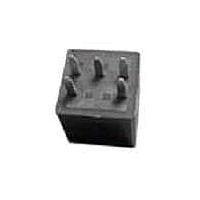
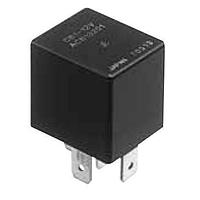
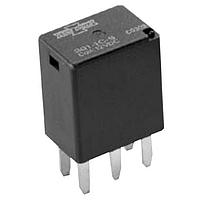
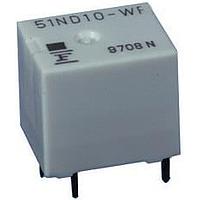
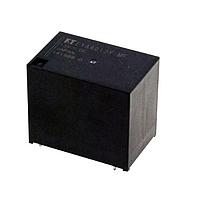
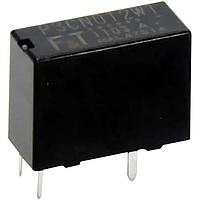
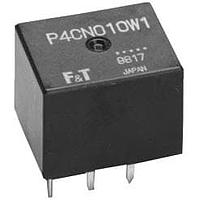
Automotive Relays
Electrical switching in vehicles has to work reliably under vibration, temperature variation, limited space, and frequent load changes. In that environment, selecting the right automotive relays is not only about current capacity, but also about long-term durability, control logic, and compatibility with the wider vehicle electrical system.
This category is intended for buyers, designers, and sourcing teams looking for relay solutions used in automotive circuits such as lighting, HVAC, power distribution, motor control, and body electronics. Whether the goal is replacement sourcing or support for new design work, understanding the role of relay type, contact arrangement, and switching method helps narrow down the right option more efficiently.
Where automotive relays are used
Automotive relay applications typically involve switching higher-current loads with a lower-current control signal. This allows control units, switches, and low-power electronics to operate actuators, fans, lamps, heaters, pumps, and similar loads without carrying full load current directly through the control interface.
Compared with more broadly applied general purpose relays, vehicle-focused designs are usually selected with closer attention to mechanical shock, compact packaging, operating temperature, and the realities of onboard power systems. These factors matter in passenger vehicles, commercial vehicles, off-highway equipment, and other mobile platforms where relay failure can affect both uptime and safety-related functions.
What makes an automotive relay different
An automotive relay is generally chosen for its ability to handle switching demands in DC systems common to vehicles. In practice, selection often depends on load type, expected switching frequency, inrush current, mounting constraints, and whether the relay is being used for simple on/off switching or as part of a more integrated control architecture.
Important considerations include contact rating, coil voltage, terminal style, sealing level, and expected electrical life. For vehicle applications, engineers also pay attention to resistance against contamination, heat buildup, and transient conditions that can occur during startup, shutdown, or load switching. These details influence both performance stability and maintenance intervals over the service life of the equipment.
Common selection criteria for engineers and buyers
When comparing options in this category, one of the first questions is the nature of the load being switched. Resistive loads are usually simpler to manage than inductive or motor-driven loads, which may generate higher inrush current or switching stress. As a result, a relay that appears sufficient on paper may still be unsuitable if the actual operating profile is more demanding.
It is also useful to review the installation environment. Exposure to dust, moisture, vibration, or temperature cycling can change the preferred relay construction. In some systems, designers may evaluate whether a conventional electromechanical approach is ideal, or whether solid state contactors are better suited for applications that require silent operation, very fast switching, or reduced mechanical wear.
- Load characteristics: resistive, inductive, lamp, motor, or heater loads
- Electrical requirements: operating voltage, switching current, surge behavior, and duty cycle
- Mechanical constraints: footprint, terminal format, mounting orientation, and harness integration
- Environmental demands: vibration, temperature range, moisture exposure, and service conditions
Integration within the automotive electrical ecosystem
Automotive relays are rarely selected in isolation. They are part of a broader interconnect and protection architecture that may include connectors, terminals, fusing, control modules, and wiring assemblies. For this reason, many buyers look at relay sourcing alongside brands already active in vehicle electrical systems, such as OMRON, Molex, Amphenol, and Aptiv, depending on the design and procurement context.
In practical system design, the relay has to fit not only electrically but physically within the assembly. Terminal layout, mating connections, and packaging space can influence installation time and serviceability. This is especially relevant in higher-density vehicle electronics, where harness routing and module packaging can be just as important as relay performance itself.
Electromechanical switching versus alternative approaches
Traditional automotive relays remain widely used because they offer a familiar and cost-conscious way to switch loads in DC systems. They are often well suited to functions where clear isolation, straightforward replacement, and established circuit design practices are important. For many maintenance and aftermarket scenarios, this makes them a practical and accessible choice.
That said, application requirements continue to evolve. As vehicles incorporate more electronics, distributed control, and tighter packaging, engineers may compare relay-based circuits with semiconductor switching methods or more specialized load control hardware. The right answer depends on the balance between switching life, thermal behavior, response time, noise, and overall system complexity rather than on one technology being universally better.
Brand context and sourcing considerations
For B2B procurement teams, supplier consistency and platform compatibility can matter as much as component-level performance. Well-known manufacturers associated with electrical and interconnect systems, including Amphenol and OMRON, are often part of broader approved-vendor strategies because engineering teams may already use related connectors, control components, or subsystem parts from the same supply ecosystem.
Buyers should also consider documentation quality, lifecycle planning, and availability across production and service phases. In automotive and mobile equipment projects, relay selection is often influenced by whether the component supports repeatable sourcing, maintenance planning, and stable integration into established electrical designs.
How to narrow down the right category options
If you are selecting from this category for a new project, start with the actual load profile rather than only nominal current. Then confirm system voltage, space constraints, connection method, and environmental requirements. This usually reduces the shortlist quickly and helps avoid selecting a relay that is electrically acceptable but mechanically impractical.
For maintenance or replacement purchasing, verify the relay’s role in the circuit before choosing an alternative. Contact configuration, coil characteristics, and operating conditions should all be checked against the installed application. Where the requirement is less vehicle-specific, it may also be useful to compare adjacent categories such as general purpose relays to identify whether a broader relay family is more appropriate for the task.
Choosing with application fit in mind
This category supports applications where dependable switching is needed in vehicle and mobile electrical systems. The most effective selection process focuses on real operating conditions: load type, control method, installation environment, and system integration requirements.
By approaching automotive relay selection from the perspective of application fit rather than only part matching, engineers and sourcing teams can make better decisions for both new builds and ongoing support. If your project involves vehicle power control, body electronics, or compact DC load switching, this category is a useful starting point for evaluating suitable relay options.
Get exclusive volume discounts, bulk pricing updates, and new product alerts delivered directly to your inbox.
By subscribing, you agree to our Terms of Service and Privacy Policy.
Direct access to our certified experts