Engineering Development Tools
From early proof-of-concept work to hardware validation and embedded prototyping, the right tools can shorten development cycles and make technical decisions easier to verify. This category brings together Engineering Development Tools used to explore devices, test interfaces, evaluate IC behavior, and move from idea to working design with less risk.
For engineers, system integrators, R&D teams, and technical buyers, these products are useful when a design needs faster bench evaluation before committing to custom hardware. They are also practical for training, firmware bring-up, sensor characterization, and application testing across embedded, power, and interface-focused projects.
Where engineering development tools fit in the design process
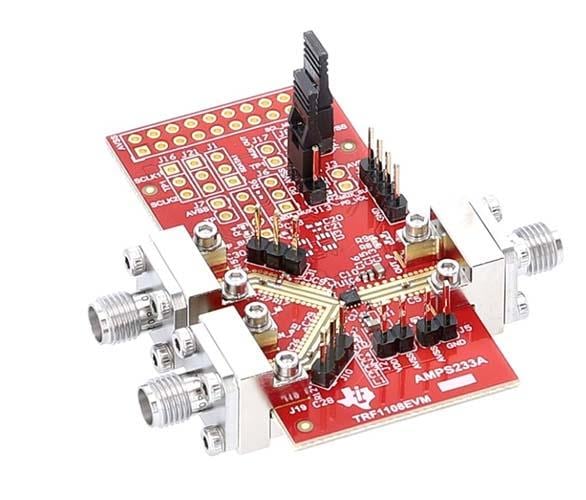
Development and evaluation hardware is often the bridge between a datasheet and a finished product. Instead of designing a full board immediately, teams can use starter kits, evaluation boards, and application-specific platforms to observe device behavior in a controlled setup, validate key functions, and identify integration issues earlier.
This is especially helpful when working with microcontrollers, sensors, power management ICs, and embedded subsystems. In many workflows, these tools are used alongside essentials such as connectors for interconnection, bench accessories, and application hardware that support repeatable development and test conditions.
Common use cases across embedded and electronic design
The scope of this category is broad because engineering teams use development tools for different tasks at different stages. Some platforms are intended for learning and rapid prototyping, while others are built to evaluate a specific IC, sensor, or power device under realistic operating conditions.
Typical applications include firmware development, peripheral testing, sensor signal evaluation, current measurement concepts, power rail analysis, and interface validation. In product development environments, these tools may also support debugging, feature comparison, demonstration builds, and pre-compliance preparation before a dedicated production design is finalized.
Representative products in this category
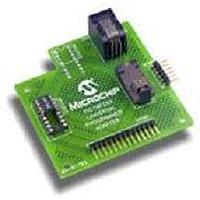
Several products in this range illustrate how varied development hardware can be. For example, the Adafruit MENTA starter kit is oriented toward hands-on microcontroller development and Arduino-compatible experimentation, making it suitable for quick prototyping and educational bench work.
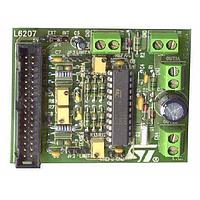
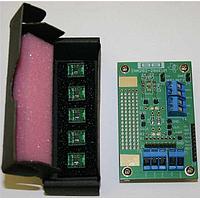
For sensor-focused evaluation, products such as the Allegro MicroSystems ASEK724LLC-20AB-T and Adafruit 1384 show the role of dedicated boards in assessing sensing functions and application response. In power-related design work, examples like the Allegro MicroSystems APEK5940GEJ-01-T-DK, APEK4962KLP-01-T-DK, and APEK4933KJP-01-T-DK reflect how evaluation board kits help engineers review device behavior before integrating a power stage into a wider system.
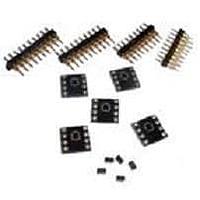
There are also platform and accessory-oriented tools such as the Advantech PCM-3644-08A1E development tool and compact Adafruit kits based on parts like the ATMega328P or ATtiny2313V-10PU. Together, they show that this category supports both general embedded development and more targeted device evaluation.
Key selection criteria before you buy
Choosing the right development tool depends first on your engineering objective. If the goal is software bring-up or fast proof-of-concept work, a general-purpose microcontroller kit may be more useful than a highly specialized board. If the task is to understand one specific sensor or power IC, a dedicated evaluation platform is usually the more efficient choice.
It also helps to check the intended development environment, available interfaces, and how easily the tool can be connected to your existing setup. Some projects may need compatibility with common embedded workflows, while others require supporting items from kits and tools, interface accessories, or protective hardware for safer lab operation.
For practical purchasing decisions, buyers often compare form factor, target IC or platform, software ecosystem, and expected use case rather than looking only at part type. This approach is useful when multiple boards appear similar on the surface but are designed for very different stages of development.
Manufacturers commonly used for prototyping and evaluation
This category includes products from recognized suppliers serving different engineering needs. Adafruit is widely associated with accessible development hardware, compact prototyping platforms, and educational or maker-friendly embedded tools that also support professional early-stage evaluation in labs and technical teams.
Allegro MicroSystems is more closely aligned with application-specific evaluation around sensing and power-related devices, where engineers need a practical way to examine IC performance in context. Advantech also appears in the category as an example of development hardware with relevance to embedded and industrial computing environments.
Because project requirements vary, the best fit often depends less on brand preference and more on whether the tool supports the exact stage of design you are working through, from concept validation to subsystem-level testing.
How these tools support faster iteration
One of the biggest benefits of using development hardware is the ability to reduce uncertainty before committing engineering time to a custom PCB. Teams can test assumptions, review electrical behavior, explore firmware options, and document performance with a lower barrier to entry than a full redesign cycle.
They also help cross-functional teams collaborate more effectively. Hardware engineers, firmware developers, application engineers, and purchasing teams can all work from a shared physical platform while defining specifications, identifying support components, or checking the need for related items such as circuit protection in the wider design.
Choosing the right category path for your project
Because engineering development work covers many technical domains, selection is often easier when you start with the application rather than the product title alone. A sensor validation task, for example, has different requirements from a programmable logic evaluation or a display interface proof-of-concept.
If your project is still broad, this category is a good starting point for comparing platforms, starter kits, and board-level evaluation options. Once the target device class becomes clear, you can narrow the search toward more specialized development hardware that aligns with your software flow, bench setup, and intended integration path.
Final considerations
Engineering Development Tools are most valuable when they help answer real design questions quickly: will the device behave as expected, can the firmware be validated, and does the application concept justify the next development step? A well-chosen kit or evaluation board can save time, reduce rework, and give technical teams better confidence before moving toward custom implementation.
Whether you are comparing embedded starter kits, sensor evaluation boards, or power-focused development platforms, the most effective choice is the one that matches your testing objective and development workflow. Reviewing application fit, ecosystem compatibility, and integration needs will usually lead to a more useful selection than choosing by model name alone.
Get exclusive volume discounts, bulk pricing updates, and new product alerts delivered directly to your inbox.
By subscribing, you agree to our Terms of Service and Privacy Policy.
Direct access to our certified experts