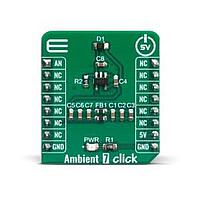
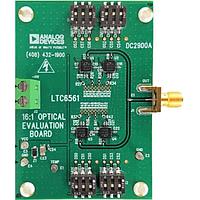
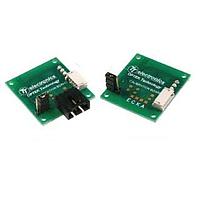
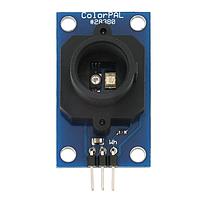
Optical Sensor Development Tools
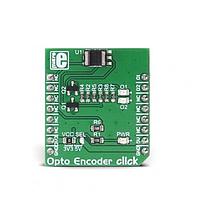
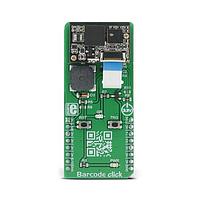
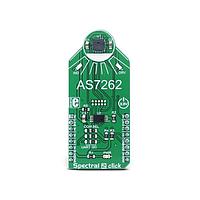
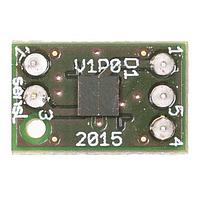
When optical sensing is part of a new design, the early evaluation stage has a direct impact on development speed, measurement stability, and integration risk. Engineers often need a practical way to test light-based detection methods, compare signal behavior, and validate interfaces before committing to a production design. That is where Optical Sensor Development Tools become especially useful in prototyping, lab verification, and embedded system development.
This category brings together tools intended to help engineers work with optical sensing technologies in a structured way. Depending on the application, these platforms can support proof-of-concept work, firmware development, interface testing, and performance checks in systems where light intensity, interruption, reflection, or related optical effects are part of the measurement principle.
Where optical sensor development tools fit in the design process
Optical sensing is used across a wide range of industrial and electronic applications, from presence detection and position feedback to interface control, object sensing, and compact embedded measurement functions. Development tools help teams shorten the path from concept to validation by providing a ready-made environment for experimenting with sensors, signal acquisition, and software integration.
In many projects, the challenge is not only selecting a sensor but also understanding how it behaves in the real operating environment. Ambient light, target material, surface finish, enclosure constraints, and electrical noise can all affect results. A development platform makes it easier to test these variables before the design moves into a custom PCB or larger control architecture.
What engineers typically evaluate with these tools
Most selection work begins with the intended sensing task. Some projects focus on simple light detection, while others involve reflected light measurement, interruption sensing, proximity-related behavior, or optical signal interpretation in a more complex embedded system. The right tool can help verify whether the sensing principle itself is suitable before time is spent on mechanical and software refinement.
Another key area is interface and integration testing. Development tools are often used to review communication behavior, output stability, response time, and the practical effort required to connect the sensor to a host controller. This is especially relevant in designs that also use related platforms such as distance sensor development tools or multi-function sensor evaluation tools when the final system combines several sensing methods.
Common application contexts for optical sensing evaluation
Optical sensor development tools are relevant in product development environments where non-contact detection is preferred or where compact sensing is needed inside electronic equipment. Typical use cases include object detection, slot or interruption sensing, reflective target recognition, user interface detection, and general embedded experimentation involving LEDs, photodetectors, and optical signal paths.
They are also useful in educational labs, R&D teams, and early-stage product engineering, where rapid iteration matters more than final packaging. In these settings, developers can compare behavior under different lighting conditions, tune thresholds, and observe how firmware decisions affect the real sensor output. This kind of work is often harder to do efficiently with a bare component alone.
How to choose the right development platform
A practical selection process usually starts with the sensing objective rather than the board itself. Consider what must be detected, the expected operating distance or optical path, environmental light conditions, and whether the application depends on direct, transmitted, or reflected light behavior. These factors shape which type of evaluation setup will provide meaningful test results.
It is also important to check compatibility with the rest of the development environment. Engineers may need support for common microcontroller ecosystems, software libraries, accessible signal pins, or documentation that speeds up testing. Brands such as Adafruit, Analog Devices, and ams OSRAM are often considered during early evaluation because development work typically depends on both hardware usability and the clarity of the supporting resources.
Optical tools in a broader sensor development workflow
Few real systems rely on only one sensing method. Optical sensing is often combined with motion, magnetic, current, or environmental feedback to improve reliability and control logic. For that reason, these development tools are best understood as part of a wider sensor development workflow, where engineers compare technologies, validate trade-offs, and build a more robust signal chain.
For example, if the project involves movement or vibration alongside optical detection, it may be useful to review acceleration sensor development tools. If the design must detect position or switching states in addition to light-based input, magnetic sensor development tools can provide helpful comparison points during architecture planning.
Why manufacturer ecosystem matters
For development tools, the manufacturer ecosystem can be just as important as the sensing hardware itself. Evaluation boards and kits are more effective when they are backed by clear setup guidance, software support, example code, and enough technical documentation to help engineers move from bench testing to design-in decisions. This is especially valuable when teams need to demonstrate feasibility quickly or hand over the project between hardware and firmware engineers.
Within this category, recognized suppliers such as Adafruit, ams OSRAM, Analog Devices, Broadcom, Maxim Integrated, Murata Electronics, and Monolithic Power Systems (MPS) help define the available landscape. The best fit depends less on brand preference alone and more on the development model: fast prototyping, detailed signal evaluation, educational experimentation, or preparation for integration into a larger embedded product.
Key considerations before moving from evaluation to design-in
Once the initial tests are complete, the next step is to confirm whether the observed optical behavior will remain reliable in the real application. Engineers should review mounting conditions, target consistency, enclosure effects, temperature influences, and long-term signal repeatability. A successful prototype is most useful when it reflects the actual environment the final product will face.
It is also worth checking whether the development platform has helped answer the core design questions: sensing principle, interface choice, firmware complexity, and expected operating margin. If those points are clear, the path to a custom implementation becomes much more predictable. This makes evaluation efficiency one of the main reasons these tools are valuable in professional engineering workflows.
Final thoughts
Choosing optical sensor development tools is ultimately about reducing uncertainty early in the project. The right platform helps engineers test sensing behavior under realistic conditions, compare options more effectively, and make better integration decisions before hardware is finalized.
For teams building embedded products, industrial electronics, or experimental sensing systems, this category supports a practical starting point for optical measurement and detection development. Reviewing the available tools alongside related sensor categories can make it easier to define a stable, scalable solution for the final application.
Get exclusive volume discounts, bulk pricing updates, and new product alerts delivered directly to your inbox.
By subscribing, you agree to our Terms of Service and Privacy Policy.
Direct access to our certified experts