Fiber Optics
Reliable optical links are a core part of modern industrial communication, sensing, and signal transmission. When a system needs long-distance data transfer, resistance to electromagnetic interference, or compact high-speed interconnects, Fiber Optics becomes a practical category to explore for both network infrastructure and device-level integration.
This category brings together components used across industrial Ethernet, embedded communication, optical sensing, and test environments. From SFP-based communication modules to sensor-related accessories, the range is relevant for engineers, system integrators, maintenance teams, and procurement specialists looking for parts that fit broader automation and electronics projects.

Where fiber optic components are used
Optical technology is widely chosen when copper cabling reaches its limits. In industrial environments, fiber can support stable communication over longer distances, help reduce the impact of electrical noise, and improve network design in facilities with drives, motors, and switching equipment.
Typical use cases include machine-to-machine communication, plant network backbones, remote monitoring, and optical sensing setups. In some projects, fiber is selected primarily for signal integrity; in others, it is part of a broader reliability strategy that also includes rugged connectors, managed networking hardware, and field-ready accessories.
Key product groups within this category
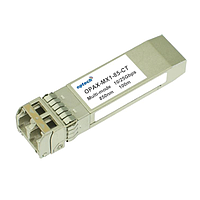
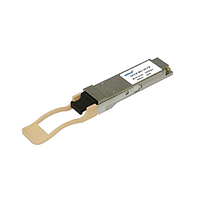
This category covers more than one type of optical part. One important group is transceiver hardware used for data communication, especially in systems that rely on SFP form factors for flexible network deployment. Another group includes accessories that support sensor installation, thermal interface, protection, or maintenance within an optical or sensing assembly.
For projects focused on communication hardware, products such as the Advantech 808-38312 Ethernet SFP IE-SFP/2.4-ED SSLX-SM1550-LC and Advantech 808-38145 Ethernet SFP IE-SFP/155-ED CWDM-SM1350-LC illustrate how optical modules can serve different transmission requirements. For accessory-oriented applications, examples like Amphenol SF4 Sensor accessories, Amphenol SF24 Sensor accessories, and Amphenol HTC-KIT Sensor accessories show the supporting role that non-core parts play in achieving a complete and serviceable solution.
Industrial communication and SFP-based optical links
In many control cabinets and industrial network architectures, SFP modules are used to adapt switches, converters, or embedded communication devices to the required optical interface. This approach gives designers flexibility when selecting distance, fiber type, and deployment topology without changing the host equipment itself.
Advantech appears in this category with optical communication products such as the Advantech SFP-FSM-40K Fiber Optic Transmitters, Receivers, Transceivers IE-SFP/155-ED, SM1310/PLUS-LC and the Advantech 808-38143 Ethernet SFP IE-SFP/155-ED CWDM-SM1310-LC. These examples are especially relevant in projects where engineers need compact optical interfaces with industrial operating expectations, including stable operation across a broad temperature range.
If your focus is specifically on communication modules rather than the wider ecosystem, it can also be useful to review the dedicated transceiver product area for a narrower component comparison.
The role of accessories in fiber sensing and integration
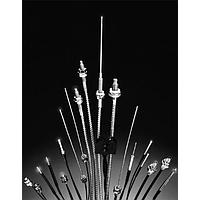
Not every optical project is centered on the transceiver itself. In sensing assemblies and field installations, accessories often determine how easily a system can be mounted, protected, serviced, or thermally managed over time. That is why accessory items should be evaluated as part of the full lifecycle of the application, not only as add-ons.
Amphenol is represented here through sensor-oriented accessories such as Amphenol SF21 Sensor accessories, Amphenol SF22 Sensor accessories, Amphenol SF23 Sensor accessories, and Amphenol SILGREASE Sensor accessories. These products are best understood as supporting elements within a sensing ecosystem, helping teams maintain compatibility and practical installation workflows rather than acting as standalone end devices.
How to choose the right fiber optic products
The right selection usually depends on the function of the optical path in your system. If the requirement is network communication, start with interface format, transmission type, expected distance, and environmental conditions. If the requirement is sensing or assembly support, focus more on compatibility with the existing sensor platform, mounting method, and maintenance access.
It is also worth checking whether the application needs standard communication components or more specialized optical hardware. In some cases, related items such as fiber optic connectors become just as important as the active module because connector quality and fit directly affect installation time and long-term performance.
- Match the component type to the actual function: communication, sensing, testing, or interconnection.
- Review operating environment needs, especially temperature and industrial installation conditions.
- Confirm interface and mechanical compatibility with the host device or sensor assembly.
- Consider maintenance needs, including replacement ease and availability of supporting accessories.
Why category-level sourcing matters in B2B projects
For procurement teams and design engineers, category-level sourcing helps reduce mismatches during specification and purchasing. Instead of viewing each item in isolation, it becomes easier to compare adjacent options, identify required companion parts, and evaluate whether a project needs a complete optical path that includes modules, connectors, cables, and test support.
This is particularly helpful when the scope may expand from a single transceiver to a broader optical bill of materials. For teams building out a full signal chain, the wider fiber optics range can provide a better starting point than searching only by individual part number.
Related categories that may support your application
Some projects combine optical communication with other optoelectronic or visualization components. For example, machine inspection or monitoring systems may involve both optical links and camera accessories, while HMI-oriented systems may also require display hardware in the same broader design workflow.
Looking at related categories can help when the application crosses boundaries between networking, sensing, imaging, and operator interface. That is often the case in factory automation, transportation equipment, embedded platforms, and smart monitoring systems.
Final considerations
Choosing fiber optic components is rarely just about finding a matching part number. The better approach is to evaluate the optical link or sensing assembly as a complete system, including interface needs, environmental conditions, installation method, and supporting accessories.
This category is well suited for buyers and engineers who need a structured view of optical communication components and related support items. Whether you are comparing SFP modules for industrial networking or looking for sensor accessories that fit an existing assembly, a category-led review can make specification and sourcing more efficient.
Get exclusive volume discounts, bulk pricing updates, and new product alerts delivered directly to your inbox.
By subscribing, you agree to our Terms of Service and Privacy Policy.
Direct access to our certified experts