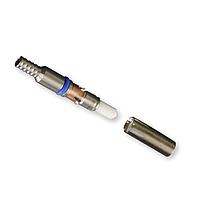
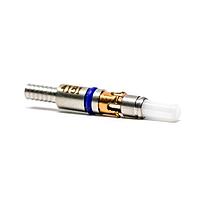
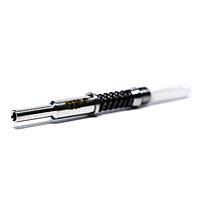
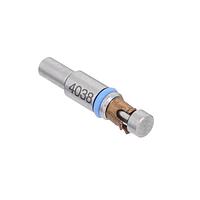
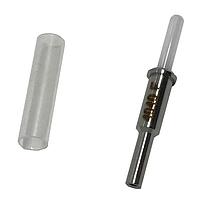
MIL Spec Fiber Optic Connectors
In demanding aerospace, defense, transportation, and industrial environments, connector reliability is often just as critical as signal performance. When fiber links must withstand vibration, temperature variation, contamination risk, and repeated mating cycles, MIL Spec Fiber Optic Connectors are a practical choice for building robust optical interconnect systems with predictable long-term performance.
This category is intended for buyers and engineers who need fiber connectivity aligned with ruggedized system requirements rather than standard commercial office or data patching use. The focus is on connector solutions suitable for harsh environments, field-deployable assemblies, and applications where mechanical durability, secure coupling, and dependable optical transmission all matter.
Where MIL-spec fiber optic connectors are typically used
These connectors are commonly selected for applications where optical networks must continue operating under mechanical stress or environmental exposure. Typical use cases include military vehicles, avionics, shipboard systems, communications shelters, test platforms, and industrial installations where connector integrity cannot be treated as an afterthought.
Compared with general-purpose fiber terminations, this type of connector is usually evaluated not only for optical interface compatibility but also for housing design, retention strength, sealing approach, and serviceability in the field. That makes the selection process more application-driven, especially when the connector is part of a larger cable assembly or mission-critical subsystem.
What to consider when selecting the right connector
A good starting point is the overall system environment. Buyers typically need to confirm the required fiber type compatibility, mating style, space constraints, and whether the connector will be installed in fixed equipment, mobile platforms, or deployable field systems. Mechanical protection and repeatable mating performance are often just as important as insertion loss considerations in rugged optical links.
It is also useful to look at the broader interconnect path. A connector should be chosen in context with the cable construction, termination method, and adjacent components in the optical chain. For example, projects that also require fiber optic cable assemblies may benefit from reviewing connector and assembly compatibility together rather than treating them as separate purchases.
How these connectors fit into a complete fiber interconnect system
MIL-spec connectivity is rarely selected as a standalone item. In practice, engineers usually specify the connector as part of a complete optical channel that may include cable, backshells or protective hardware where applicable, mating interfaces, and passive signal-management components. This system-level view helps reduce integration issues and supports more consistent field performance.
For installations that need a broader optical hardware stack, related categories such as fiber optic connectors or fiber optic cables can help narrow choices based on interface style, installation method, and routing needs. In some networks, attenuation control may also be relevant, which is why buyers sometimes review fiber optic attenuators alongside connector planning.
Manufacturer landscape in this category
Several established suppliers are associated with rugged interconnect and defense-oriented optical connectivity. Brands such as Amphenol Fiber Optics, Amphenol Aerospace, Glenair, Cinch, and Trompeter / Cinch Connectivity Solutions are commonly considered when application requirements call for durable construction and dependable interface performance in harsh operating conditions.
Manufacturer choice is often influenced by the target platform, preferred connector family, qualification expectations, and integration with existing hardware. Rather than focusing only on brand familiarity, it is usually more effective to compare available connector formats, system compatibility, and support for the intended deployment environment.
Key evaluation points for B2B sourcing
For procurement teams and design engineers, the most important purchasing questions are usually practical. These include whether the connector aligns with the required system standard, whether it supports the intended cable and termination approach, and whether it can be maintained or replaced efficiently in service. In regulated or mission-focused projects, documentation and supply continuity may also affect the final decision.
It is equally important to think about the installation workflow. A connector that looks suitable on paper may still create avoidable complexity if it requires special handling, introduces unnecessary adaptation points, or does not match the rest of the optical interconnect architecture. Reviewing the application as a complete rugged fiber system often leads to better outcomes than evaluating the connector body alone.
Why application context matters more than generic comparison
Not every rugged connector is appropriate for every optical design. Some projects prioritize compact packaging, while others focus on environmental sealing, rapid maintenance, or secure retention under vibration. That is why side-by-side comparison should start from the operating environment and system constraints rather than from a simple feature checklist.
In many cases, the best path is to define the optical route first, then match the connector to the fiber, assembly method, and service conditions. This approach helps ensure the selected optical interconnect supports both immediate installation requirements and long-term reliability in the field.
Finding the right fit for your project
This category brings together connector options intended for applications where standard commercial fiber hardware may not be enough. Whether the requirement is driven by defense electronics, aerospace systems, transportation platforms, or harsh industrial environments, the right selection depends on balancing optical compatibility, mechanical robustness, and integration with the rest of the link.
By reviewing connector needs together with cable, mating interface, and deployment conditions, buyers can make more informed sourcing decisions and reduce downstream integration risk. If your project involves harsh-environment fiber infrastructure, MIL-spec fiber optic connectors are best evaluated as part of the complete solution rather than as an isolated component choice.
Get exclusive volume discounts, bulk pricing updates, and new product alerts delivered directly to your inbox.
By subscribing, you agree to our Terms of Service and Privacy Policy.
Direct access to our certified experts