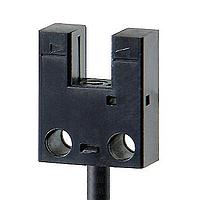
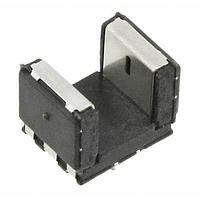
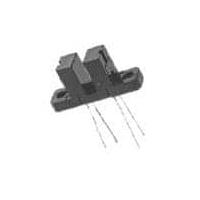
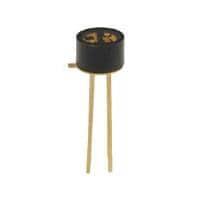
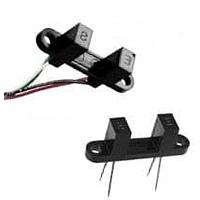
Optical Switches
Non-contact sensing is often the simplest way to detect position, presence, rotation, or interruption in compact electronic and industrial designs. In many applications, an optical solution helps reduce mechanical wear, improves response speed, and supports reliable switching where physical contact would be less practical. That makes Optical Switches a widely used category across automation, embedded electronics, consumer devices, and safety-oriented control circuits.
On this page, buyers can explore optical switching components used for object detection and signal triggering in systems that rely on light transmission or interruption. These devices are commonly selected when engineers need fast, repeatable sensing in a small footprint, especially in designs where electrical isolation, low maintenance, or silent operation are important considerations.
Where optical switches fit in electronic and industrial design
An optical switch typically operates by using a light source and a photosensitive receiver arranged so that the output changes when light is blocked, reflected, or otherwise altered. This basic principle supports a broad range of functions, from paper detection in office equipment to position sensing in machinery, cover-open detection in instruments, and motion feedback in control assemblies.
Compared with purely mechanical switches, non-contact detection can help limit wear-related issues and improve long-term consistency. In practice, this makes optical switches useful in equipment that cycles frequently, runs at higher speed, or requires stable switching behavior over repeated operation.
Common applications for optical switches
Optical switching components appear in many different product types because they are adaptable to both simple and more specialized detection tasks. Typical use cases include object presence detection, slot-based position sensing, encoder-style movement detection, tray or lid status monitoring, and media path detection in printers, kiosks, and lab equipment.
They are also relevant in broader optoelectronic systems where designers may combine them with display components, indicator elements, or signal interfaces. In more advanced systems, optical sensing may work alongside imaging devices, making related categories such as cameras and accessories useful to review when the application extends beyond simple switching.
Typical device formats and sensing approaches
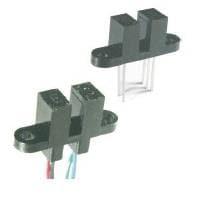
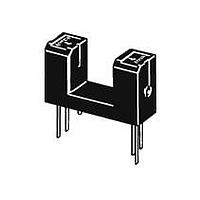
Within this category, buyers will often encounter different optical switch constructions intended for different installation and detection conditions. Some designs are used for through-beam or slot-based sensing, where an object interrupts the light path. Others are better suited to reflective arrangements, depending on how the emitter and detector are positioned within the assembly.
The right format usually depends on target size, mounting space, alignment tolerance, ambient light conditions, and required switching distance. For compact PCB-based products, package size and assembly method may matter most. In industrial or equipment-level designs, mechanical integration and repeatable alignment are often just as important as the electrical interface.
How to choose the right optical switch
Selection usually starts with the sensing task itself. Buyers should first clarify whether they need object detection, edge detection, rotational pulse feedback, or simple open/closed status monitoring. From there, it becomes easier to narrow the suitable package style, sensing geometry, and expected response behavior.
Other practical considerations include operating environment, required response speed, output compatibility, and installation constraints. For example, a dusty or enclosed application may call for a more carefully protected sensing path, while a high-speed mechanism may require faster and more stable switching performance. When the design also needs isolated load control, related categories such as solid state relays can provide useful context for the wider circuit architecture.
Leading manufacturers in this category
This category includes components from established optoelectronics and sensing manufacturers such as ams OSRAM, Broadcom, Honeywell, Lite-On, Omron Automation and Safety, Omron Electronics, ROHM Semiconductor, Sharp Microelectronics, and Stanley Electric. These brands are commonly associated with optoelectronic components used in signal detection, switching, and control-oriented designs.
Depending on the project, engineers may prioritize different manufacturers based on package preferences, application history, sourcing standards, or integration requirements. Honeywell and Omron are often considered in industrial and control-related environments, while companies such as Broadcom, Lite-On, ROHM Semiconductor, and Sharp Microelectronics are frequently evaluated for compact electronic and embedded applications.
Optical switches within a broader optoelectronic system
Optical switches rarely exist in isolation at the system level. They are often part of a wider optoelectronic design that may include light transmission, indication, visualization, or sensing functions. In some projects, that means reviewing adjacent categories such as fiber optic components when signal routing or optical isolation strategy becomes part of the design discussion.
For product teams building complete assemblies, it is often useful to evaluate how the switching element interacts with mechanics, firmware, connectors, and the user interface. A well-matched optical switch can simplify signal acquisition and improve reliability, but only when its sensing method fits the actual operating conditions of the final equipment.
What buyers should review before ordering
Before selecting a part, it helps to confirm the intended detection method, available board or mounting space, expected switching frequency, and environmental constraints. Mechanical drawings and integration details are especially important in optical components because alignment strongly affects real-world performance.
It is also worth reviewing how the switch will be used in the circuit, including interface logic, output interpretation, and any shielding or enclosure features that may influence light behavior. Taking a system-level view early can reduce redesign work and make it easier to choose an optical switch that fits both the electrical design and the physical product architecture.
For teams sourcing components for automation, embedded electronics, or equipment manufacturing, optical switches offer a practical path to fast and repeatable non-contact sensing. A careful review of sensing style, integration requirements, and brand preferences will help narrow the range and identify components that align with the real demands of the application.
Get exclusive volume discounts, bulk pricing updates, and new product alerts delivered directly to your inbox.
By subscribing, you agree to our Terms of Service and Privacy Policy.
Direct access to our certified experts