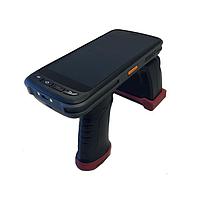
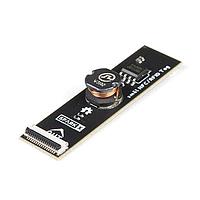
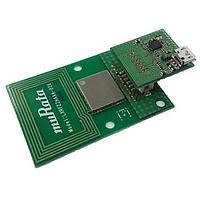
NFC/ RFID Development Tools
When you are building or validating contactless identification, access control, asset tracking, or smart-device interfaces, having the right development platform makes the work faster and far more predictable. NFC/RFID Development Tools help engineers move from protocol evaluation and antenna testing to firmware integration and application prototyping without jumping directly into full custom hardware.
For B2B design teams, these tools are useful at several stages of the product lifecycle: early feasibility studies, proof-of-concept builds, lab validation, and pre-production integration. They are especially relevant when a project depends on stable wireless communication at short range, secure data exchange, or reliable tag and reader interaction in a real operating environment.
Where NFC and RFID development tools fit in a project
This category is typically used by engineers, system integrators, embedded developers, and technical buyers who need a practical way to test contactless communication before committing to production hardware. Depending on the project, a development tool may support reader evaluation, protocol learning, interface testing, or rapid integration into a host system.
In many workflows, these platforms sit between raw components and finished equipment. They allow teams to assess communication behavior, tune application logic, and verify interoperability with tags and transponders under more realistic conditions than a purely theoretical design review.
Typical use cases in industrial and commercial environments
NFC and RFID are used across a wide range of technical applications, so development tools in this category can support many different evaluation tasks. Common examples include access credentials, product authentication, maintenance logging, mobile-device pairing, traceability systems, and smart equipment interfaces.
In an industrial setting, teams may use these tools to test how a reader behaves around metal structures, compact enclosures, or electrically noisy installations. In commercial product development, they are often used to validate user interaction, reading distance, tag compatibility, and host communication before a design is frozen.
What to look for when selecting a development platform
The right choice depends on how the tool will be used in the engineering process. Some teams need a platform primarily for protocol exploration and software development, while others need something closer to a hardware reference design that can shorten integration into a target device.
Useful selection criteria often include supported interfaces, operating environment, development ecosystem, documentation quality, and how easily the platform fits into an embedded workflow. It is also worth considering whether the tool is intended mainly for learning and experimentation or for more serious design validation in a commercial development program.
If your project will move quickly toward implementation, it can also help to review related NFC/RFID product options across the broader category structure so the transition from evaluation to deployment is smoother.
Manufacturer ecosystems commonly considered for development work
Different manufacturers support different priorities, from embedded integration and semiconductor-level evaluation to maker-friendly prototyping and industrial connectivity. Brands such as NXP, Analog Devices, Infineon, Murata Electronics, and Adafruit are often relevant depending on whether the focus is on controller-level evaluation, RF behavior, software accessibility, or faster proof-of-concept development.
For some projects, connector and interconnect expertise from companies like HARTING or Molex may also matter, especially when a prototype must be packaged into a broader system rather than used only on the bench. The key is not simply choosing a well-known brand, but selecting an ecosystem that aligns with your firmware tools, host interfaces, and target application constraints.
Development tools versus production-oriented NFC/RFID hardware
A development tool is not always the same thing as a deployment-ready module or finished reader. In most cases, it is intended to simplify evaluation, demonstrate communication behavior, or provide a reference implementation that helps teams understand integration requirements.
That distinction matters during sourcing. A lab-ready board may be ideal for software bring-up, but a production design may later require different packaging, compliance planning, antenna arrangement, or mechanical integration. If your work is moving beyond evaluation, it may be useful to compare these tools with other development resources for NFC/RFID and adjacent product groups before locking in a final architecture.
How these tools support faster engineering decisions
One of the biggest advantages of using dedicated development hardware is that it reduces uncertainty early in the project. Instead of spending initial cycles creating a custom test platform, teams can focus on communication behavior, software interaction, and system-level constraints that have a direct impact on product feasibility.
This is especially important in B2B environments where timelines are tied to customer pilots, qualification schedules, or internal milestone gates. A suitable toolkit helps clarify whether the challenge lies in protocol handling, antenna placement, host communication, power design, or application logic, allowing engineering teams to allocate effort more efficiently.
Building a complete evaluation workflow
Most NFC/RFID projects require more than a single board or reader. A practical test setup may involve development hardware, reference software, target tags, embedded interfaces, and a repeatable validation method for real-world conditions. That is why this category is often used alongside Adafruit or semiconductor-focused vendor ecosystems when fast experimentation and iterative testing are both important.
For broader solution development, teams often combine evaluation kits with suitable firmware tools, host processors, and a representative tag set. Looking at the tool as part of a larger integration workflow usually leads to better results than treating it as a standalone item.
Choosing with application needs in mind
The most effective buying decision starts with the actual job the tool must do: reading and writing tags, evaluating interoperability, supporting embedded code development, or demonstrating a customer-facing concept. From there, it becomes easier to narrow down the right platform based on interface requirements, development effort, and intended migration path toward final hardware.
This category brings together options designed to support that early and mid-stage engineering work. Whether you are validating a contactless interface for industrial equipment or prototyping a connected product feature, the right NFC/RFID development environment can help reduce design risk and accelerate practical decision-making.
Get exclusive volume discounts, bulk pricing updates, and new product alerts delivered directly to your inbox.
By subscribing, you agree to our Terms of Service and Privacy Policy.
Direct access to our certified experts