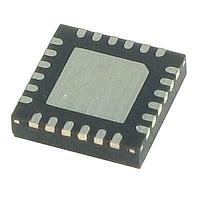
Prescaler
Stable frequency handling is a critical part of many RF signal chains, especially when designers need to condition high-frequency signals before measurement, synthesis, division, or downstream processing. In these applications, Prescaler devices help extend usable frequency ranges and simplify signal management in receivers, synthesizers, communication modules, and test equipment.
On this page, you can explore prescaler components within the broader RF IC ecosystem, with practical context for selection, integration, and related signal-chain building blocks. For engineers working on wireless modules, instrumentation, or embedded RF designs, understanding where a prescaler fits can make device comparison much easier.
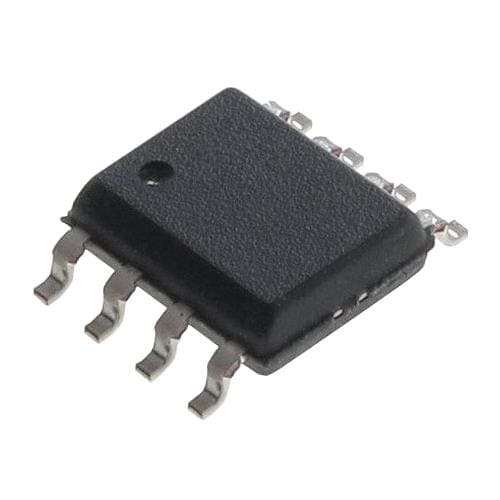
What a prescaler does in an RF design
A prescaler is typically used to divide an incoming high-frequency signal down to a lower frequency that can be processed more easily by counters, PLLs, synthesizers, or control logic. This is especially useful when the original signal is too fast for a monitoring stage or digital section to handle directly.
In practical RF systems, prescalers are often part of a larger frequency-conversion or timing architecture. They can support applications such as local oscillator management, frequency synthesis, signal monitoring, and measurement paths in instruments or communication hardware. Rather than acting as a standalone solution, they usually work alongside switching, modulation, filtering, and phase-control devices.
Where prescalers are commonly used
Prescalers are relevant in designs where frequency stability and manageable signal levels are important. Typical use cases include wireless infrastructure, RF front ends, signal generators, frequency counters, and industrial electronics that rely on controlled clocking or RF timing paths.
They are also useful in development and evaluation environments, where engineers need to observe or divide high-frequency signals before feeding them into lower-frequency logic or measurement equipment. In this role, prescalers help bridge the gap between the analog RF domain and the digital control domain.
How to evaluate a prescaler for your application
Device selection usually starts with the input frequency range your design must support. The expected division behavior, signal level compatibility, supply requirements, and package constraints also matter, especially in compact boards or multi-stage RF layouts.
Engineers should also consider how the prescaler interacts with surrounding circuitry. If the design includes signal routing, isolation, or frequency-path control, related devices such as RF multiplexers or switching stages may be part of the same architecture. In phase-sensitive designs, components from the phase detectors and shifters category can also be relevant when building complete synchronization or tuning paths.
Examples from leading RF semiconductor suppliers
This category sits within an RF portfolio that includes products from established semiconductor manufacturers such as Analog Devices, Broadcom, Infineon, KYOCERA AVX, and Maxim Integrated. While not every RF IC in the ecosystem is a prescaler, reviewing adjacent device types helps clarify how these components are deployed in real designs.
For example, parts such as the Analog Devices HMC270MS8GETR RF switch illustrate how signal routing may be handled before or after a frequency division stage. The Analog Devices HMC631LP3ETR vector modulator shows another side of RF chain design, where amplitude and phase control become important in transmit or conversion sections. Broadcom ACPF-7124-TR1 BAW filters highlight the importance of selectivity and interference management in compact wireless hardware.
Other listed devices, including the Maxim Integrated MAX2141ETH/V+ and Infineon CYW20735KFBG, reflect the wider landscape of RF transceiver ICs used around frequency generation, conversion, and wireless communication functions. These examples are useful for system-level context, even when the design task is specifically focused on prescaling or frequency division.
Prescalers within the broader RF IC signal chain
In many projects, choosing a prescaler is only one step in defining the full signal path. Designers may also need shielding, isolation, coupling, modulation, and frequency-path control depending on the board environment and performance targets.
That is why it is often helpful to look at related categories such as modulator / demodulator devices for signal conversion stages, or RF shields when layout density and EMI control are concerns. Viewing prescalers as part of a complete RF architecture leads to better component matching and fewer integration issues later in the design cycle.
Selection considerations for industrial and embedded development
In industrial and embedded applications, engineers usually balance electrical performance with lifecycle, assembly, and environmental constraints. Temperature range, PCB area, power budget, and compatibility with surrounding logic can all influence whether a given prescaler is suitable for a long-term design.
It is also important to review how the device will be tested in the final system. A prescaler that works well in a lab prototype still needs to fit the production signal chain, including any filters, switches, or matching networks that may affect signal amplitude and integrity. Careful validation at the system level is often more useful than focusing on one parameter in isolation.
Finding the right part for your RF frequency path
When comparing options in this category, the most effective approach is to start from the signal source, define the required division and downstream interface, and then evaluate supporting RF blocks around it. That helps narrow the search to parts that match both electrical and integration requirements.
Whether you are developing wireless hardware, frequency-control circuitry, or RF instrumentation, a well-chosen prescaler can simplify high-frequency processing and improve system usability. Explore the available devices in this category together with related RF IC building blocks to create a more complete and reliable design path.
Get exclusive volume discounts, bulk pricing updates, and new product alerts delivered directly to your inbox.
By subscribing, you agree to our Terms of Service and Privacy Policy.
Direct access to our certified experts