RF Front End
In wireless hardware design, signal quality is often won or lost at the interface between the antenna and the transceiver. That is where RF Front End devices play a critical role, helping designers manage transmit power, improve receive sensitivity, and simplify the RF signal path in compact systems. For engineers working on IoT, Wi-Fi, automotive wireless, and other connected products, choosing the right front-end solution can have a direct impact on range, efficiency, and integration effort.
This category brings together RF front-end components and modules used to support both transmit and receive chains. Depending on the device, that can include functions such as a low-noise amplifier (LNA), power amplifier (PA), and related front-end integration that reduces board complexity and helps optimize overall RF performance.
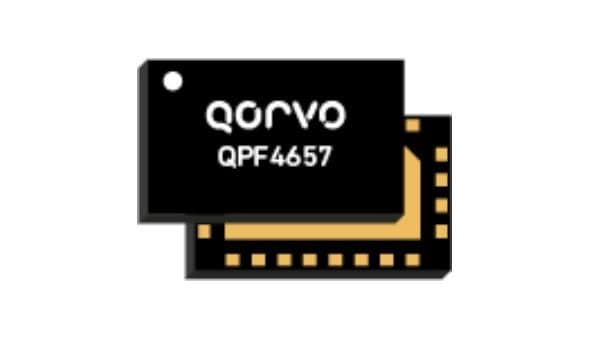
What RF front-end devices do in a wireless design
An RF front end is typically positioned between the antenna and the main RF transceiver. On the receive side, the LNA helps amplify weak incoming signals while minimizing additional noise. On the transmit side, the PA boosts the outgoing signal to the level needed for reliable wireless communication.
By integrating these functions into a single device or module, designers can reduce the number of discrete parts in the RF chain. This can help with PCB space, matching complexity, and repeatability during development, especially in products where layout and signal integrity are tightly constrained.
Typical applications for RF front-end modules and ICs
RF front-end products are used across a wide range of wireless systems. Common examples include Wi-Fi connectivity, short-range wireless devices, industrial IoT nodes, telematics platforms, and vehicle communication systems where transmit power and receiver sensitivity both matter.
Some devices in this category are aimed at broadly integrated wireless architectures, while others are better suited to application-specific implementations. For example, the Qorvo QPF1003QSR is positioned for C-V2X / DSRC / Wi-Fi front-end use, while the Microchip SST12LF01-QDE is a 2.4 GHz front-end module that can be relevant in compact wireless designs operating in the widely used 2.4 GHz band.
How to evaluate RF front-end options
Selection usually starts with the wireless standard, operating frequency, and required link budget. From there, engineers often compare integration level, supply requirements, package constraints, and how the device fits into the rest of the RF signal chain. A highly integrated front end can reduce design time, but only if it aligns with the target architecture and performance goals.
It is also important to consider surrounding RF building blocks. In some designs, signal routing may involve RF multiplexers or impedance and path management elements that sit alongside the front end. In tightly packed layouts, shielding and isolation can also influence final system behavior, which is why designers sometimes review related solutions such as RF shields during the same selection process.
Representative products in this category
This category includes integrated LNA+PA solutions from several established suppliers. Examples include the ams OSRAM NJG1159PHH-A-TE1, the Infineon RXS8156PLAXTMA1, the Renesas Electronics RA81F0473STGNH#KB0, and the Analog Devices ADTR1107ACCZ. These parts illustrate the range of integration approaches available for front-end signal conditioning and amplification.
Qorvo is especially visible in this category with devices such as the QPF4617SR, QPF7250SR, QPM1002TR7, QPF4288TR13-5K, QPF4259TR13, and QPF4559SR. Rather than treating these as interchangeable, it is better to evaluate each device against the intended wireless band, output power expectations, layout targets, and system-level efficiency needs.
Manufacturer ecosystem and sourcing context
Engineers and procurement teams often prefer to compare parts from multiple trusted suppliers before committing to a design. Within this category, common reference points include Analog Devices, ams OSRAM, Infineon, Microchip, Renesas Electronics, and Qorvo. Reviewing alternatives across these manufacturers can be useful when balancing performance, integration preference, and long-term sourcing strategy.
Because RF design decisions are highly application-dependent, there is rarely a single universal choice. A front-end device that works well for one short-range wireless node may not be the best fit for another design with different coexistence, power, or packaging constraints.
Integration with the broader RF signal chain
RF front-end devices do not operate in isolation. Their performance is influenced by antenna matching, PCB layout, filtering strategy, and the behavior of nearby RF ICs. In more advanced architectures, other functional blocks such as modulator / demodulator devices may also be part of the overall signal path, depending on how the radio section is partitioned.
This broader view is important when moving from proof of concept to production. A suitable front-end component should not only meet basic electrical needs, but also support stable integration within the complete RF design, including compliance work, tuning, and repeatable manufacturing.
Choosing the right RF front-end category for your project
If your design needs improved transmit capability, better receive sensitivity, or a more compact way to implement the antenna interface, this category is a practical place to compare integrated front-end solutions. Product names alone rarely tell the full story, so it helps to review the intended wireless use case, expected operating conditions, and how much RF integration the design actually needs.
Whether you are evaluating a compact 2.4 GHz module, a front end for vehicle or Wi-Fi-related applications, or an LNA+PA device for a custom RF architecture, a careful comparison of available RF front-end parts can shorten development time and support a cleaner wireless design path.
Get exclusive volume discounts, bulk pricing updates, and new product alerts delivered directly to your inbox.
By subscribing, you agree to our Terms of Service and Privacy Policy.
Direct access to our certified experts