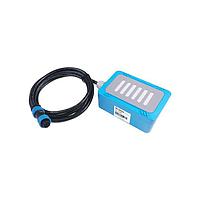
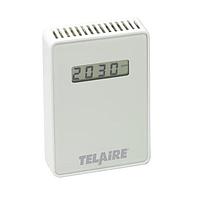
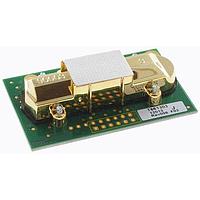
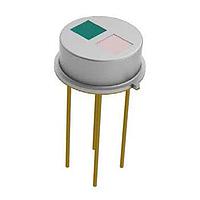
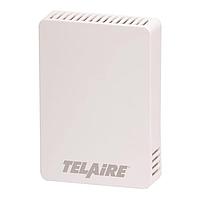
Air Quality Sensors
Monitoring indoor and outdoor conditions has become a practical requirement across manufacturing, building automation, HVAC, smart devices, and safety-focused environments. When air conditions affect equipment reliability, occupant comfort, or process stability, selecting the right Air Quality Sensors helps turn environmental data into actionable control and maintenance decisions.
This category covers sensor solutions used to detect and track parameters related to air condition and contamination levels. For design engineers, system integrators, and industrial buyers, the key is not just finding a sensor, but choosing a device that fits the target gas, response expectations, installation environment, and the wider control architecture.
Where air quality sensors are used
Air monitoring is relevant in more places than traditional environmental stations. In commercial buildings, these sensors support ventilation control and indoor comfort strategies. In industrial settings, they can be part of equipment monitoring, worker safety programs, or process enclosures where air composition needs to be observed over time.
They are also common in connected products such as smart appliances, portable instruments, embedded electronics, and building management nodes. Depending on the application, the sensor may be used for trend monitoring, threshold alerts, demand-controlled ventilation, or as one input among several environmental measurements.
Typical sensing targets and measurement goals
The term air quality can cover several different measurement objectives. Some applications focus on general indoor air indicators, while others are aimed at identifying a particular gas or pollutant. That is why system requirements should be defined clearly before comparing devices.
Common goals include monitoring volatile compounds, carbon-dioxide-related occupancy trends, airborne contamination indicators, or overall indoor air condition. In broader environmental monitoring designs, air quality sensing is often combined with humidity, temperature, pressure, or particulate-related inputs to create a more complete picture. If your project also involves adjacent environmental measurements, it may be useful to review related corrosion sensing options for installations exposed to harsh atmospheric conditions.
How to choose the right sensor for your application
A good selection process starts with the use case rather than the component label. Consider whether you need continuous monitoring, periodic sampling, portable measurement, or embedded integration into a larger device. The target environment matters as much as the measured substance, especially when temperature variation, humidity, dust, vibration, or airflow patterns can influence sensor behavior.
It is also important to evaluate response time, long-term stability, calibration needs, interface compatibility, and power consumption. For battery-powered or compact electronics, low-power design may be a priority. For building systems or industrial controllers, communication method and system-level integration may be more important than package size alone.
Engineers should also check whether the sensor is intended for qualitative indication, trend analysis, or more precise quantitative measurement. That distinction affects how the device should be installed, maintained, and interpreted in the final system.
Integration in embedded, industrial, and building systems
Air quality sensors are rarely used in isolation. In embedded products, they are often paired with microcontrollers, wireless modules, edge processors, or local displays. In industrial and commercial installations, they may feed PLCs, gateways, data loggers, or supervisory platforms that support alarms, analytics, and automated control.
Manufacturers in this category such as Honeywell, Bosch Sensortec, Advantech, and Amphenol are commonly considered when buyers need components suited to electronic integration or broader sensing ecosystems. The best fit depends on whether the project is centered on compact board-level design, industrial deployment, or multi-sensor environmental monitoring.
For many projects, air quality data becomes more useful when correlated with neighboring measurements. Teams building broader environmental nodes may also compare this category with other air sensing solutions and related environmental sensor families already used in the system architecture.
Manufacturer landscape and sourcing considerations
This category includes recognized suppliers used across electronics development and industrial applications. Brands such as Bosch Sensortec, Advantech, Amphenol, Banner Engineering, Infineon, and Asahi Kasei Microdevices (AKM) are relevant for buyers comparing different integration approaches, packaging styles, and deployment contexts.
Supplier selection should take into account not only device capability, but also documentation quality, lifecycle expectations, and compatibility with the intended product platform. In B2B purchasing, these factors can influence qualification speed and long-term maintenance more than headline specifications alone.
Common application considerations before purchase
Before ordering, it helps to define how the sensor will be mounted and what “good enough” performance means for the application. Airflow path, enclosure design, contamination exposure, and warm-up behavior can all affect real-world results. A sensor that performs well in a lab setup may require additional mechanical or firmware adjustments once installed in a finished product.
It is equally important to plan for calibration strategy, maintenance intervals, and data interpretation. Some systems use air quality sensing for direct control, while others use it as a diagnostic or trend-based indicator. Clarifying that role early will help narrow the category more efficiently and reduce redesign risk later.
Building a more complete environmental monitoring solution
Many modern systems no longer rely on a single environmental input. Instead, they combine air quality data with temperature, humidity, occupancy, pressure, or equipment-health signals to improve decisions across ventilation, safety, predictive maintenance, and energy management. This is especially relevant in smart buildings, industrial cabinets, laboratories, and connected infrastructure.
When selecting from this category, it is useful to think in terms of the full sensing chain: detection, signal processing, communication, and system response. That broader view helps ensure the chosen sensor supports not only measurement, but also the control logic and operational outcomes expected from the final application.
Conclusion
Choosing the right air quality sensor depends on what you need to detect, where the device will operate, and how the resulting data will be used inside the system. A well-matched sensor can improve visibility into environmental conditions, support smarter control strategies, and help create more reliable monitoring solutions across commercial and industrial applications.
For engineering and procurement teams, the most effective approach is to compare sensing goals, integration requirements, and operating conditions together rather than focusing on a single specification. That makes this category a practical starting point for building robust environmental monitoring designs with clearer long-term fit.
Get exclusive volume discounts, bulk pricing updates, and new product alerts delivered directly to your inbox.
By subscribing, you agree to our Terms of Service and Privacy Policy.
Direct access to our certified experts