Corrosion Sensors
Corrosion monitoring is often critical wherever metal equipment operates in aggressive process conditions, cooling water loops, pipelines, or chemical handling systems. Selecting the right corrosion sensors helps maintenance and reliability teams track metal loss trends earlier, support inspection planning, and make more informed decisions about process control, inhibitor performance, and material selection.
In industrial environments, these sensors are used to bring corrosion behavior closer to real operating conditions instead of relying only on periodic lab checks or shutdown inspections. That makes them relevant for plants that need continuous insight into asset condition, especially where fluid chemistry, temperature, pressure, and alloy compatibility all affect service life.
Where corrosion sensors fit in industrial monitoring
Corrosion sensors are part of a broader environmental and process sensing strategy used to understand how operating conditions affect equipment surfaces over time. They are especially useful in systems where corrosion can accelerate unexpectedly due to changes in water chemistry, contamination, temperature shifts, or flow conditions.
For buyers comparing technologies across related applications, it may also be helpful to review other environmental sensing solutions such as air quality sensors when monitoring extends beyond liquid or process-contact conditions. Within corrosion-focused applications, however, the key objective is to obtain practical, field-relevant data that reflects actual exposure inside the system.
Linear polarization resistance sensors in this category
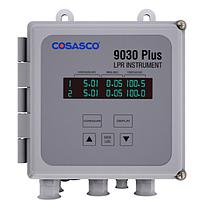
A leading product group in this category is the linear polarization resistance sensor, commonly used for corrosion rate monitoring in conductive process environments. This method evaluates the electrochemical response of the exposed element and helps estimate corrosion behavior without waiting for long-term physical inspection intervals.
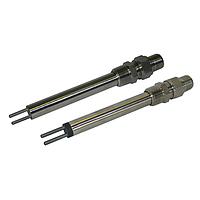
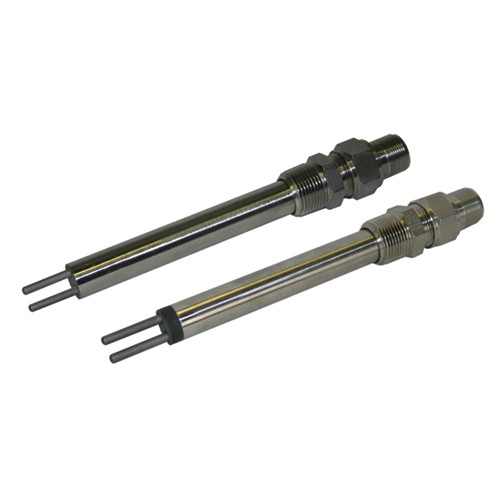
Several featured models from Cosasco illustrate this approach, including the Cosasco 7022-0-K03005, 7022-0-S30400, 7022-0-S30403, and 7022-0-S31603. These examples share a similar sensor format with two replaceable electrodes, adjustable 3/4" NPT mounting, stainless steel body construction, and operating limits suited to demanding industrial service, while differing in the electrode alloy used to match the monitoring objective.
Why electrode alloy selection matters
One of the most important selection factors is the electrode material. In corrosion monitoring, the sensing element should usually reflect the metallurgy of the asset, coupon program, or corrosion concern being studied. That is why this category includes variants using pipe grade carbon steel, 304 stainless steel, 304L stainless steel, 316L stainless steel, Carpenter 20 Cb3, Monel 400, copper alloys, brass, and aluminum grades.
For example, a carbon steel monitoring point may call for a model such as the Cosasco 7022-0-K03005, while stainless process systems may align better with options like the 7022-0-S30400, 7022-0-S30403, or 7022-0-S31603. In marine, cooling water, or specialty alloy environments, options such as the 7022-0-N04400, 7022-0-C71500, or 7022-0-C70610 may provide a more relevant match to the metallurgy under evaluation.
Common applications and operating considerations
These sensors are typically considered in applications where corrosion needs to be followed under pressure and temperature rather than inferred from offline testing alone. Typical use cases can include pipelines, chemical process lines, water treatment systems, offshore or marine circuits, and industrial utility loops where metallic components remain in direct contact with conductive media.
From the featured products, repeated design characteristics such as replaceable electrodes, stainless steel body material, and adjustable insertion mounting suggest a configuration intended for practical field installation and maintenance. Temperature capability up to +300°F / +150°C and pressure rating up to 500 PSI / 3.4 MPa are also relevant for users screening sensors for process compatibility, though final suitability should always be checked against the actual service conditions and monitoring method.
How to choose the right corrosion sensor for your system
Selection usually starts with the process itself: fluid type, conductivity, operating temperature, pressure, and expected corrosion mechanism. After that, teams normally compare the metallurgy being monitored and the installation constraints, including insertion depth, process connection, and maintenance access.
It is also useful to consider whether the priority is routine trend monitoring, inhibitor program verification, material comparison, or investigation of a recurring failure point. In many projects, choosing among alloy variants is more important than simply comparing part numbers, because the value of the measurement depends heavily on how closely the sensor element represents the real equipment surface.
- Match the electrode alloy to the material or corrosion scenario being studied.
- Confirm process compatibility for temperature, pressure, and mounting style.
- Consider serviceability, especially where replaceable electrodes can simplify maintenance.
- Review whether the monitoring location reflects the most representative process conditions.
Featured manufacturers and product scope
Cosasco is prominently represented in this category through multiple linear polarization resistance sensor variants designed around different electrode alloys. This provides a useful range for buyers who need consistency in sensor format while adapting the sensing element to different metals and process environments.
Chemtrol is also a relevant manufacturer within the broader corrosion monitoring landscape. For users building or expanding a monitoring program, brand-level comparison can help when evaluating product ecosystems, installation preferences, and long-term maintenance strategies alongside the sensor itself.
When to explore the broader corrosion monitoring range
Not every application is solved by one sensor style alone. Some users arrive on this page looking for a specific alloy-matched probe, while others are comparing technologies within a wider corrosion sensing range to support inspection programs or online condition monitoring.
That broader view can be useful when systems involve mixed metallurgy, changing process chemistry, or multiple monitoring points with different risk profiles. In those cases, understanding the role of each sensor type within the larger maintenance and integrity workflow is just as important as selecting an individual model.
Short FAQ
What is the main purpose of a corrosion sensor?
Its main purpose is to help monitor corrosion behavior in operating systems so teams can detect changes earlier and support maintenance, inspection, and process decisions.
Why are there so many alloy options?
Different alloys are used because corrosion performance depends strongly on the material exposed to the process. Matching the sensor element to the metal of interest improves the relevance of the measurement.
Are these sensors only for laboratory use?
No. The featured models are intended for industrial process environments where installation method, pressure, temperature, and material compatibility matter.
For industrial users, the right corrosion sensor is less about finding a generic device and more about choosing a monitoring point and alloy that reflect real service conditions. By comparing sensor construction, mounting style, and electrode material carefully, buyers can build a more useful corrosion monitoring strategy and select products that align with the asset integrity goals of the application.
Get exclusive volume discounts, bulk pricing updates, and new product alerts delivered directly to your inbox.
By subscribing, you agree to our Terms of Service and Privacy Policy.
Direct access to our certified experts