Signal converter
Signal conditioning and interface conversion are often the small details that make an industrial system work reliably. When devices speak different electrical languages, when a sensor output needs to be standardized, or when test equipment must connect through another bus, the right signal converter helps maintain compatibility, readability, and stable data transfer across the system.
This category brings together products used to adapt, translate, or condition signals for measurement, control, and instrument communication. In practical terms, these devices are used to bridge inputs and outputs, support legacy interfaces, and make it easier to integrate sensors, controllers, displays, and lab equipment into one usable workflow.
Where signal converters are used
In industrial automation, a converter may be needed when a temperature sensor, current loop, pulse output, or low-level analog signal cannot be read directly by the next device in the chain. The converter prepares that signal in a form that a controller, display, recorder, or monitoring system can use more effectively. This is especially helpful in mixed environments where older instruments and newer control platforms must operate together.
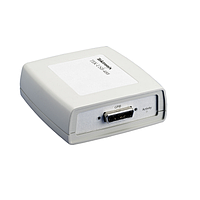
In test and measurement, interface conversion is equally important. Instruments with GPIB communication, for example, may still be part of active test setups, while the host computer relies on USB connectivity. Products such as the TEKTRONIX TEK-USB-488 GPIB to USB Adapter and the KEITHLEY KUSB-488B USB to GPIB Converter illustrate how signal conversion can also mean protocol and interface adaptation, not only analog scaling.
Common conversion tasks in this category
Signal converters can serve different roles depending on the application. Some are used to convert sensor outputs into standard analog signals such as 0-10 V, 0-20 mA, or 4-20 mA. Others are designed to handle pulse inputs, bridge sensor conditioning, or digital communication between instruments and host systems.
Examples in this category reflect that variety. The Autonics CN-6000 series models, including CN-6101-V1, CN-6101-V2, CN-6400-C1, and CN-6400-C2, show how signal converters can also include display functions while accepting different process inputs. At the component level, solutions from Renesas Electronics demonstrate the role of sensor signal conditioners in preparing low-level bridge signals for further processing in embedded or OEM designs.
How to choose a suitable signal converter
The first step is to define both sides of the conversion path: input type and required output. That includes checking whether the source signal is voltage, current, resistance, pulse, thermocouple, RTD, bridge-based sensor, or a digital interface such as GPIB. A mismatch here can lead to incorrect readings or unstable operation, even if the converter appears mechanically compatible.
It is also important to review the installation environment and integration method. Power supply range, mounting style, operating temperature, required isolation, and whether local indication is needed can all affect the final choice. For example, a panel-oriented converter with display may be more practical for machine monitoring, while a compact interface adapter is better suited to instrument benches or portable setups.
Another consideration is whether the requirement is for a finished device or a semiconductor-level building block. Products like Renesas Electronics ZSSC4165DE5R or ZSSC4151CE4R fit applications where signal conditioning is designed into the end product, while ready-to-use adapters such as the Mountz U-3B Interface Converter or TEKTRONIX and KEITHLEY interface products are better matched to direct deployment.
Signal converters in measurement and automation workflows
Many facilities combine process control, equipment monitoring, and laboratory verification in the same operation. In those cases, converters help create continuity between sensors in the field, indicators on the panel, and instruments in the test environment. A conditioned and standardized signal is easier to distribute, record, and compare across systems.
This category is also relevant when building control cabinets or upgrading existing equipment. A converter can simplify the connection between a process variable and associated devices such as relays or control interfaces that depend on predictable electrical inputs. When signal quality and compatibility are addressed early, downstream devices tend to be easier to commission and troubleshoot.
Examples of products covered here
The range includes both industrial units and specialized interface devices. TEKTRONIX TEK-USB-488 and KEITHLEY KUSB-488B are representative of instrument communication conversion, helping bridge USB and GPIB in test systems where legacy equipment remains in use. The Mountz U-3B Interface Converter is another example of a compact device used to connect systems that would otherwise require a dedicated interface workaround.
On the automation side, the Autonics CN-6101-V1 and CN-6101-V2 support broad input compatibility and analog output conversion with local display, while the CN-6400-C1 and CN-6400-C2 focus on pulse input applications with current output formats. For embedded signal conditioning, parts from Murata and Renesas Electronics highlight how conversion and conditioning can also take place at the board or sensor-interface level rather than only in stand-alone housings.
Related devices often considered alongside signal converters
Signal conversion is rarely isolated from the rest of the control architecture. In practical projects, engineers may also review switching and control components that respond to the converted signal or participate in the same machine function. Depending on the application, that can include switches for operator interaction or circuit state control, as well as devices that trigger actions based on monitored conditions.
For motion or actuation tasks, some systems also connect converted outputs to solenoids and actuators. Reviewing the full control path helps ensure the selected converter delivers the correct signal type and level for the equipment that follows.
What matters for long-term reliability
A good signal conversion setup is not just about making a connection once; it is about maintaining stable operation over time. Electrical noise, grounding practices, power quality, environmental conditions, and interface standards all influence the final result. That is why it is useful to choose products with operating conditions and communication characteristics that match the actual application rather than only the nominal signal type.
Brand preference can also matter when a project already follows a certain ecosystem. This category includes products associated with manufacturers such as TEKTRONIX, KEITHLEY, Autonics, Murata, and Renesas Electronics, each relevant to different use cases from bench instrumentation to OEM signal conditioning. The right selection depends less on brand repetition and more on the fit between application, integration method, and signal path.
Finding the right option for your application
Whether the goal is converting a sensor output for a controller, adapting a pulse or analog signal for display, or linking USB-based systems to GPIB instruments, the most suitable signal converter is the one that matches the real operating context. Looking closely at input compatibility, output format, power requirements, and installation constraints will usually narrow the selection quickly.
This category is intended to support that process with options for industrial control, instrumentation, and embedded signal conditioning. If you are comparing products for panel integration, test bench connectivity, or sensor interface design, reviewing the available models here is a practical starting point for building a more compatible and maintainable system.
Get exclusive volume discounts, bulk pricing updates, and new product alerts delivered directly to your inbox.
By subscribing, you agree to our Terms of Service and Privacy Policy.
Direct access to our certified experts