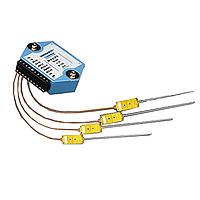
Signal Conditioners
Reliable measurement starts long before a value reaches the PLC, controller, recorder, or monitoring software. In many industrial systems, weak, noisy, or mismatched sensor signals need to be converted, isolated, or scaled so downstream equipment can read them accurately. That is where Signal Conditioners play a critical role.
On this page, you can explore signal conditioning devices used to interface RTD, thermocouple, voltage, and current signals in process monitoring and control environments. These products help improve signal integrity, support safe electrical isolation, and make it easier to integrate field instruments into broader data logging systems or plant-level measurement architecture.
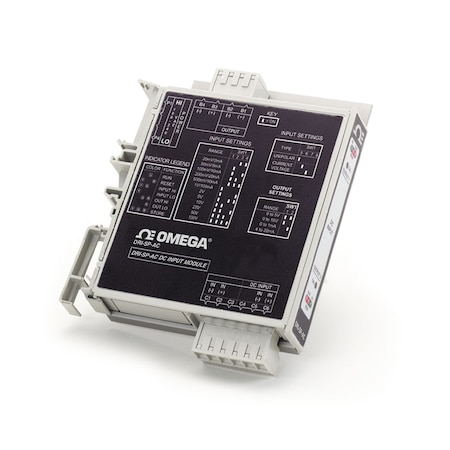
Why signal conditioning matters in industrial measurement
Sensors and transmitters do not always produce outputs that are ready for direct use. Temperature sensors such as RTDs and thermocouples often require conversion, linearization, amplification, or isolation before their signals can be sent to indicators, controllers, or acquisition devices. In electrically noisy environments, conditioning also helps reduce the impact of interference and grounding issues.
A well-matched conditioner can improve measurement stability, simplify wiring between field devices and control cabinets, and protect connected equipment from unwanted electrical interaction. This is especially important in distributed systems where sensor signals may travel through multiple devices before reaching a final destination.
Typical functions of signal conditioners
Depending on the application, a signal conditioner may perform one or several tasks at once. Common functions include signal isolation, signal conversion, scaling, and adaptation between sensor input types and standard analog outputs such as current or voltage. For temperature measurement, this often means converting an RTD or thermocouple input into a stable output that can be used by automation hardware.
Isolation is particularly valuable when different parts of a system operate at different ground potentials. Devices in this category may also support DIN rail mounting for straightforward panel installation, making them suitable for compact industrial enclosures and modular control system layouts.
Common applications for RTD and thermocouple conditioning
Signal conditioners are widely used in process plants, OEM equipment, utilities, environmental monitoring, and machine-building projects. They are a practical choice when temperature sensors must feed PLC analog input cards, chart recorders, local displays, alarm units, or remote monitoring platforms. If long-term trend capture is part of the requirement, they can be paired naturally with a temperature chart recorder or other logging interface.
For plants expanding connectivity, conditioned analog signals can also serve as a clean handoff point into IIoT and wireless monitoring systems. This is useful when legacy sensors remain in place but the site wants more accessible data for supervision, maintenance, or process optimization.
Examples available in this category
This category includes models from Dwyer, with solutions designed for DIN rail installation and isolated signal handling. The available range shown here includes units for RTD inputs, thermocouple inputs, and isolator duties, covering several common temperature spans and installation requirements.
Examples include the Dwyer SCL4151B and SCL4151C for RTD applications, as well as thermocouple-focused models such as the SC4130P for Type K inputs over higher temperature ranges and the SC4130G for Type J applications. The Dwyer SCL4380 illustrates the role of a dedicated isolator, which can be useful when the goal is less about sensor-specific conversion and more about maintaining a clean, separated analog signal path.
How to choose the right signal conditioner
Selection starts with the input type. RTD and thermocouple signals have different electrical characteristics, so the conditioner must match the sensor technology in use. If you are working with thermocouples, it is also important to verify the thermocouple type, such as J or K, along with the expected temperature range in the process.
The next consideration is output and system compatibility. Check whether the receiving device expects a current or voltage signal, and confirm load requirements, power supply range, and mounting format. In many panel-based systems, DIN rail compatibility simplifies installation and maintenance, while input-to-output isolation helps improve reliability in mixed-equipment environments.
It is also worth considering the broader control architecture. Some applications only need straightforward temperature conversion, while others benefit from a conditioner that supports wider analog input ranges or an isolated handoff between subsystems. When measurement quality matters, details such as linearity, drift behavior, and isolation rating can be just as important as basic input/output matching.
DIN rail integration and panel design considerations
Many signal conditioners in this category are designed for 35 mm DIN rail mounting, which fits well in standard industrial cabinets. This format supports organized wiring, modular expansion, and easier replacement during service. For integrators and maintenance teams, that can reduce downtime and simplify troubleshooting.
Power requirements also matter during panel design. Some models in this range operate from 12 to 24 Vac/Vdc, while others are intended for wider 85 to 265 Vac/Vdc supply conditions. Choosing the right supply class early helps avoid unnecessary auxiliary power components and keeps the panel design aligned with available plant power.
Where signal conditioners fit in a larger instrumentation system
Signal conditioning is often one layer within a larger measurement chain rather than a stand-alone purchase decision. A sensor may feed a conditioner, which then passes a normalized analog signal to a recorder, controller, gateway, or supervisory platform. In that sense, these devices act as the interface between field instrumentation and higher-level control or monitoring equipment.
For buyers comparing system options, this category is most relevant when the challenge involves sensor compatibility, electrical isolation, or analog signal cleanup. If the requirement is broader acquisition, storage, or communications functionality, it may also be helpful to review adjacent product groups such as data loggers and wireless monitoring solutions alongside the conditioner itself.
Finding a suitable model for your application
The best choice depends on the sensor signal you have, the output your control system needs, and the environmental and electrical conditions around the installation. A compact RTD conditioner may be the right fit for routine temperature monitoring, while a thermocouple model with the correct type and range is more appropriate for higher-temperature processes. In other cases, an isolated analog module is the better answer when separation and signal integrity are the main priorities.
By comparing input type, temperature range, isolation, power supply, and mounting requirements, you can narrow the selection to the models that fit your process with fewer compromises. This category brings those options together so engineers, integrators, and maintenance teams can evaluate signal conditioners in a way that supports both immediate installation needs and long-term system performance.
Get exclusive volume discounts, bulk pricing updates, and new product alerts delivered directly to your inbox.
By subscribing, you agree to our Terms of Service and Privacy Policy.
Direct access to our certified experts