DIN Rail Signal Conditioners
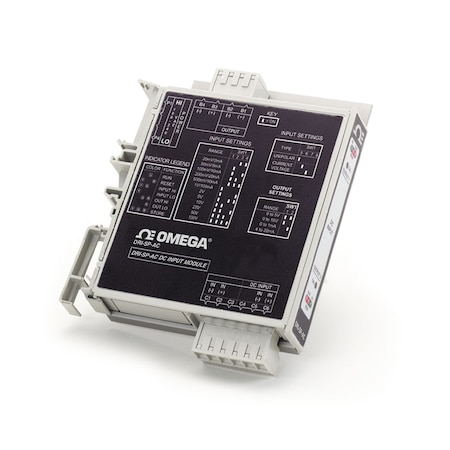
Stable measurement signals are essential when sensors are installed far from the control cabinet, exposed to electrical noise, or connected to PLC and data acquisition systems with strict input requirements. In these situations, DIN Rail Signal Conditioners help convert, isolate, and standardize low-level process signals so they can be transmitted and interpreted more reliably across industrial systems.
Mounted directly on standard 35 mm rails, these devices are widely used in panels for temperature measurement, process control, machine monitoring, and general instrumentation. They are especially relevant when working with RTDs, thermocouples, and analog current or voltage loops that need better signal integrity before reaching downstream equipment.
Why DIN rail mounting matters in industrial panels
A DIN rail format is often preferred because it simplifies panel assembly, keeps wiring organized, and makes future maintenance more straightforward. In compact automation enclosures, the ability to install signal conditioning modules alongside relays, power supplies, and I/O hardware helps create a cleaner and more serviceable layout.
Compared with other formats such as head mount signal conditioners, DIN rail units are usually better suited to centralized control cabinets where multiple signals must be conditioned in one place. This approach can also make calibration checks and troubleshooting easier, since the modules are accessible without disturbing field-mounted sensor heads.
Core functions of DIN Rail Signal Conditioners
The main job of a signal conditioner is to take an incoming signal and prepare it for reliable use by another device. Depending on the application, that may mean signal isolation, conversion between sensor types and analog outputs, filtering noise, or matching a transmitter output to a PLC or recorder input.
In temperature applications, conditioners are commonly used with RTD and thermocouple inputs. They can help transform weak or noise-sensitive sensor signals into standardized analog outputs such as current or voltage ranges used in industrial control. When isolation is included, the module also helps reduce the risk of ground loops and improves protection between field wiring and the control side.
Typical applications for RTD, thermocouple, and isolator modules
Temperature measurement is one of the most common use cases for this category. RTD-based conditioners are often selected for processes that require stable and repeatable temperature feedback, while thermocouple conditioners are useful where a broader temperature range is needed, such as ovens, heating systems, and thermal process equipment.
Signal isolator variants are used when the goal is not sensor conversion but cleaner transmission of an existing analog signal. In a panel with multiple analog loops, isolation can help separate circuits electrically and improve overall measurement quality. For applications that need a more specialized architecture, some users may also compare these products with specialty conditioners depending on the signal type and installation method.
Examples available in this category
This category includes several representative models from Dwyer, covering RTD, thermocouple, and isolator configurations in DIN rail form. For example, the Dwyer SCL4151B and SCL4151C are designed for RTD inputs with common temperature ranges, while the SCL4130 series includes versions for thermocouple types such as J and K across different spans.
Examples such as the Dwyer SCL4130P support higher thermocouple ranges, while the Dwyer SCL4380 serves as an isolator for analog signals where electrical separation is the main requirement. The category also includes SC series options, such as SC4151B and SC4130K, which provide similar conditioning functions with different supply arrangements. These examples illustrate that selection often depends less on brand alone and more on input type, temperature range, isolation needs, and available panel power.
How to choose the right DIN rail signal conditioner
Start with the input signal type. An RTD conditioner should match the sensor technology in use, while thermocouple applications require the correct thermocouple type, such as J or K. If the module is intended for analog isolation rather than temperature sensing, review the supported current or voltage ranges on both the input and output side.
Next, look at the operating range and the signal path required by the control system. A module intended for 0 to 100 °C service may not fit a high-temperature furnace application, just as a broad thermocouple range may be unnecessary for moderate process heating. It is also important to verify power supply compatibility, especially when comparing units designed for 12 to 24 Vac/Vdc with models that accept wider 85 to 265 Vac/Vdc supplies.
Finally, consider panel constraints and electrical performance. Compact width can matter in dense control cabinets, while isolation, linearity, and drift characteristics can affect long-term measurement stability. In installations where multiple channels are mounted together, these details become increasingly important for maintaining consistent process data.
What to review before ordering
Before selecting a unit, confirm the sensor type, expected measurement span, output format required by the receiving device, and available supply voltage in the cabinet. It is also worth checking whether the application calls for straightforward conversion or true galvanic isolation between field and control circuits.
Mechanical compatibility should not be overlooked. These products are intended for 35 mm DIN rail mounting, which supports quick installation in standard industrial enclosures. If your project involves a mixed instrumentation setup, it may also be useful to browse other DIN rail signal conditioner options within the category to compare input types and electrical ranges more closely.
Where these modules fit in a broader instrumentation system
DIN rail conditioners are often one part of a larger chain that includes sensors, transmitters, PLC analog input cards, indicators, data loggers, and SCADA-connected control hardware. Their role is to make the signal more usable and more robust before it reaches the device that makes decisions or records process values.
That is why they are commonly found in water treatment skids, HVAC control panels, industrial ovens, packaging lines, and general-purpose process instrumentation. When a raw sensor signal needs cleaner transmission, safer electrical separation, or a standard analog interface, this category provides a practical panel-mounted solution.
Conclusion
Choosing the right DIN rail signal conditioner comes down to matching the module to the sensor, signal range, electrical environment, and panel power available in the application. Whether the requirement is RTD conversion, thermocouple interfacing, or analog isolation, the right device can improve signal quality, support more stable control, and simplify integration inside industrial control cabinets.
Use the available product details to compare input type, temperature span, supply requirements, and isolation characteristics carefully. A well-matched conditioner helps turn raw field signals into dependable data for monitoring, control, and long-term system performance.
Get exclusive volume discounts, bulk pricing updates, and new product alerts delivered directly to your inbox.
By subscribing, you agree to our Terms of Service and Privacy Policy.
Direct access to our certified experts